Injections vs electro-osmosis vs plaster: an independent comparison
Three approaches to rising damp side by side: how they work, when they make sense, drying time, salts, guarantees and price.
- Injections and electro-osmosis try to stop rising water; salt-retardant plaster doesn't stop it, it lets the wall dry and stores salts.
- Observed prices are similar (€35–60/m²): choose by wall type, access and guarantee, not by price.
- The costliest mistake is applying any of these methods to a wall with condensation. Confirm the type of damp first.
IN THIS GUIDE
Which is best for rising damp: injections, electro-osmosis or plaster?
Short answer: injections and electro-osmosis try to stop water rising from the ground; salt-retardant plaster stops nothing, but lets the wall dry and stores salts without spoiling the finish. Most well-executed jobs use a barrier and a suitable plaster.
Observed prices for injections and electro-osmosis are similar, €35–60/m², so the choice should rarely come down to price. It depends on the wall (material, thickness, amount of salts), on access and on the guarantee terms.
- Injections: make sense in brick or stone with regular joints, where the base of the wall is accessible and the plaster is going to be redone anyway.
- Electro-osmosis: when you want to avoid opening up the base of the wall (tiles, stone skirting, fitted furniture) and accept a slower result, with check readings.
- Salt-retardant plaster: whenever there is efflorescence, as the finish after the barrier; on its own, only as a compromise.
- Outside drainage: when the ground or pavement is higher than the inside floor — often the first step, before any barrier.
How do damp-proofing injections work?
Holes are drilled at regular intervals at the base of the wall, just above floor level, and filled with a silane/siloxane cream or liquid. The product spreads through the pores and makes that band water-repellent: it creates a horizontal chemical barrier.
They work well in brick and in stone with regular joints. In irregular stone walls with voids and weak mortar, the product may not spread continuously — and a barrier with gaps lets water through. That is why thickness and material weigh so heavily on the price.
- For: a well-known method, acts directly at the base of the wall, leaves no equipment running.
- Against: requires drilling and usually hacking off plaster; the wall above the barrier stays damp for months.
Prices and what makes the job dearer: how much injections cost.
How does electro-osmosis work?
Electro-osmosis uses electrodes fitted in the wall and a small electric current to counteract water rising through the capillaries. There are mains-powered systems and systems sold as passive or wireless.
The argument for it is less intrusion: fewer holes and sometimes no need to open up the whole base of the wall. The argument against is that results take months to show and depend on the system keeping working and the electrodes not degrading.
Because the principle of some devices is hard for a buyer to verify, ask for wall moisture readings before installation and on set dates afterwards, and for the guarantee to state what happens if the readings don't fall. Prices under electro-osmosis.
Salt-retardant plaster: treatment or finish?
Salt-retardant (macroporous) plaster has lots of large pores. It lets moisture leave the wall as vapour and gives salts room to crystallise inside it, instead of blowing the paint off the surface.
On its own, it does not stop water rising. With a barrier, it is what lets the wall dry and look good. Without a barrier, on a very damp wall, it eventually saturates with salts and the patches come back — later, but they come back.
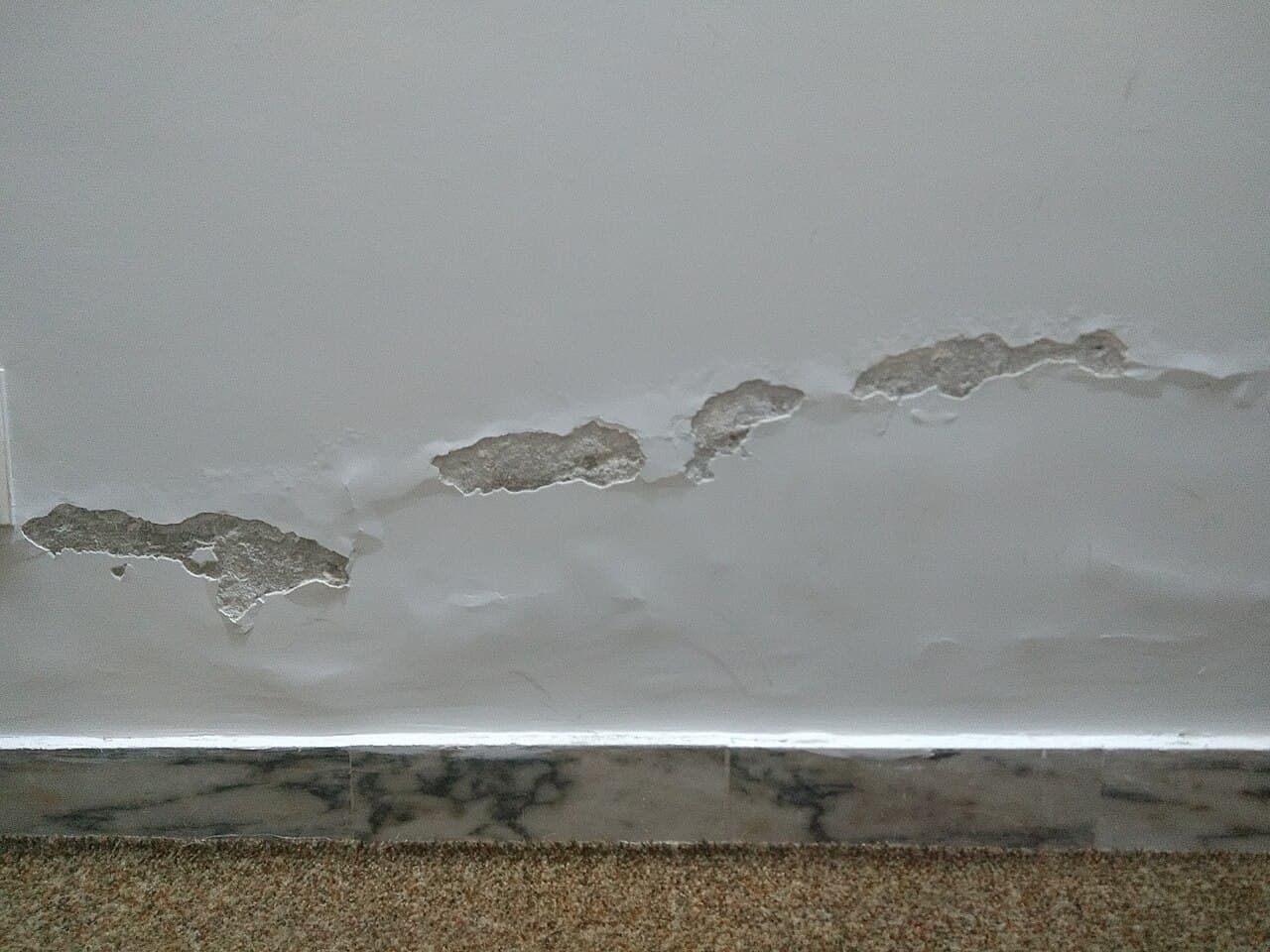
Old plaster with efflorescence has to come off. Salts are hygroscopic: they draw moisture from the air and keep the wall damp even after the rising water has been stopped. Leaving it and painting over it is the most common reason a job «doesn't work».
Side by side: effectiveness, salts, guarantees and price
| Injections | Electro-osmosis | Salt-retardant plaster | |
|---|---|---|---|
| What it does | Chemical barrier at the base | Counteracts rising water with a current | Lets the wall dry and stores salts |
| Stops rising water? | Yes, if the barrier is continuous | Yes, if the system works | No |
| Intrusion | Holes and, as a rule, new plaster | Electrodes, fewer holes | Hack off and replaster |
| Time until the wall dries | Months | Months, sometimes longer | Doesn't dry the wall by itself |
| Salts | Stay in old plaster: replace it | Stay in old plaster: replace it | Holds them for years |
| Maintenance | None | Check the system | Repaint with breathable paint |
| Observed price | €35–60/m² | €35–60/m² | Very variable, ask for a quote |
Guarantees: long guarantees of 20–30 years are common for injections and electro-osmosis. Read what they cover — the product, the work or the measured result — and what voids them, such as painting with impermeable paint or not replacing the plaster.
For real figures, with an 8 m² wall example, read how much rising damp treatment costs.
How long does the wall take to dry?
Longer than most people expect. The barrier stops new water, but the water already in the wall has to leave by evaporation. In a thick stone wall that takes months; in a damp Lisbon winter, with outdoor RH of 90–100% in January and February, drying slows down.
During that period new salts may appear on the surface: that is water escaping and leaving the efflorescence behind. On its own it doesn't mean the treatment has failed. What matters is the trend — the height of the patch should fall or stabilise, not climb. Ask the company to record in writing the readings taken at the end of the job, so you have a baseline.
- Don't paint the wall straight after treatment «to see the result»: use vapour-permeable paint and follow the period stated in writing.
- Air the room and keep indoor RH between 40% and 60% — a hygrometer of about €10 is enough to keep track.
- Photograph and measure the height of the patch every month. If it keeps climbing, contact the company under the guarantee.
The most common mistake: treating condensation as rising damp
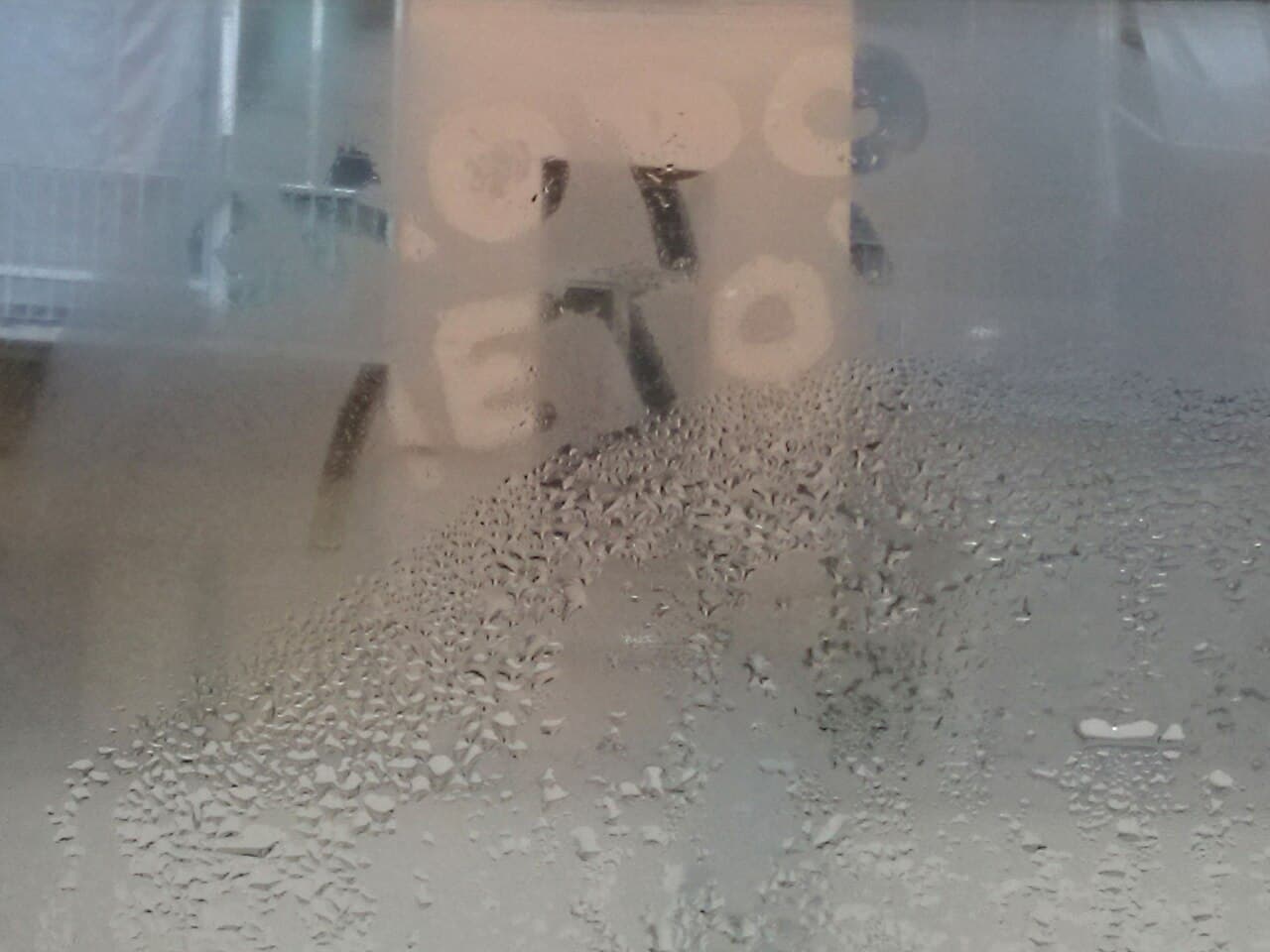
The costliest mistake is not choosing between injections and electro-osmosis — it is applying either of them to a wall with condensation. Condensation appears when humid air meets a surface colder than the dew point: at 18 °C and 75% RH, a wall below about 13.5 °C gets wet.
The signs differ. Condensation: black mould spots in upper corners, behind furniture, around windows, worse on winter mornings, on any floor. Rising damp: a band up to about 1 metre, efflorescence, crumbling plaster — and practically never above the ground floor.
If your patch shows the signs of condensation, the fix is ventilation, dehumidifying and less vapour indoors, with simple solutions costing €20–300. If it shows the signs of rising damp, then comparing the three methods above makes sense.
Frequently asked questions
Use a paint that lets water vapour through, such as mineral or silicate paints, compatible with the plaster applied. Plastic paints and gloss finishes form a film that traps moisture and leads to blisters and stains. Respect the drying period given by the company before painting; painting too early hides the problem for a few weeks and then ruins the finish.
It depends on the stone, the mortar and the thickness. In irregular stone with voids, injections use more product and a continuous barrier is harder to guarantee; outside drainage and a plaster that lets the wall breathe become more important. With this kind of wall the decision needs a technical visit with measurements, and it is worth comparing two quotes for different methods.
You can, when the damp is moderate and the priority is how the wall looks, but know what you are buying: the plaster does not stop water rising. It stores salts for a while and eventually saturates, especially on very damp walls. It is a compromise, not a treatment of the cause, and the guarantee should say so clearly.
It helps dry the air and speeds up drying once rising water has been stopped, but it does not prevent water from continuing to rise from the ground. Without a barrier, the appliance removes water that the wall soaks up again. It is useful as a complement during the drying months, especially in poorly ventilated basements and ground floors.
As a rule it isn't necessary: both methods aim for the same result, which is to stop water rising. The usual combination is one barrier, of either type, plus salt-retardant plaster and, where the outside ground is high, drainage on the outside. If you are offered both methods together, ask for a written justification.
SOURCES
- Prices observed on Google.pt, cume.pt, Zaask and Habitissimo, Oct 2026
- Customer reports on forums and in public reviews (Oct 2026)
- Building physics: dew point (Magnus formula)