Rising damp: signs, causes and treatments
Water from the ground climbs the walls as if through a wick. It shows up on ground floors and in basements, in a band up to about one metre high. It is the most expensive treatment — and the one most often sold to people who don't need it. It is fixed with a barrier at the base of the wall (injections or electro-osmosis), salt-retardant plaster and, where the ground outside is higher than the floor, drainage — but only after confirming it really is rising damp.
Signs
- Damp band up to ~1 m from the floor
- White powder and salts (efflorescence)
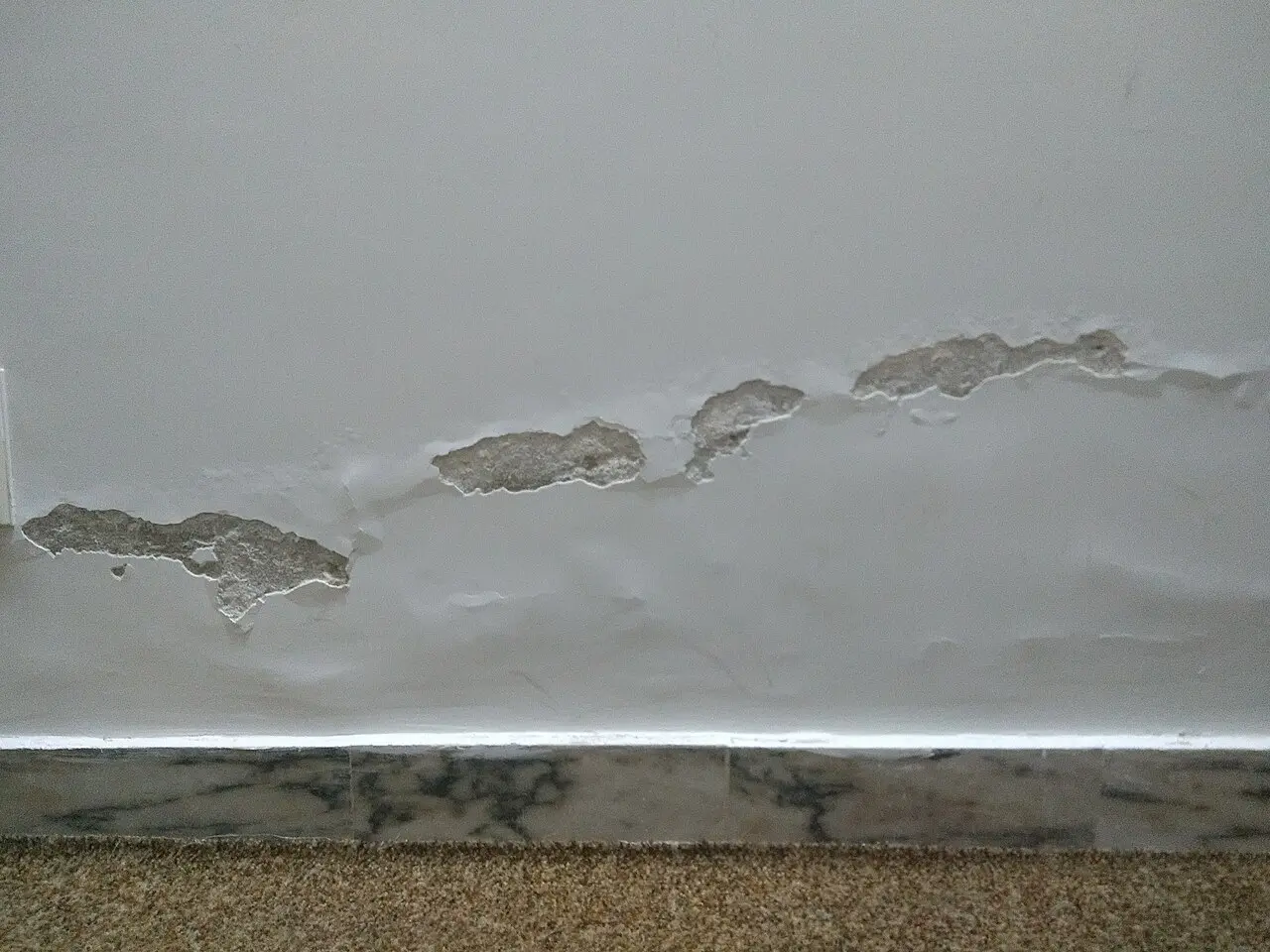
- Crumbling plaster, blistered paint
- Ground floor or basement, the same all year round
Most common causes
Walls with no barrier against ground moisture, outside ground level higher than the floor inside, cement renders that stop the wall from drying out.
How to fix rising damp: treatments and prices
- Silane injections€35–60/m²
- Electro-osmosis€35–60/m²
- Whole-house systems (customer reports)€4,500–20,000
- Salt-retardant plaster (finish after the barrier)varies widely, ask for a quote
- Drainage and lowering the outside grounddepends on the job
Sources: Habitissimo, Zaask, cume.pt, customer reports. Collected on 02.10.2026.
Detailed prices: Injections · Electro-osmosis · all prices
How rising damp works
Brick, stone, mortar and plaster are full of very fine pores. When the base of a wall is in contact with damp ground, water climbs through those pores, against gravity, like a sugar cube dipped in coffee. That is why it is called rising damp (in Portuguese, humidade por capilaridade or humidade ascensional), or sometimes ground moisture.
The water rises until evaporation from the wall's surface balances what comes in from below — usually up to about 1 metre, sometimes more in thick stone walls or when the wall has been covered with materials that stop it evaporating. Salts dissolved from the ground rise with it. When the water evaporates, the salts stay on the surface and crystallise: this is efflorescence (salitre), the white powder that crumbles the plaster and blisters the paint. More on this in efflorescence on walls.
Modern buildings have a barrier at the base of the walls (a membrane or a waterproof layer) that stops this rise. Many older homes don't have one, or the barrier has deteriorated. In Portugal, the problem is typical of:
- ground floors and basements of older blocks of flats and houses, especially those built before the 1960s;
- stone and rammed-earth (taipa) houses in the interior and in the historic centres of towns and cities;
- homes where the ground or the street outside has risen above the indoor floor over the years;
- walls rendered with cement or painted with plastic paints, which trap the water and force it to rise higher.
Details on older housing in damp in older homes and on basements in damp in basements and ground floors.
First: confirm it really is rising damp
It is the type of damp most often sold to people who don't have it. A stain near the floor can have other causes, and a rising-damp treatment fixes none of them. Before asking for quotes, check:
- The floor you live on. The water comes from the ground. Above the ground floor there is practically no rising damp, however similar the stain looks. On a second floor, look for condensation, water ingress or a leak.
- The shape. Rising damp is a continuous band from the floor up, with an uneven upper edge, like a tide line, and efflorescence. An isolated stain at one point on the wall points to a pipe.
- The season. Rising damp is there all year, with little difference between summer and winter. If the stain almost disappears in August, condensation is more likely.
- The mould. Rising damp brings little black mould and lots of salt; condensation brings lots of mould and no salt.
The guide condensation or rising damp: 5 tests puts these signs into a decision table, with the aluminium foil test and the hygrometer test.
What looks like rising damp but isn't
| Situation | How to recognise it | What fixes it |
|---|---|---|
| Condensation at skirting level | Black mould spots behind a sofa or bed pushed against an outside wall; worse in winter | Move the furniture, ventilate — see condensation damp |
| Outside ground higher than the floor | The stain starts at the height of the soil outside; worse after rain | Lower the ground, drainage, external waterproofing |
| Rain splashback and gutters | Base of the façade soaked by water running down or bouncing off the pavement | Repair gutters and downpipes, direct water away from the wall |
| Leak in a pipe in the floor or wall | Stain at one point that grows with no link to rain; meter moving with everything turned off | A plumber — see water ingress |
| Lateral water ingress in a buried basement | Water coming in through the wall in contact with the soil, sometimes running down it | Drainage and waterproofing from the outside, not injections |
How rising damp is treated
A treatment that works almost always has three steps, in this order:
- Stop the water rising at the base of the wall, with a barrier.
- Let the wall dry, which takes months.
- Redo the plaster with a material that can cope with the salts still in the wall.
The barrier methods most used in Portugal:
- Silane/siloxane injections (chemical barrier). Holes at the base of the wall, every 10 to 15 cm, filled with a product that makes the pores water-repellent. It is the most common method and the one with the most accumulated experience. €35–60 per m² of wall, in observed prices — see how much it costs.
- Electro-osmosis. Electrodes and a weak electric current that counteracts the rising water. Less building work, but results take months and depend heavily on installation and maintenance. €35–60/m² — see how much electro-osmosis costs.
- Physical cut. Opening the wall in sections and inserting a membrane or sheet. It is the most reliable method, but also the most invasive, and rare in flats.
- Drainage and lowering the ground. When the soil is above the floor, no barrier works on its own. Sometimes it is the only work needed.
The «wireless» devices that promise to dry the whole house with a magnetic or electric field, without touching the wall, are the ones that generate the most complaints. The full comparison is in injections vs electro-osmosis vs plaster.
After the barrier, the old salt-contaminated plaster is removed, with a margin above the damp area (often 50–80 cm), and replaced with a salt-retardant plaster (macroporous, also called renovation plaster), which lets the wall dry and stores the salts in its pores without crumbling. Never cement render or plastic paint. See salt-retardant plaster.
How much it costs and how to read a quote
Observed prices for injections and electro-osmosis range from €35 to €60 per m² of treated wall; proposals for the whole house, according to customer reports, range from €4,500 to €20,000. The market isn't very transparent — even the marketplaces contradict each other — so always compare like with like:
- Unit: m² of wall, linear metre or fixed price? And does it count one face of the wall or both?
- What is included: removing the plaster, salt-retardant plaster, painting, cleaning up.
- Written diagnosis: which readings were taken, at what heights, and why condensation and leaks were ruled out.
- Guarantee: what it covers, who signs it and what happens if the company closes. See 20- or 30-year guarantees.
The full example for a 4 × 1 m band, with the calculations, is in how much rising damp treatment costs. To assess a proposal you already have in hand, see damp treatment quote: how to tell if it's fair.
What you can do before calling a company
Some cheap measures reduce the damp near the floor and are worth doing anyway:
- Keep water away from the base of the house: clean the gutters, connect the downpipes to a drain or direct them away from the wall, correct pavement slopes that channel rain towards the façade.
- Lower the outside ground when soil or a flower bed is banked against the wall above the indoor floor level.
- Let the wall breathe: move furniture away, remove panelling, cork or wallpaper covering the damp area.
- Brush off the efflorescence dry, wearing a mask, and vacuum it up. Don't wash it with water — that dissolves the salts again and puts them back into the wall.
- Ventilate basements and ground floors, especially in winter; in summer, avoid opening up in the hottest hours, because warm air condenses on the cold basement walls.
How to choose a company and avoid high-pressure sales
Rising damp is the most expensive damp treatment and the area where high-pressure selling is most common. Warning signs:
- a rising-damp diagnosis on an upper floor, or with no readings at all;
- a discount «only if you sign today»;
- a long guarantee with no written conditions;
- a proposal that says nothing about plaster or drying time;
- refusal to leave the report and readings in writing.
The 12 questions to ask and the documents to request are in how to choose a damp-proofing company. If you already have a proposal, humidade.pt's free second opinion helps you review the diagnosis and the quote before you sign.
Frequently asked questions
It is water from the ground that climbs through the pores of the walls, like a wick. In Portuguese it is called humidade por capilaridade or humidade ascensional. It appears on ground floors and in basements, as a continuous band from the floor up to about 1 metre, with efflorescence and crumbling plaster, and it is there all year round.
Practically never. The water comes from the ground and doesn't reach floors that aren't in contact with it. A similar stain on an upper floor is almost always condensation, water ingress through the façade or a plumbing leak.
With a barrier at the base of the wall (silane/siloxane injections, electro-osmosis or a physical cut), months of drying and a salt-retardant plaster in place of the old salt-laden plaster. When the outside ground is above the floor, drainage or lowering the soil comes first.
In observed prices, injections and electro-osmosis cost €35–60 per m² of treated wall; proposals for the whole house range from €4,500 to €20,000, according to customer reports. Salt-retardant plaster and painting are usually quoted separately.
Injections are the most widely used method, with the most accumulated experience. Electro-osmosis needs less building work, but results take months and depend on the installation. More important than the method is getting the diagnosis right and having a guarantee with written conditions.
Months. A brick wall can dry within a season; a thick stone wall can take 6 to 12 months or longer. During that time it shouldn't be painted with finishing paint.
The barrier should be installed by professionals. On your own, you can keep water away from the base of the house (gutters, downpipes, soil banked against the wall), brush off the efflorescence dry and let the wall breathe. Never cover it with cement or waterproof paint.
Not on its own. The number of years means little without the conditions: what it covers, what maintenance it requires, who pays for the repair and what happens if the company ceases to exist. Read the guarantee before signing the proposal.
Read next
 How much does rising damp treatment cost? (2026 prices)
 Injections vs electro-osmosis vs plaster: an independent comparison
- Damp in basements and ground floors: rising damp, condensation or the ground?
- Condensation or rising damp? 5 simple tests you can do at home
- Renovation plaster for damp walls: what it is, when to use it and what it costs