How much does rising damp treatment cost? (2026 prices)
Injections, electro-osmosis and salt-retardant plasters: prices per m², a worked example, red flags and what to ask before you sign.
- Observed prices range from €35 to €60 per m² of treated wall; whole-house jobs reach €4 500–20 000.
- A 4 m × 1 m band on two walls is 8 m²: €280–480 for the barrier alone, or €560–960 if both faces are counted.
- Before paying, make sure it really is rising damp and insist on m², price per m², plaster included and a written guarantee.
IN THIS GUIDE
First: are you sure it is rising damp?
Rising damp is moisture that climbs from the ground through the pores of the wall, as if through a wick. It is real and common in old masonry houses, but it is also the most oversold diagnosis — because it is the most expensive treatment.
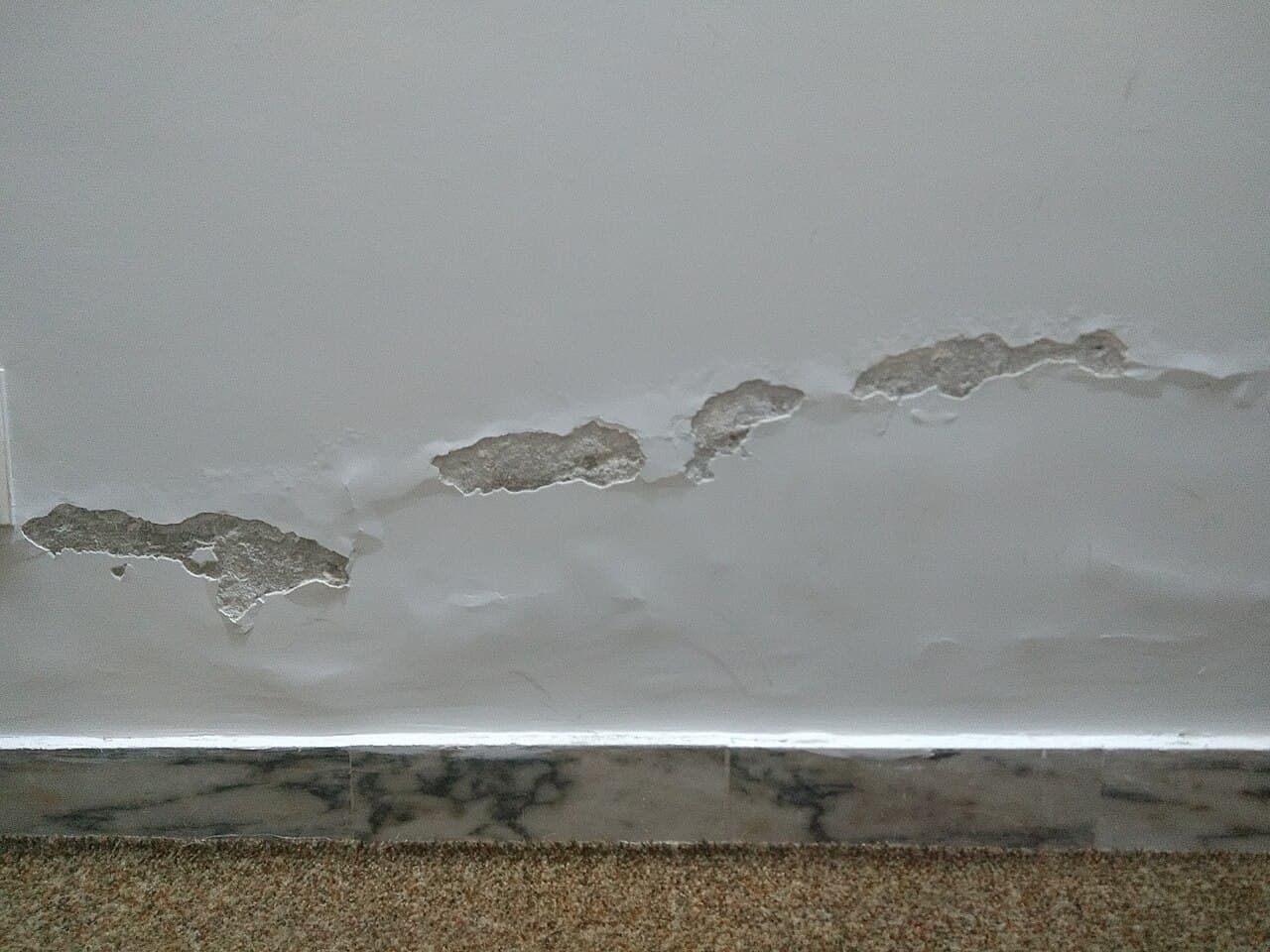
Three signs together make it likely: a damp band up to about 1 metre from the floor, white salts (efflorescence) and crumbling plaster, on a ground floor or in a basement. If the patch is in the upper corners, behind furniture or gets worse on winter mornings, condensation is far more likely.
Before asking for quotes, take the free diagnosis: 12 questions and a probability for each cause. If confidence is low, the result recommends a technical visit — which is also a useful answer.
How much does rising damp treatment cost per m²?
Observed prices for injections and electro-osmosis range from €35 to €60 per m² of treated wall. New plaster, when needed, is almost always quoted separately.
| Method | How it works | Observed price |
|---|---|---|
| Silane/siloxane injection | Holes at the base of the wall filled with a water-repellent product that forms a barrier. | €35–60/m² |
| Electro-osmosis | Electrodes and a small current that counteract the rising water. Results take months. | €35–60/m² |
| Salt-retardant (macroporous) plaster | Plaster that lets the wall dry and stores salts without spoiling the paint. Complements the other methods. | very variable, ask for a quote |
| Drainage and lowering the outside ground | Keeps water away from the base of the wall from outside. | depends on the job |
| «Whole-house» systems | Fixed packages, usually with long guarantees. | €4 500–20 000 (customer reports) |
The ranges were collected from Google.pt, cume.pt, Habitissimo, Zaask and customer reports published in October 2026. The marketplaces contradict each other — Zaask quotes €4–50/m², Habitissimo an average of €157.50/m² — which shows how opaque this market is.
How a rising damp quote is built
A serious quote starts from measurements, not a fixed price «per house». Four variables explain almost all the difference between quotes.
- Area in m²: length of affected wall × height to be treated. The height usually goes a little above the tide mark to catch the salty zone.
- Wall thickness and material: an irregular 50 cm stone wall takes far more product and more holes than a 15 cm brick wall. Some firms charge per linear metre and adjust for thickness — ask for the unit in writing.
- One face or both: on an interior wall damp on both sides, or an exterior wall where the outside render is also redone, the area to treat or plaster doubles.
- Plaster and finishes: hacking off old salty plaster, applying salt-retardant plaster, painting with breathable paint and removing rubble. This part can cost as much as the barrier itself.
Then come site factors: difficult access, built-in furniture, tiles to remove, kitchens and bathrooms with pipes in the wall. None of this is unusual, but it should be itemised, not buried in a total.
Worked example: a 4 m × 1 m band on two walls
Picture a ground-floor flat in a 1960s building with the typical tide mark: 1 metre high along 4 metres, on two living-room walls. The arithmetic goes like this:
| Step | Calculation | Result |
|---|---|---|
| Area per wall | 4 m × 1 m | 4 m² |
| Total area (two walls, one face) | 2 × 4 m² | 8 m² |
| Barrier at the lowest observed price | 8 m² × €35 | €280 |
| Barrier at the highest observed price | 8 m² × €60 | €480 |
| If the quote counts both faces | 16 m² × €35–60 | €560–960 |
For this case the barrier should, as a rule, land between about €280 and €960, depending on the price per m² and the number of faces. Salt-retardant plaster and painting come on top and depend on material and finish — ask for them on a separate line.
A quote of several thousand euros for these two walls is not automatically excessive: it may include outside drainage, plaster on both faces or thick stone walls. But you should be able to see, line by line, where the difference comes from.
When it isn't worth treating
If the wall is damp only behind a wardrobe pushed against it, if the outside ground is higher than the inside floor, or if there is a pipe in the wall, no injection will fix it. Fix the cheap things first: move furniture away, clear gutters, lower the soil against the façade, look for leaks.
Basements and ground floors often have more than one cause at once — see the guide on damp in basements and ground floors.
Red flags in a quote
- Rising damp diagnosed above the ground floor, or on patches on the ceiling and upper corners.
- No measurement mentioned: just a «visual inspection» or a device nobody explains.
- Only a total, with no area in m² and no price per m².
- A discount «valid today only» or pressure to sign during the visit.
- A guarantee that is only verbal, or conditional on paid annual servicing.
- Plaster and paint left out when the wall is visibly damaged.
- No sign of an alvará or certificado de empreiteiro (contractor licence issued by IMPIC) or of insurance.
Many companies do the visit for free and sell their own system — the diagnosis and the works come from the same source. It is neither illegal nor necessarily bad, but it is a good reason to get another opinion. See also how to choose a damp-proofing company.
Guarantees: what to read before signing
Guarantees of 20–30 years are common in this market, but the number of years says little without the conditions. Read the guarantee as a contract, because that is what it is.
- What it covers: damp returning in the treated zone, the plaster, the paint, or just the product?
- How failure is proven: who measures, with what device, and who pays for the call-out.
- What voids it: painting with impermeable paint, not replacing the plaster, later building work.
- Who honours it if the company closes, and whether it passes to the new owner if you sell.
Questions to ask before accepting a quote
- What type of damp did you find and how did you measure it (contact moisture meter, carbide method, thermal imaging)?
- What is the area in m² and the price per m²? Does it count one face of the wall or both?
- Does it include hacking off old plaster, salt-retardant plaster, painting and rubble removal?
- How long should the wall take to dry, and when can it be painted?
- What does the written guarantee say, and what voids it?
- Why this method and not another? Compare with the guide injections vs electro-osmosis vs plaster.
Get 2 quotes for different methods and run both through these questions. If you already have a quote in hand, you can use our free second opinion, which automatically checks whether the method and price per m² fit the type of damp.
Frequently asked questions
A well-executed treatment lasts, but salts left in the old plaster keep drawing moisture from the air and leave marks even once the rising water has been stopped. That is why affected plaster normally has to be hacked off and replaced with a breathable plaster. If the patch climbs again in the treated zone, record it with dated photos and claim under the written guarantee.
Injection creams are sold to the public, but drilling pattern, spacing and the amount of product take experience, especially in stone walls. What you can do yourself is remove outside causes: lower soil heaped against the façade, clear gutters, take off cement skirting and move furniture away from walls. This often shrinks the patch before any building work.
In July 2026 the E-Lar and Vale Eficiência programmes were closed and no new schemes had been announced. It is worth keeping an eye on official websites and your câmara municipal (town council), which sometimes runs its own refurbishment schemes. Don't postpone an urgent repair waiting for a grant that may not come; get quotes and decide on what the house needs.
As a rule, no. Multi-risk home policies usually cover «danos por água» (water damage) from sudden events such as a burst pipe, but moisture rising slowly from the ground, condensation and lack of maintenance are often excluded. Check the condições particulares (specific terms) of your policy before counting on any payout.
As a rule, conservation works fall to the senhorio (landlord) under the Código Civil (Civil Code), art. 1074, unless the contract says otherwise. The tenant should give written notice and keep evidence such as photos and messages. Urgent repairs follow their own rules (art. 1036). This is general information: check your case with a lawyer or with DECO, the consumer association.
SOURCES
- Prices observed on Google.pt, cume.pt, Zaask and Habitissimo, Oct 2026
- Customer reports on forums and in public reviews (Oct 2026)
- IMPIC — contractor licences and certificates
- Código Civil (Civil Code), arts. 1036 and 1074