Condensation damp: how to identify and fix it
It is the most common cause in Portugal. Warm, humid air touches a cold surface and the water condenses — in the corners, behind furniture, on the windows. In most cases it can be fixed without building work. To treat mould that has already appeared, clean it and bring the humidity down: airing, extractor fans and, if needed, a dehumidifier.
Signs
- Black mould spots in the upper corners and behind furniture
- Droplets on the windows in the morning
- Worse in winter, especially in the morning
- Strongest in bedrooms and bathrooms
Most common causes
Poor ventilation, laundry dried indoors, gas heaters, aluminium windows without a thermal break and uninsulated walls (about 70% of buildings date from before 1990).
How to fix condensation damp: treatments and prices
- Airing, dehumidifier, moisture absorbers€20–300
- Positive input ventilation (PIV / VMI) (estimate)€2,000–5,000
- Mechanical ventilation (MVHR / VMC)€1,000–6,000
Sources: Habitissimo, Zaask, cume.pt, customer reports. Collected on 02.10.2026.
Detailed prices: PIV ventilation · MVHR · Dehumidifier · External wall insulation · Mould cleaning · all prices
Why water appears on the wall
The air in a home always contains water vapour. The warmer it is, the more vapour it can hold. When that air touches a cold surface — a window pane, the corner of an outside wall, a roller-shutter box — it cools and can no longer hold all its vapour. The excess turns into water. The temperature at which this happens is called the dew point.
A winter example in Lisbon: a bedroom at 18 °C and 70% relative humidity. The dew point is about 12.4 °C, and any corner below ~16 °C already has enough moisture at the surface for mould to grow, even with no droplets in sight. On an uninsulated outside wall, like those in most homes built before 1990, this happens easily on cold mornings. The dew point calculator works it out for your case.
So condensation depends on two things at once: too much vapour in the air and cold surfaces. You fix it by tackling one, the other or both. That is also why the problem appears mostly between November and March and almost disappears in summer.
Where the vapour comes from in an ordinary home:
| Source | Water released (approximate) |
|---|---|
| Two people sleeping in a closed bedroom | 0.5–1 L per night |
| One hot shower | 0.2–0.5 L |
| Cooking dinner for a family, without a cooker hood | 0.5–1 L |
| One load of laundry drying indoors | 1.5–2.5 L |
| Butane or propane gas heater, per kilo of gas | ~1.5 L |
Added up, a family of four easily releases 8–12 litres of water a day into the air of their home. If that vapour doesn't get out, it ends up in the coldest spots.
How to confirm it really is condensation
The signs above are often enough for a strong suspicion. Before spending money, confirm it with three simple checks:
- Hygrometer at 7 am for a week. A ~€10 hygrometer in the affected room, away from the window. If the morning humidity is almost always above 65–70%, there is too much vapour. Normal levels and what to do about each are in ideal humidity at home.
- Floor and season. There is no rising damp on a third floor. If the stain shrinks in summer and comes back in December, condensation is much more likely than any other cause.
- Aluminium foil. Tape a 30 × 30 cm square over the damp area and seal the edges. After 2 days, water on the room side points to condensation; water underneath the foil points to water coming from the wall.
The guide condensation or rising damp: 5 tests explains each test in detail. If you have an infrared thermometer (€15–20), measure the cold corners and compare them with the dew point — the guide infrared thermometer shows you how.
What to do now, without building work
In most homes, condensation improves a lot within two to three weeks just by changing habits. In order of impact:
- Air the home briefly and fully. Open windows on opposite sides of the home for 5–10 minutes in the morning and after showering or cooking. A window left ajar all day cools the walls and changes little air. It works even when it's raining: outside air at 10 °C and 95% humidity, once warmed to 18 °C indoors, drops to around 57%. See how to air your home in winter.
- Remove the vapour where it starts. Cooker hood on while cooking and for 10–15 minutes afterwards, with lids on the pans. In the bathroom, door closed while you shower and the window open or the extractor fan on afterwards. No window? See bathroom without a window.
- Laundry outside, or in a closed room with the window open. It is often the biggest source of vapour in winter. The guide drying laundry indoors has the alternatives.
- Move furniture away from outside walls. Leave 5–10 cm behind wardrobes, beds and sofas that stand against walls facing outdoors. Behind a wardrobe pushed against the wall, the wall is several degrees colder than the rest of the room.
- Heat steadily. Keeping the home at 17–19 °C on a regular basis prevents more condensation than heating hard for two hours and letting it cool overnight. Walls that never warm up are always close to the dew point. See cold home and damp.
- Avoid flueless gas heaters. A butane heater burns the gas inside the room and releases the vapour into the air. If you use one, ventilate more. Details in gas heaters and damp.
- Clean existing mould safely, and only once the humidity has started to come down; otherwise it comes back. See how to remove mould from walls.
Dehumidifier: when it makes sense
If, after two weeks of these habits, the humidity at 7 am is still above 70%, a dehumidifier solves most cases in a single room or a small flat. A 10–12 L/day compressor unit starts at ~€90 and is enough for a two-bedroom flat (T2) in Lisbon; set the humidistat to 50–55% — going lower just uses electricity. In cold homes, below 15 °C, desiccant models work better.
Calcium chloride absorbers are for a wardrobe or a storeroom, not a whole room. Comparisons and running costs:
When habits aren't enough: ventilation and insulation
In some homes condensation persists even when everything is done right: flats with new, very airtight windows and no trickle vents, north-facing homes, uninsulated walls, thermal bridges at beams and roller-shutter boxes. There the solutions lie in the building, not in habits. In order of cost:
- Vents and extractor fans. Clearing existing vents, fitting self-regulating trickle vents in the windows and a humidity-controlled extractor fan in the bathroom costs a few hundred euros and solves many cases.
- PIV (positive input ventilation, VMI). A unit, usually in the loft or a false ceiling, that blows in filtered air and creates slight positive pressure. Estimated at €2,000–5,000 installed. See how much PIV costs.
- Mechanical ventilation (VMC). Continuous extraction from the wet rooms and, in balanced-flow systems (MVHR), heat recovery. €1,000–6,000 depending on the system and the ducting. See how much mechanical ventilation (VMC) costs and VMI or VMC: which to choose.
- Windows. Aluminium windows without a thermal break are the coldest point in the home and stream with water every morning. Replacing them helps, but very airtight windows without ventilation can make the walls worse. See aluminium windows without a thermal break.
- External wall insulation (ETICS). It warms the walls on the inside and gets rid of cold corners. €40–100/m² of façade; in a block of flats it is a decision for the building's condominium (condomínio). See how much ETICS costs.
Mistakes that make condensation worse
- Blocking ventilation grilles in windows, the kitchen or the bathroom to «keep the cold out».
- Painting an interior wall with waterproof paint or gloss enamel. Water can no longer evaporate from the wall and the mould appears next to it. An anti-mould paint delays the stains coming back, but only after the humidity has come down.
- Shutting the bedroom at night with no air coming in and only opening up at the end of the day.
- Switching the heating off completely on cold days and heating hard in the evening.
- Covering the wall with boards, wallpaper or cork without fixing the cause: the mould then grows behind it, out of sight.
Condensation room by room
The same cause shows up differently in each room. The detailed guides:
| Where | What is typical | Guide |
|---|---|---|
| Bedroom | Black spots in the upper corners and behind the wardrobe; worse on waking | Mould in the bedroom |
| Windows | Water on the glass and frame every morning, mould on the rubber seals | Mould on windows |
| Bathroom | Mould on the ceiling and in the grout, mirror stays misted for a long time | Bathroom without a window |
| Kitchen | Grease and steam, mould above the hob and in the cupboards | Damp in the kitchen |
| Wardrobe | Musty smell, spots on clothes and on the back panel | Mould in the wardrobe |
| Ceiling | Diffuse stains in the corners, on the top floor or under balconies | Mould on the ceiling |
In a rented home: who is responsible
Condensation is the cause landlords and tenants argue about most, because it depends both on the building (cold walls, windows, lack of ventilation) and on how the home is used (laundry, showers, heating). The 7 am hygrometer log, together with what you did to air the home and reduce vapour, is the best way to show which side the problem is on. The steps and a template letter are in damp in a rented home: who pays and on the page for tenants.
Frequently asked questions
It is water that comes from the air inside the home. The vapour released by sleeping, cooking, showering and drying laundry turns into water when it touches cold surfaces — corners of outside walls, window panes, roller-shutter boxes — and mould grows there. It is the most common cause of damp in houses and flats in Portugal.
In most cases: air the home for 5–10 minutes with windows open on opposite sides in the morning and after showers and meals, use the cooker hood, dry laundry outside, move furniture 5–10 cm away from outside walls and keep the heating steady. If after two weeks the humidity at 7 am is still above 70%, add a dehumidifier set to 50–55%.
Not always. It depends both on how the home is used and on the building: uninsulated walls, cold windows and lack of ventilation also cause condensation. A two-week log of the humidity at 7 am, with what you did to air the home, helps show which side the problem is on.
No. Cold outside air holds little water in absolute terms. Air at 10 °C and 95% humidity, once warmed to 18 °C indoors, drops to around 57%. Opening the windows for 5–10 minutes lowers the humidity even on a rainy day.
It solves most cases in a single room or a small flat, if the unit suits the area (10–12 L/day is enough for a two-bedroom flat, a T2) and is set to 50–55%. It doesn't replace ventilation: the air still needs to be renewed.
Changing habits and buying a hygrometer costs little more than €10. A dehumidifier costs €90–300. Vents and extractor fans, a few hundred euros. PIV (VMI) costs €2,000–5,000 and mechanical ventilation (VMC) €1,000–6,000; external wall insulation (ETICS) costs €40–100 per m² of façade.
Because that corner is colder than the rest of the wall: where two outside walls meet, a beam, the roller-shutter box or a wardrobe pushed against the wall. Even with the air at 55–60%, the humidity next to a cold surface can go above 80%, which is enough for mould to grow.
It doesn't fix the cause. The biocides in the paint delay the stains coming back, but the wall keeps taking on water from the air. Use it after lowering the humidity and cleaning off the mould, and never use waterproof paint on an interior wall.
Read next
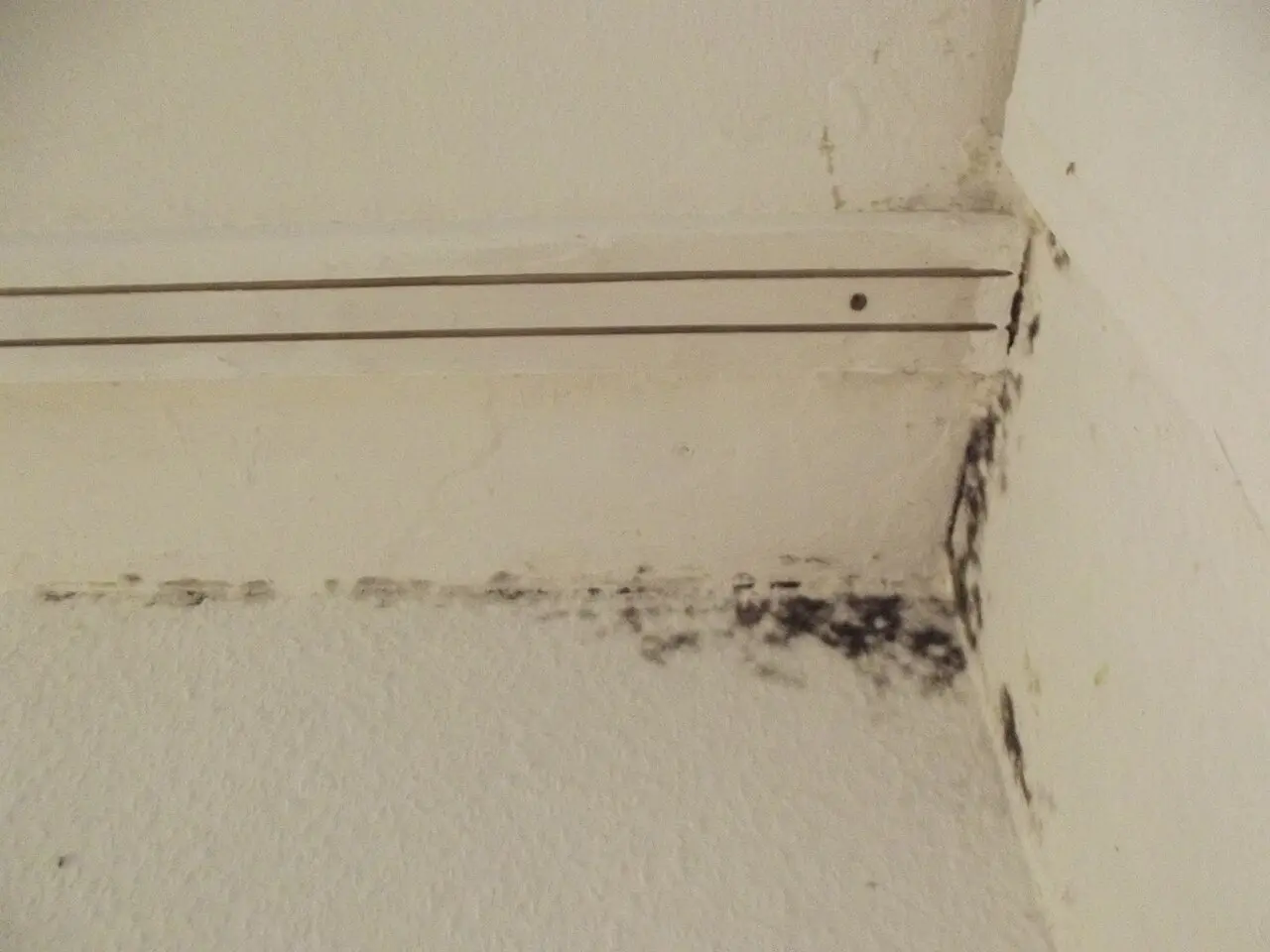 Mould in the bedroom: why it appears and how to get rid of it
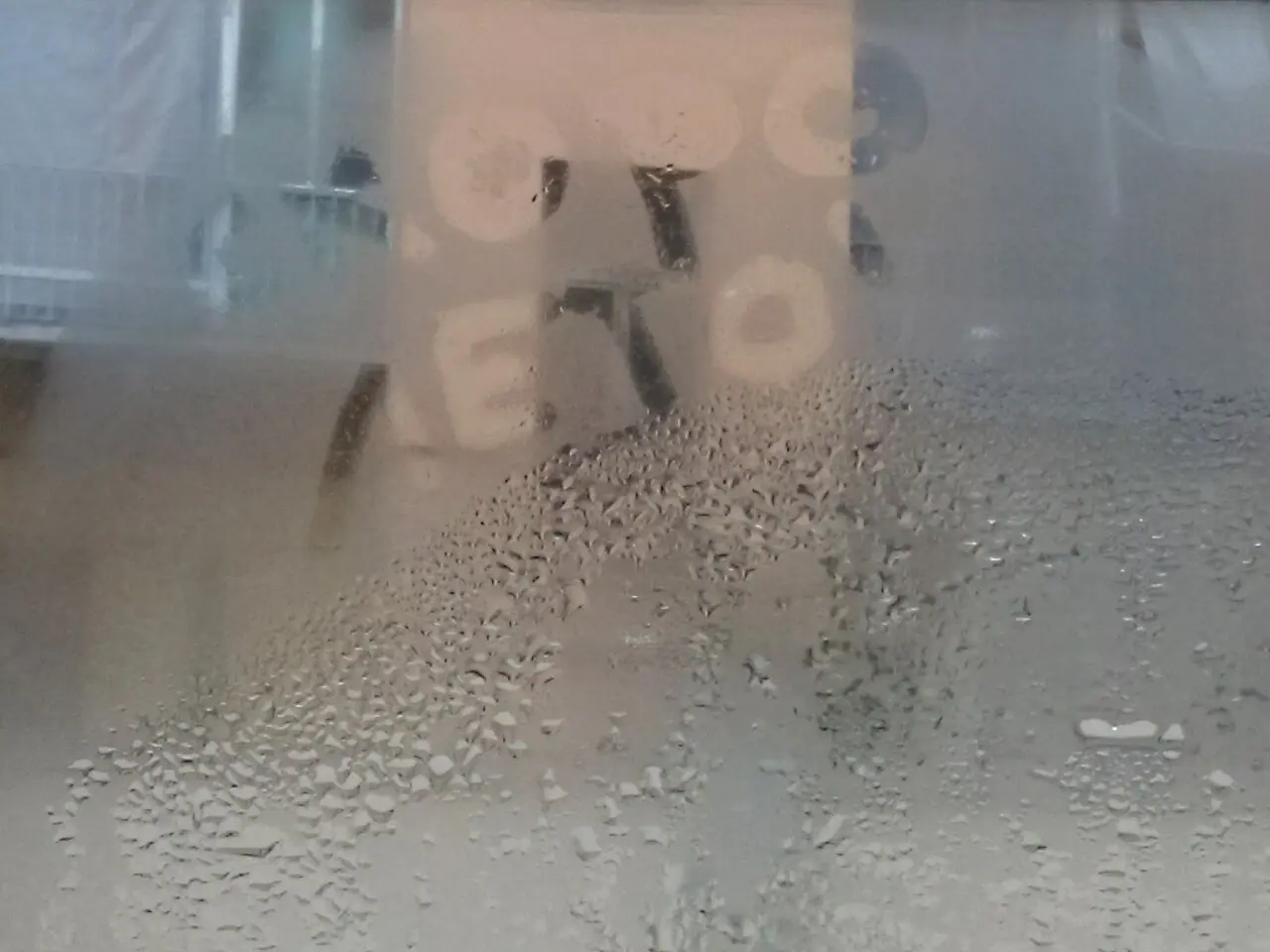 Dehumidifiers: which one to buy and how many litres you need
- Drying laundry indoors without causing mould
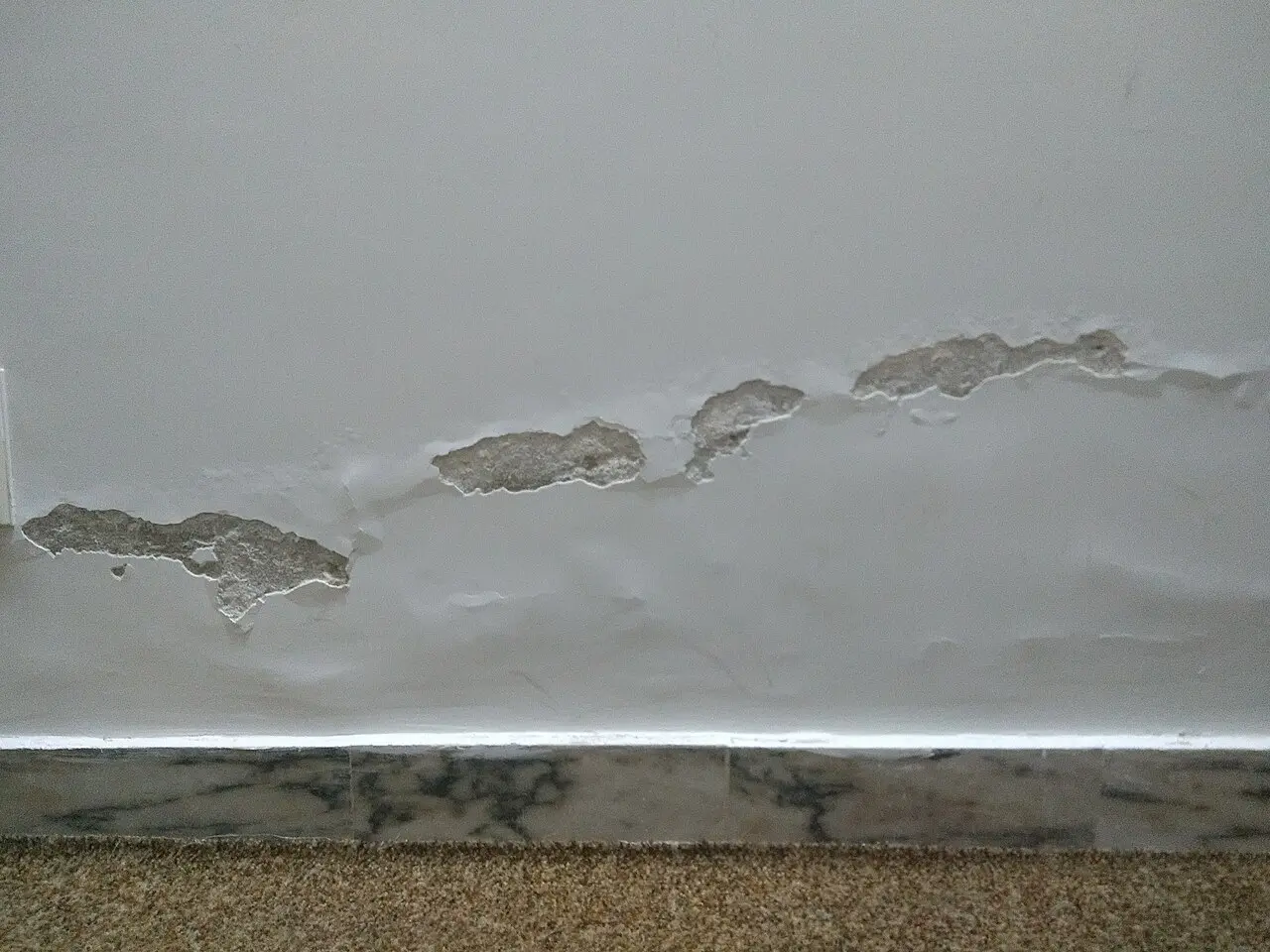 Condensation or rising damp? 5 simple tests you can do at home
- Mould on windows and window frames: why it appears and how to get rid of it