Water ingress: how to find out where the water comes from
Water gets in from outside or from a pipe — through the roof, the terrace, a window or from the upstairs neighbour. The patch has a sharp edge and gets worse after rain.
Signs
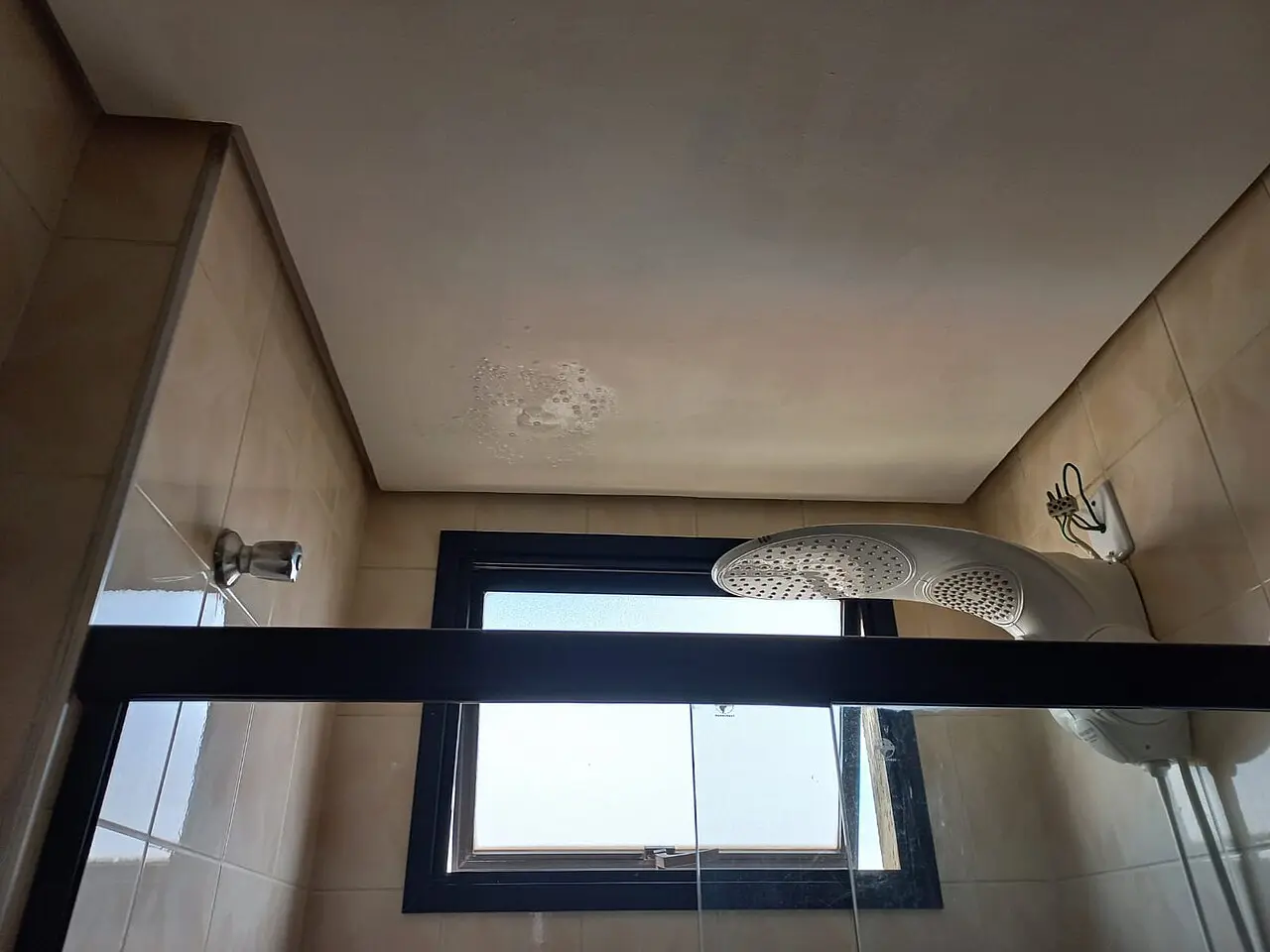
- Yellow-brown patch with a sharp edge
- Worse 1–3 days after rain
- On the ceiling, near windows or under the terrace
- If it is the same in dry weather: possible plumbing leak
Most common causes
Broken roof tiles, worn terrace waterproofing, badly sealed window frames, leaking pipes inside the wall or in the neighbour's flat.
How to fix water ingress: treatments and prices
- Terrace waterproofing€28–45/m²
- Leak detectionfrom a few hundred €
- Roof repairneeds a site visit
Sources: Habitissimo, Zaask, cume.pt, customer reports. Collected on 02.10.2026.
Detailed prices: Terrace waterproofing · Roof repair · Leak detection · all prices
Water ingress or a plumbing leak?
Both bring liquid water into the wall or ceiling, but the source and who pays are different. The first question is whether the stain follows the rain.
- Rainwater ingress: the stain appears or grows 1–3 days after rain, especially with wind, and dries slowly in dry weather, leaving tide marks. With a broken roof tile the water can arrive within hours; through a terrace with ageing waterproofing it can take days to get through the slab.
- Plumbing leak: the stain grows with no link to the weather, is often near the kitchen, the bathroom or a water riser, and may smell of sewage when it is a waste pipe.
Where the water comes from: clues from where the stain is
If the stain is on the ceiling, the guide water coming through the ceiling goes through the possible sources floor by floor.
| Where the stain is | Most likely source | Guide |
|---|---|---|
| Top-floor ceiling | Roof, gutters, chimney, skylight or roof terrace | Water ingress through the roof |
| Ceiling on a middle floor | Upstairs neighbour's bathroom or kitchen, soil stack | Upstairs neighbour |
| Ceiling below a balcony or terrace | Terrace waterproofing, blocked drains, door threshold | Waterproofing a terrace |
| Around a window or the roller-shutter box | Badly sealed frame, sill with no drip groove, façade joints | Mould on windows |
| Outside wall, halfway up | Cracks in the façade, deteriorated render, expansion joints | Water ingress through outer walls |
| Wall of a buried basement | Ground water coming in from the side | Basements and ground floors |
| Floor or skirting, at one spot | Leaking water or heating pipe | Leak detection |
Water travels inside walls and across slabs before it appears. The stain is rarely directly below the point where it gets in — with a roof, the gap can be several metres.
What to do right away when water is coming in
- Safety first. If the water is near sockets, light fittings or the fuse box, switch off the circuit breaker for that area. A bulging false ceiling can collapse: keep clear and don't pierce it without protection.
- Contain it. Buckets, towels, move furniture and appliances away. If the water is coming from one of your own pipes, close the main stopcock.
- Take dated photos, close up and from a distance, and repeat over the following days. Also keep the weather forecast or news reports of heavy rain that day.
- Notify the upstairs neighbour, the building's condominium (condomínio) management or the landlord, in writing, as soon as possible.
- Report it to your insurer if there is damage. Where the policy sets no deadline, the law points to the 8 days after you become aware of the incident. See does home insurance cover damp and water ingress?
- Don't go up on the roof in rain, wind or when the tiles are wet. A zoomed photo taken from the street or a neighbouring building is enough to show slipped tiles or blocked gutters.
Who pays for the repair
It depends on where the source is, not on where the stain appears:
- In your home (one of your pipes, your window): the owner of the unit pays, possibly with help from their insurance.
- In the neighbour's home (their shower, their pipe): the neighbour, or their third-party liability insurance. See damp coming from the upstairs neighbour.
- In common parts (roof, roof terrace, façade, risers): the condomínio, split according to each unit's share (permilagem) — even if the terrace is for the exclusive use of one unit. See damp in condominium common parts and the template letter on the condominium page.
- In a rented home: as a rule, conservation works fall to the landlord. See rented home: who pays and the landlord won't fix it.
How professionals find the source
When the source isn't obvious, there are methods that avoid breaking open walls at random:
| Method | What for | Notes |
|---|---|---|
| Visual inspection of the roof and façade | Tiles, flashings, gutters, cracks, joints, edge details | The first step; often enough |
| Thermal imaging (thermal camera) | Seeing damp areas and leaking pipes behind the plaster | Works best when there is a temperature difference between inside and outside |
| Water test | Flooding a terrace or spraying part of the façade and watching below | Can take hours or days to show a result |
| Plumbing pressure test | Confirming whether a circuit is losing water | Isolates the leaking section |
| Tracer gas and geophone | Pinpointing the exact location of a buried leak | For difficult cases |
Leak detection costs €50–350 per visit, not including the repair, in observed prices; difficult cases with tracer gas can cost more. See how much leak detection costs. Always ask for a report with photos of the point found — it is the document you will need for the insurer, the neighbour or the condomínio.
Repairs: what is usually needed
- Roof: replacing tiles, redoing flashings and edge details, cleaning and repairing gutters. Spot repairs come in at €15–50/m²; redoing the roof costs €50–250/m². It can only be quoted after a visit. See how much roof repair costs.
- Terrace: new waterproofing with a membrane or liquid system, drains, and edge details at door thresholds and low walls. €28–45/m² in observed prices. See how much it costs to waterproof a terrace.
- Façade: treating cracks, redoing joints, render and painting with paint made for exterior use; where exposure to rain is high, external wall insulation.
- Windows: seals, silicone between the frame and the wall, a drip groove on the sill, the roller-shutter box.
- Plumbing: opening up at the exact spot, replacing the section and closing up again.
Only once the source has been repaired is it worth dealing with the inside: letting it dry (weeks to months, depending on the wall), replacing plasterboard or crumbling plaster, cleaning off the mould and painting with vapour-permeable paint.
Common mistakes with water ingress
- Painting over the stain on the inside with anti-damp or «waterproofing» paint. The water keeps coming in and is now trapped in the wall.
- Waterproofing from the inside a problem that comes from outside.
- Filling façade cracks or terrace joints with silicone as a permanent fix.
- Waiting for next winter. Active water ingress damages plaster, timber and electrical wiring, and the insurer may refuse damage that got worse because it wasn't reported.
- Accepting a repair without a report. If the stain comes back, there is no way to prove what was done.
If you aren't sure it is water ingress, the free diagnosis compares the three causes — condensation, rising damp and water ingress — and tells you when its confidence is low.
Frequently asked questions
Water ingress usually leaves a yellowish-brown stain with a sharp outline and tide marks, which appears or grows 1–3 days after rain, on the top-floor ceiling, under terraces or around windows. If the stain grows in dry weather, the source is probably a plumbing leak.
Start with where the stain is: a top-floor ceiling points to the roof or terrace; a ceiling on a middle floor, to the upstairs neighbour; an outside wall, to the façade or the window. The meter test, with every tap turned off for 1–2 hours, shows whether there is a leak in your plumbing. When it isn't obvious, a professional uses thermal imaging, water tests or tracer gas.
Under horizontal property (propriedade horizontal), the roof and roof terraces are common parts, even if they only protect the top floor or are for the exclusive use of one unit. The repair falls to the building's condominium (condomínio) and is paid by all owners according to each unit's share (permilagem), unless the título constitutivo (the building's founding deed) says otherwise.
Notify the neighbour in writing, with dated photos, and ask for access to check their bathroom or kitchen. If there is damage, report it to your insurer; the neighbour's third-party liability insurance may cover the repair. If the source is a shared riser, it is a matter for the condomínio.
Many home multi-risk policies (multirriscos) cover sudden water damage, such as a burst pipe, and exclude gradual damp or lack of maintenance. Read the exclusions and report the incident quickly: where the policy sets no deadline, the law points to the 8 days after you become aware of it.
It depends on the source. Leak detection costs €50–350 per visit, not including the repair; waterproofing a terrace €28–45/m²; spot roof repairs €15–50/m². Only after the source is repaired is the inside dealt with: drying, plastering and painting.
No. Anti-damp or waterproofing paint on the inside doesn't stop water coming in from outside; it traps it in the wall and the stain comes back, often bigger. The repair has to be made at the point where the water gets in.
Weeks to months, depending on its thickness and material. Airing, heating and a dehumidifier speed up drying. Only paint when the wall is dry to the touch and the stain has stopped growing for several weeks, including rainy days.
Read next
 Mould on the ceiling: condensation or water ingress?
- Damp in a rented home: who pays, the landlord or the tenant?
- Damp coming from the upstairs neighbour: what to do
- How much does water leak detection cost (2026 prices) and who pays
- Water ingress through the roof: signs, what to do now and who pays