Do moisture absorbers work? Test and limits
Where they help (wardrobes, pantries) and where they're money down the drain (whole rooms). Simple maths and the precautions to take.
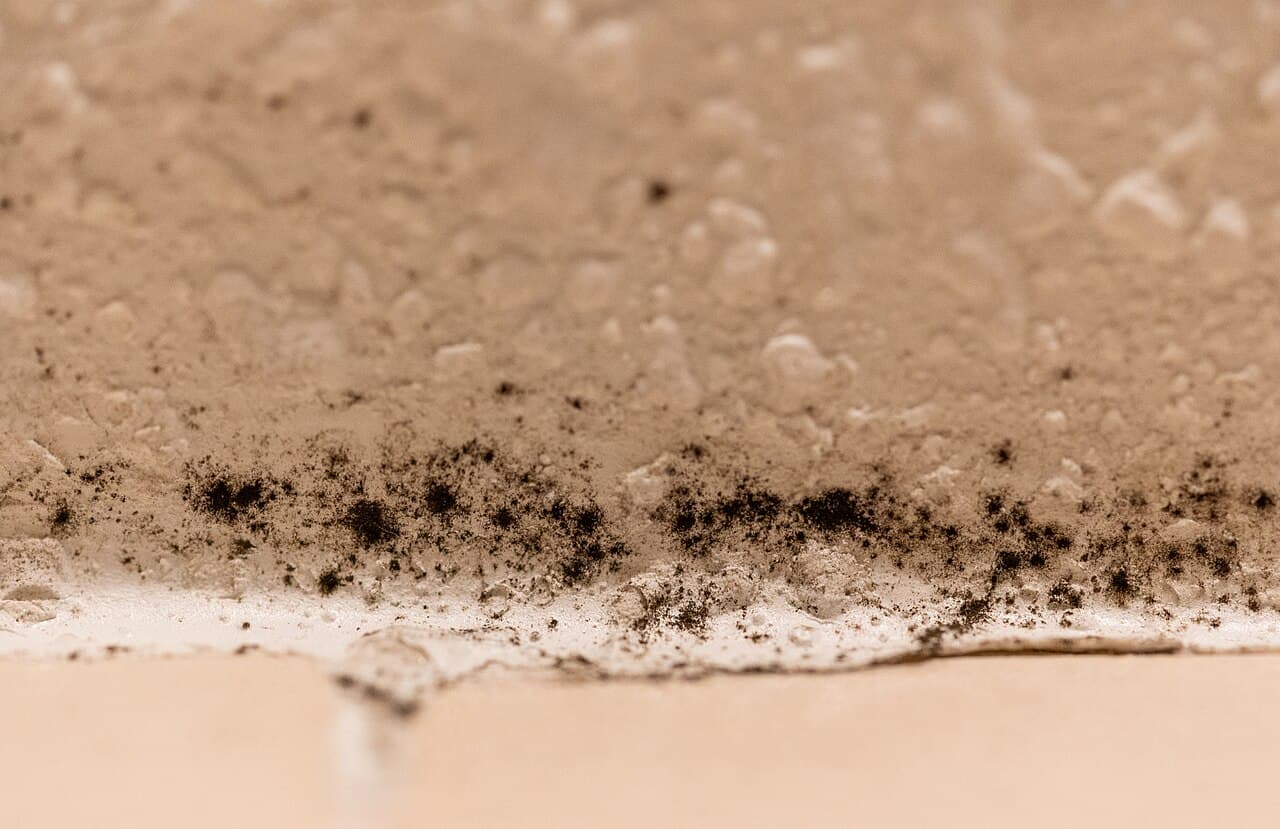
- A ~450 g calcium chloride absorber collects on the order of 1 litre of water over several weeks.
- A family of 4 puts ~10 L of water a day into the air: in a whole room, one absorber's effect is close to zero.
- They work in wardrobes, pantries and closed boxes. The liquid collected is brine: keep it away from children, pets and metal.
IN THIS GUIDE
Do moisture absorbers work?
They work — but on a very small scale. A calcium chloride absorber captures water vapour from the air around it and slowly turns into a brine that drips into a tank. In a closed wardrobe or a pantry, that's enough to lower humidity and stop the musty smell. In a whole room, it isn't.
The reason is arithmetic. A typical 450 g unit collects, over several weeks, on the order of one litre of water. A family of four puts about 10 litres a day into the air of the home, through breathing, showers, cooking and drying laundry.
If the problem is mould on the walls or windows streaming in the morning, absorbers are not the right tool. Start by finding the cause with the free diagnosis: in most cases it's condensation, which is solved with ventilation and habits, not little boxes in the corners.
The maths: one absorber versus a family
| Source or device | Water | Period |
|---|---|---|
| Calcium chloride absorber (~450 g) | ≈1 L collected | several weeks |
| Two people sleeping in a bedroom | 0,5–1 L released | one night |
| One wash load drying indoors | ≈2 L released | a few hours |
| Family of 4 (breathing, cooking, showers, laundry) | ≈10 L released | one day |
In the bedroom alone, a couple releases in one night almost as much as an absorber collects in several weeks. To keep up with 10 litres a day using absorbers you would need hundreds of units working at once — and even then, the water would reach the coldest walls before it reached the boxes.
That's why, in a room with condensation, the effect of one or two absorbers can't be seen on a hygrometer. Humidity rises and falls with showers, dinner and the nights, exactly as before.
Do the maths in your own home: if you empty an absorber's tank every three or four weeks, it has collected about a litre in that time. Compare that with what a dehumidifier collects in a single night in the same room and you'll see the difference in scale.
Where absorbers make sense
In small, closed spaces, where the volume of air is small and exchange with the rest of the home is slow:
- wardrobes and chests of drawers, especially those against external walls;
- pantries and cupboards under the kitchen sink;
- shoe cabinets, suitcases and storage boxes;
- small storerooms with no window;
- motorhomes and boats laid up for the winter, with everything closed.
Here, an absorber can lower humidity noticeably and stop clothes picking up a musty smell. Manufacturers usually state a maximum volume — for example, up to ~10 m³ — and a lifespan of a few weeks; respect those limits rather than scattering units around the home.
Refillable models, Humydry-type, cost ~€9 and refills ~€1,50 in observed prices; calcium chloride refills are also sold loose. The shop has a four-pack intended for wardrobes and closed corners, but any calcium chloride absorber does the same job.
How to test whether an absorber is working in your home
You don't have to take the label's word for it, or this guide's: you can measure. The test takes two weeks and only needs a hygrometer with min/max memory.
- Week 1, no absorber: leave the hygrometer in the space you want to test (wardrobe, pantry or bedroom) and note the maximum and minimum every morning. Reset after each reading.
- Week 2, with absorber: put the absorber in, keep the same habits — wardrobe door closed, the same airing — and note the readings the same way.
- Compare the averages: in a wardrobe, a drop of several points and less smell is a good result. In a whole room, expect a difference within the instrument's error (±2–3%).
- Measure what was collected: at the end, pour the brine into a measuring jug, divide by the number of days and compare with the 0,5–1 L two people release in a single night.
If the wardrobe result doesn't convince you, the next step isn't buying more absorbers. It's checking the wall behind, measuring its temperature with an infrared thermometer and comparing it with the dew point.
Where they don't work: whole rooms, basements and wet walls
- Bedroom or living room with condensation: the air volume is large and is renewed every time a door opens; the water entering the air every day far exceeds any absorber's capacity.
- Basement or ground floor with rising damp: the wall takes in water from the ground continuously; absorbers fill quickly and the wall stays the same. See rising damp.
- Water ingress: no absorber can compete with rainwater coming in through the façade, roof or terrace.
- Bathroom: a shower releases far more vapour than an absorber can capture; what works is the extractor fan, the window and a closed door. See bathroom without a window.
For a whole room with condensation, the right scale is ventilation and, if that isn't enough, a dehumidifier. An absorber in the corner of the bedroom can even give a false sense that the problem has been dealt with, while mould keeps growing behind the wardrobe.
In rented homes, some senhorios (landlords) suggest absorbers as the answer to mould on the walls. If the problem persists despite good ventilation habits, log your readings for a few weeks: they help show whether the cause lies in habits or in the building — see the guide for tenants.
What about home remedies: salt, rice, charcoal, bicarbonate?
Coarse salt and rice capture some moisture, but far less than calcium chloride, and they saturate quickly. Activated charcoal and bicarbonate of soda are mainly odour absorbers: they can mask the musty smell inside a cupboard, but do little about humidity.
The silica gel sachets that come in shoe boxes work well in very small volumes — a photo box, a toolbox, a camera case. In a wardrobe they're not enough.
None of these methods changes anything in the walls. If the musty smell is throughout the home and not just inside cupboards, read musty smell at home: it usually points to a source of damp worth finding.
Precautions: brine, children and pets
The liquid that collects in the tank is calcium chloride brine: a very salty solution that irritates skin and eyes, stains fabric and wood, and corrodes metal. The solid tablets also warm slightly on contact with water.
- Keep the absorber upright and don't carry it with a full tank.
- Pour the brine down the kitchen sink or toilet with running water, unless the label says otherwise.
- Wash your hands after changing the refill.
- Don't reuse the tank to store food.
Always follow the product label. Some links on the site may be affiliate links and are always marked — we explain how in how we make money.
Frequently asked questions
It depends on how damp the space is. In a wardrobe in winter, a calcium chloride unit typically lasts a few weeks until the tablets have fully dissolved; in summer it can last much longer. When there's no solid left in the top compartment, change the refill. If it fills in a few days, too much moisture is getting into that space and it's worth looking for the cause.
Calcium chloride doesn't release gases into the room. The risk lies in direct contact: the tablets and the brine irritate skin and eyes, and swallowing them is dangerous, especially for children and pets. Keep them out of reach, with the tank stable and a dish underneath, and wash your hands after changing the refill. Always follow the label.
It isn't worth it. Calcium chloride dissolves in the water it captures and becomes brine; recovering it would mean evaporating the liquid with heat, which is laborious and creates a risk of burns and corrosive splashes. Silica gel, on the other hand, can be regenerated in the oven at a low temperature, following the manufacturer's instructions, and reused in small volumes.
For a two-door wardrobe, one absorber is the starting point; for a large wardrobe or one against a cold external wall, two. More than that is rarely worth it. If clothes still smell with two absorbers filling every few weeks, the problem is probably the wall behind the wardrobe, not the air inside it.
Not measurably. Mould on a wall means the surface stayed above ~80% humidity for days, usually because of condensation at a cold spot, rising damp or water ingress. An absorber in the room doesn't change the wall's temperature or the water reaching it. Clean off the mould, identify the cause and deal with that first.
SOURCES
- Building physics: water vapour production in homes
- Labels and spec sheets of calcium chloride absorbers, Oct 2026
- Prices observed on Google.pt and online retailers, Oct 2026
- WHO — Guidelines for indoor air quality: dampness and mould (2009)