Dehumidifiers: which one to buy and how many litres you need
Compressor or desiccant, 10 or 20 litres, how much electricity it uses and when it won't help at all. A guide with no paid brands.

- For a 1–2 bedroom flat (T1–T2) with condensation, 10–12 L/day is enough in most cases; if you dry laundry indoors, go one size up.
- Below ~15 °C (unheated bedrooms, basements), a desiccant model extracts more water than a compressor one.
- Consumption: watts × hours ÷ 1000 = kWh per day. With the humidistat at 50–55%, the unit switches itself off and uses less.
IN THIS GUIDE
Do you really need a dehumidifier?
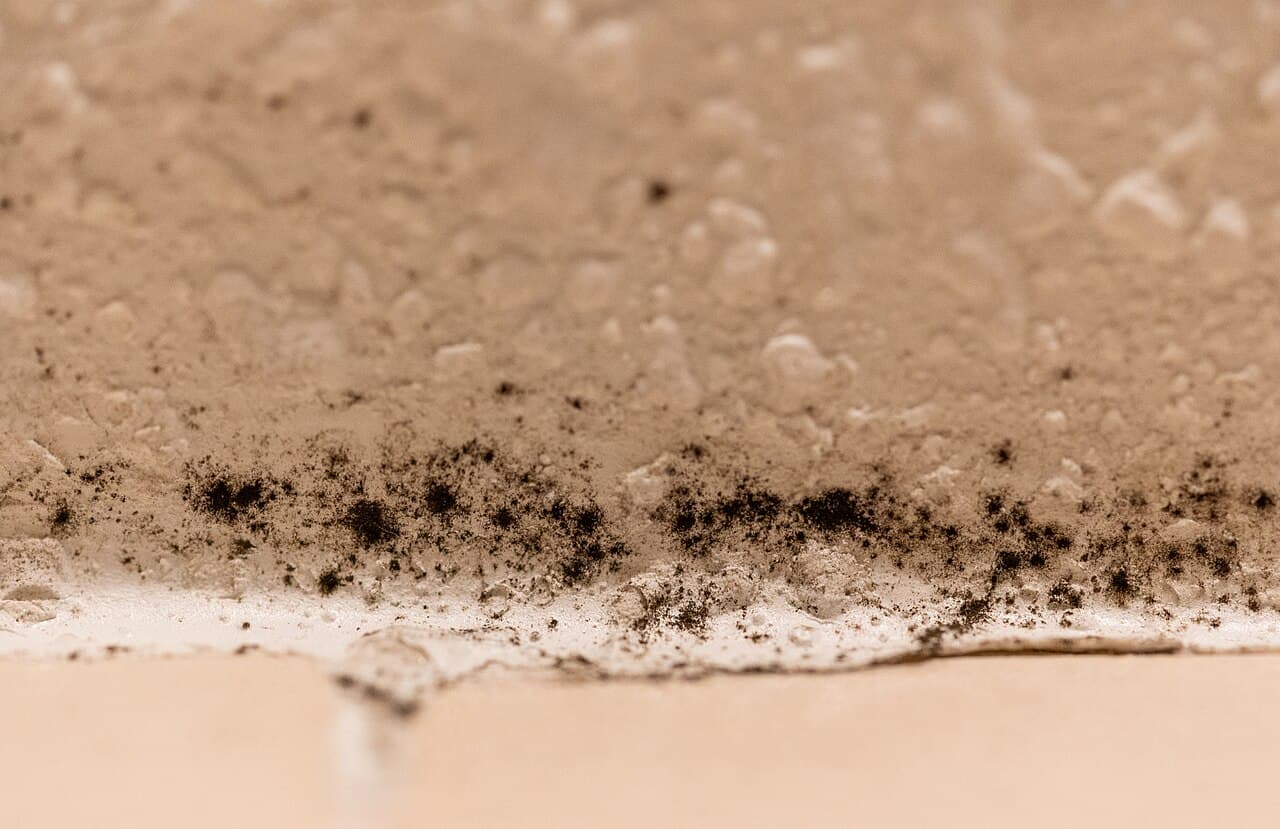
A dehumidifier takes water out of the air. That means it treats condensation — wet windows in the morning, mould in cold corners, a musty smell in wardrobes — and little else. If water is coming in through the façade or the roof, or rising from the ground, the unit will fill its tank every day without ever reaching the cause.
It makes sense when, after two weeks of airing properly, your hygrometer still reads above 65–70% relative humidity at 7 am in the bedroom, or when you have nowhere to dry laundry outdoors. A family of four puts about 10 litres of water a day into the air through breathing, cooking, showers and laundry. In a 1970s flat with aluminium windows without a thermal break, that water ends up on the glass and the coldest walls.
Demand has grown fast — up 72% at Aldi in 2025 — but impulse buying is the most common mistake. Before you spend, check with the free diagnosis whether the pattern really is condensation.
Compressor or desiccant: which works better in a Portuguese winter?
Compressor units work like a fridge: air passes over a cold coil, the water condenses and drips into the tank. Desiccant units use a rotor with an absorbent material that captures moisture; a heating element warms the rotor to regenerate it and the water is collected.
| Compressor | Desiccant | |
|---|---|---|
| How it works | cold coil, like a fridge | absorbent rotor + heater |
| Where it performs best | rooms above ~15 °C | cold rooms, below ~15 °C |
| Consumption for the same water | lower, in mild rooms | higher (has a heater) |
| Noise | compressor hum | usually just the fan |
| Effect on temperature | warms slightly | warms the room |
| Weight | heavier | lighter |
Below ~15 °C, a compressor's coil gets close to freezing: it extracts little water and spends part of the time defrosting. That's why, in unheated bedrooms that sit at 13–15 °C in January, or in basements, a desiccant unit usually performs better despite using more electricity.
In a living room or bedroom that reaches 17–18 °C, a compressor is generally the more economical choice. In observed prices, a 10–12 L/day compressor unit starts at ~€90; see the updated ranges in how much a dehumidifier costs.
How many litres do you need? Table by size and problem
The advertised capacity (litres per day) is not what the unit will extract in your home. It's measured in a lab with warm, very humid air; in a bedroom at 15 °C and 70%, the same unit extracts far less. Use the table as a starting point, not a promise.
| Situation | Suggested capacity | Note |
|---|---|---|
| Bedroom or studio (T0) with misted windows | 10 L/day | door closed overnight |
| 1–2 bedroom flat (T1–T2) with moderate condensation | 10–12 L/day | the most common case |
| 3-bedroom (T3), or mould in several rooms | 16–20 L/day | moving the unit around isn't enough |
| Laundry dried indoors | go one size up | each load leaves litres of water in the air |
| Cold basement or ground floor (r/c) | desiccant, 10–20 L/day | first rule out rising damp |
Two people sleeping release about 0,5–1 litre of water per night. If the unit collects far more than that in a bedroom with no laundry drying, there's another source of water — and it's worth asking where it comes from before buying a bigger model.
Humidistat, tank or continuous drainage: what to check
The humidistat is the most important part: it lets you choose the target humidity and switches the unit off when it gets there. Set it to 50–55%. The goal at home is 40–60%; below ~45% you're spending electricity with no benefit to the walls.
- Adjustable humidistat, with the humidity shown on the display — without it, the unit works blind.
- Hose outlet for continuous drainage, if you'll use it every day.
- Automatic shut-off when the tank is full, with a warning light.
- Laundry mode, which runs continuously with more airflow.
- Night mode, with the noise level in dB stated on the spec sheet.
- Washable filter and a tank that comes out without spilling.
- Wheels and a handle, if you'll move it between rooms.
Tank or continuous drainage? A tank has to be emptied once or twice a day in the wet months; if you forget, the unit stops and humidity climbs again. Continuous drainage carries the water through a hose to a drain, bathtub or shower tray.
Drainage works by gravity: the drain must sit below the unit's outlet and the hose can't loop upwards. In a bedroom with no drain nearby, the tank is still the practical option.
Is it noisy? Noise and where to put it
The noise comes from the compressor and the fan. Compare the dB figures on spec sheets at the lowest setting, and be wary of figures that don't say at what distance they were measured. If the noise bothers you in the bedroom, run the unit in the evening with the door closed, and again in the morning after airing.
- Close the doors and windows of the room you want to treat. With the window open you're drying the air outside.
- Place it in the middle of the room or near the mouldy area, 20–30 cm from walls and furniture, so air can circulate.
- Don't push it against curtains or cover it with clothes: the air inlet and outlet need space.
- In a two-bedroom flat, treat the worst room first — usually the north-facing bedroom — and only then move the unit.
- Air the room for 5–10 minutes in the morning with a cross-draught, close up and switch it back on.
How much electricity does it use? Work it out with a formula
You don't need to trust consumption claims. Find the power in watts (W) on the label or spec sheet and do this sum: kWh per day = power (W) × hours running ÷ 1000.
Example: a 200 W unit running for 8 hours uses 200 × 8 ÷ 1000 = 1,6 kWh per day, or about 48 kWh in a 30-day month. Multiply that by the price per kWh on your own tariff — it's on your electricity bill — and you have the monthly cost.
With the humidistat at 55%, the unit cycles on and off by itself, so the real running hours are fewer than the hours it's plugged in. A higher-powered desiccant unit uses proportionally more per hour; on the other hand, in a cold room, it extracts water where a compressor barely does.
If you want the real figure, a plug-in energy meter shows the accumulated kWh after a week. It's the most honest way to compare two units in your own home.
When a dehumidifier isn't the answer
There are three situations where the unit only masks the problem:
- Rising damp: a band of staining up to ~1 m high, salt deposits (salitre), crumbling plaster, almost always on the ground floor or in a basement. The water comes from the ground and drying the air won't stop it. See rising damp.
- Water ingress: tide marks that grow after rain, near terraces, window frames or roofs. The water entry has to be found and repaired — see water ingress.
- Plumbing leaks: stains that don't follow the weather, a water meter that keeps turning with the taps closed. The next step here is a plumber.
Nor is it worth using a dehumidifier to make up for a gas or paraffin heater: when they burn, they release water vapour into the room. See gas heaters and damp.
Before you buy, measure. A hygrometer and an infrared thermometer are enough to tell whether there's condensation; with those readings, the dew point calculator tells you whether the wall is below the dew point. There's a kit with both instruments in the shop, but any model with min/max memory will do. Some links on the site may be affiliate links and are always marked — we explain everything in how we make money.
Frequently asked questions
It makes no sense. With the window open, the unit is trying to dry the outside air, which in Lisbon in January and February is often at 90–100% relative humidity. The tank fills, the electricity is spent and the room barely changes. Air the room for 5–10 minutes with a cross-draught, close the window and only then switch the dehumidifier on.
There's no fixed number. With the humidistat set to 50–55%, the unit decides for itself: it runs while humidity is above the target and switches off when it gets there. On damp winter days it may run for many hours; in dry weather, hardly at all. If it never switches off, either the unit is too small for the room or another source of water is coming in.
It helps dry the surface of a wall with condensation, because it lowers the humidity of the air next to it. It won't dry a wall that is taking in water from the ground, the rain or a pipe: the water keeps arriving faster than the unit removes it. In those cases the cause is treated first; the dehumidifier can then speed up the drying of new plaster.
In most homes, no. In summer the walls warm up, windows stay open longer and condensation almost disappears. The exceptions are cool basements and ground-floor flats, homes with constantly high humidity near a river or the sea, and rooms where laundry is dried. Measure with a hygrometer: if humidity is between 40 and 60%, you can switch it off.
No. A dehumidifier removes water but doesn't renew the air: carbon dioxide, cooking smells and other indoor pollutants stay inside. A short daily airing with a cross-draught is still needed. The unit complements ventilation on days when that isn't enough, especially at night and when laundry is drying indoors.
SOURCES
- Building physics: dew point (Magnus formula)
- WHO — Guidelines for indoor air quality: dampness and mould (2009)
- Prices observed on Google.pt, cume.pt, Zaask and Habitissimo, Oct 2026
- Manufacturers' spec sheets from online retailers, Oct 2026