How to measure damp in a wall (and what the numbers actually mean)
Hygrometer, pin meter, carbide test or thermal camera: what each instrument really measures and how not to be fooled by a single number.
- A hygrometer measures the air, not the wall; pin meters give relative readings and salts inflate them.
- Always compare with a dry wall in the same home and map several heights: the pattern says more than a single number.
- Before paying for rising-damp work, ask for written readings with location and height; the carbide test is the most reliable.
IN THIS GUIDE
How to measure damp in a wall: the short answer
No instrument gives you «the moisture of the wall» as a single, reliable number. There are three different things you can measure: the humidity of the air next to the wall, the water inside the plaster and masonry, and the temperature of the surface. Each one answers a different question.
For most homes the most useful combination is cheap: a ~€10 hygrometer, a ~€15–20 infrared thermometer and, if you want to map a stain, a material moisture meter. With these you can tell whether the problem comes from the air (condensation) or from inside the wall (rising damp, water ingress or a leak). Laboratory measurements are for when expensive work is on the table.
| Instrument | What it measures | Who uses it | Reliability for walls |
|---|---|---|---|
| Hygrometer | relative humidity and air temperature | anyone, ~€10 | indirect: shows condensation risk |
| Pin or contact meter | conductivity or capacitance of the material | anyone or a technician | relative: good for comparing areas |
| Carbide test | water content of a sample, as % of mass | technician | high: absolute value, at several depths |
| Thermal camera | surface temperature as an image | technician | indirect: shows cold areas, which may or may not be wet |
| Infrared thermometer | temperature of one spot on the surface | anyone, ~€15–20 | indirect: with the dew point, shows condensation risk |
Hygrometer: it measures the air, not the wall
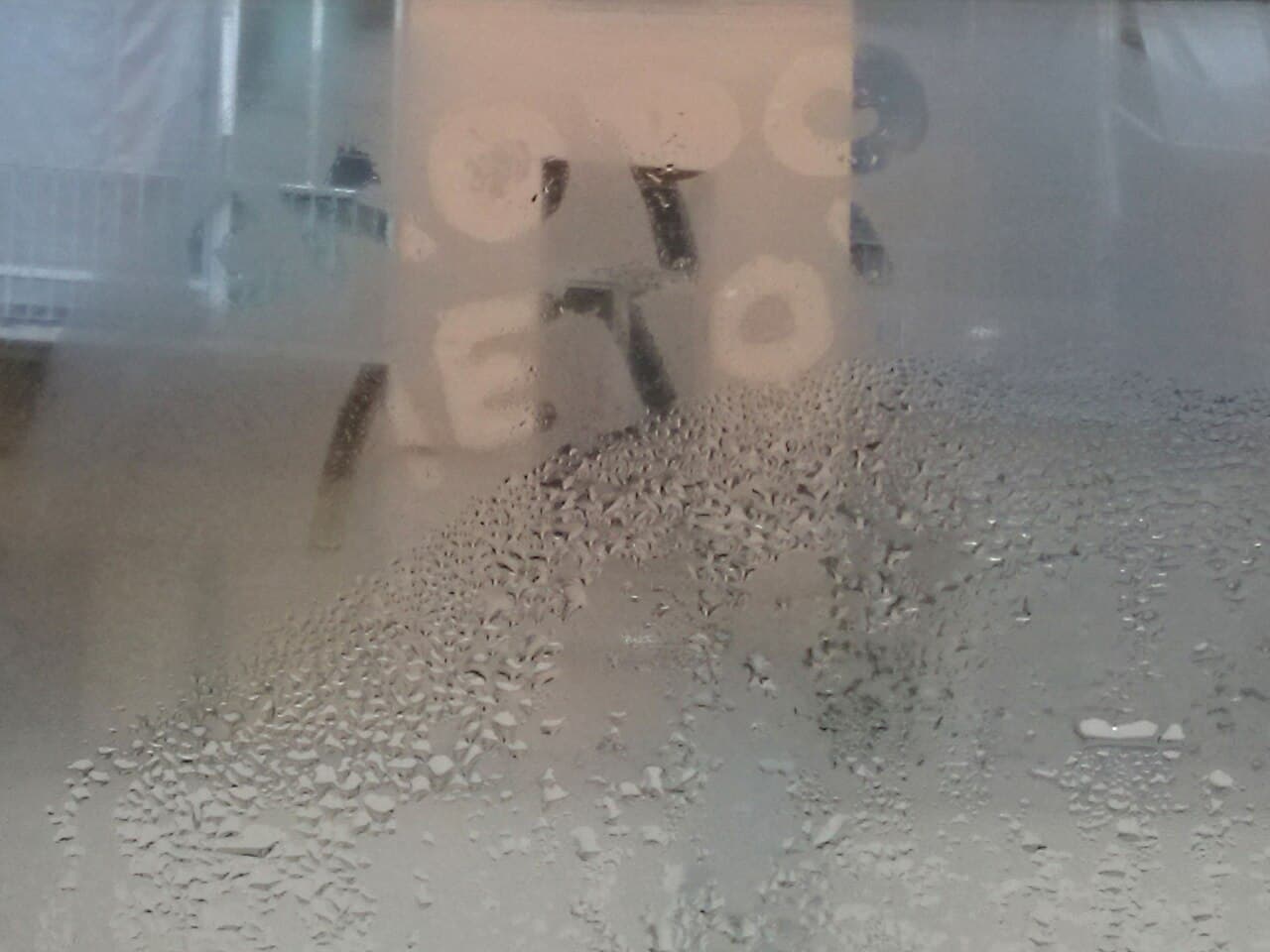
A hygrometer tells you how much moisture there is in the room's air. It is the first instrument to buy, because the most common cause of damp walls in Portuguese flats is condensation: water vapour turning into water on the coldest surfaces. A family of four puts about 10 L of water into the air every day through breathing, cooking, showers and drying clothes.
Measure at 7 am in the bedroom for a week. If relative humidity (RH) is above 65–70% most mornings, condensation is likely. If the air is at 50–55% and the wall is still dark and cold to the touch, the water probably comes from inside. The guide which hygrometer to buy explains how to check calibration with the salt test.
Pin or contact moisture meters: how to read the numbers
Material moisture meters push two pins into the plaster and measure electrical conductivity, or press a plate against the surface and measure capacitance. Most were calibrated for wood. On masonry they show a relative scale, often 0 to 100, which is not a percentage of water.
The biggest problem is salts. Efflorescence (salitre) conducts electricity far better than pure water, and plaster full of salts can give maximum readings while almost dry. So a pin meter on a salty wall «reading 100» proves neither rising damp nor a soaked wall.
Use it to compare, never to judge a single value:
- First measure a dry interior wall in the same home, at the same height. That is your reference value.
- On the stained wall, make a grid: points at 10, 50, 100 and 150 cm from the floor, every 50 cm horizontally.
- Write the values on a sketch of the wall and photograph it with the meter in place.
- Repeat the grid two or three weeks later, or after a few rainy days, at the same time of day.
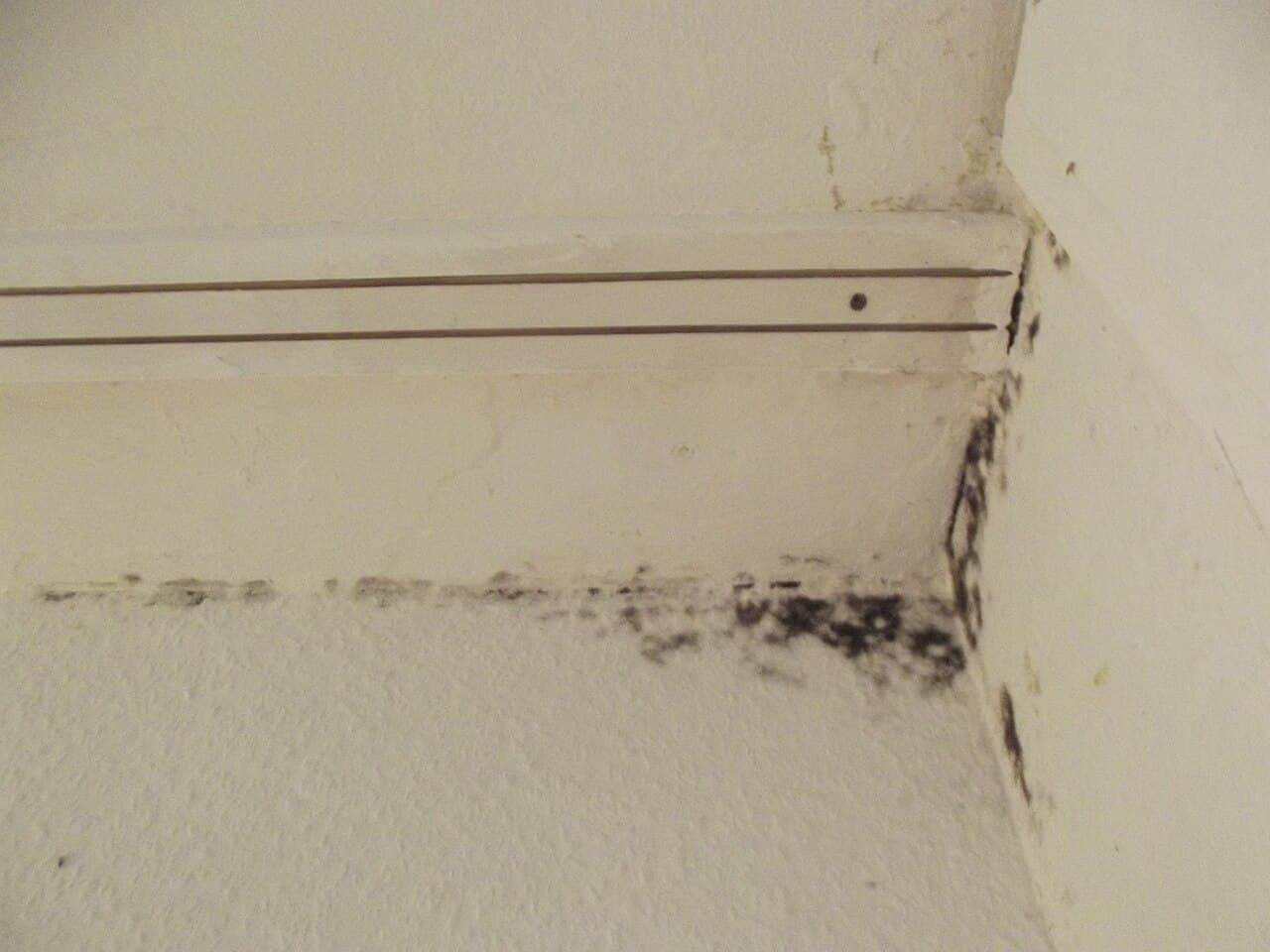
The resulting pattern is what matters. High values near the floor that fall with height point to rising damp. A stain with its peak in the centre that grows after rain points to water ingress or a leak. High values only in the upper corners and behind furniture, with a cold wall, point to condensation.
The carbide test: laboratory-grade measurement on site
When there are serious doubts, or work costing thousands of euros has been proposed, the reference measurement is the calcium carbide test. The technician drills into the wall and collects masonry dust at different depths. Each sample is weighed and sealed in a pressure vessel with calcium carbide, which reacts with the water and raises a pressure gauge. The result is the water content as a percentage of mass.
The big advantage is seeing water in depth, not just at the surface. A wall that is wet inside, with values that fall as you go up from the floor, is consistent with rising damp. A wall that is dry 5–10 cm deep but damp in the first few millimetres points to condensation or to hygroscopic salts drawing moisture from the air.
Samples can also go to a laboratory to measure water content by oven-drying, and the type and amount of salts. It is slower, but it is how you find out whether plaster must be replaced because of salts, even after the source of water has been dealt with.
Thermal cameras and infrared thermometers: they show temperature, not moisture
A thermal camera produces a colour image of the temperature of each point on the wall. It looks impressive in photos, but it does not see water: it sees cold areas. A wet area shows up cold because evaporating water cools the surface. A thermal bridge — a concrete column, the junction between floor slab and façade, the reveal of an aluminium window without a thermal break — also shows up cold without a drop of water in it.
So a thermal image is only worth something with context: indoor and outdoor temperature at the time, air humidity, time of day and confirmation by another method in suspect areas. An image without this data is an illustration, not a measurement.
An infrared thermometer does the same thing spot by spot, for a fraction of the price. Compare the wall temperature with the dew point of the air: at 18 °C and 75% RH in the bedroom, the dew point is ≈13.5 °C. If the corner is at 14 °C, it is in the zone where mould grows. The dew point calculator does the maths, and the infrared thermometer guide explains where to aim.
How to interpret the results
Combine the measurements with what you see. No single number decides the cause, but together they are usually clear:
| What you measured | Likely cause | Next step |
|---|---|---|
| RH above 70% at 7 am, cold corners near the dew point, pin meter high only at the surface | condensation | reduce vapour, ventilate, heat steadily |
| Band up to ~1 m, values falling with height, salts, ground floor or basement | rising damp | confirm with a carbide test before asking for quotes |
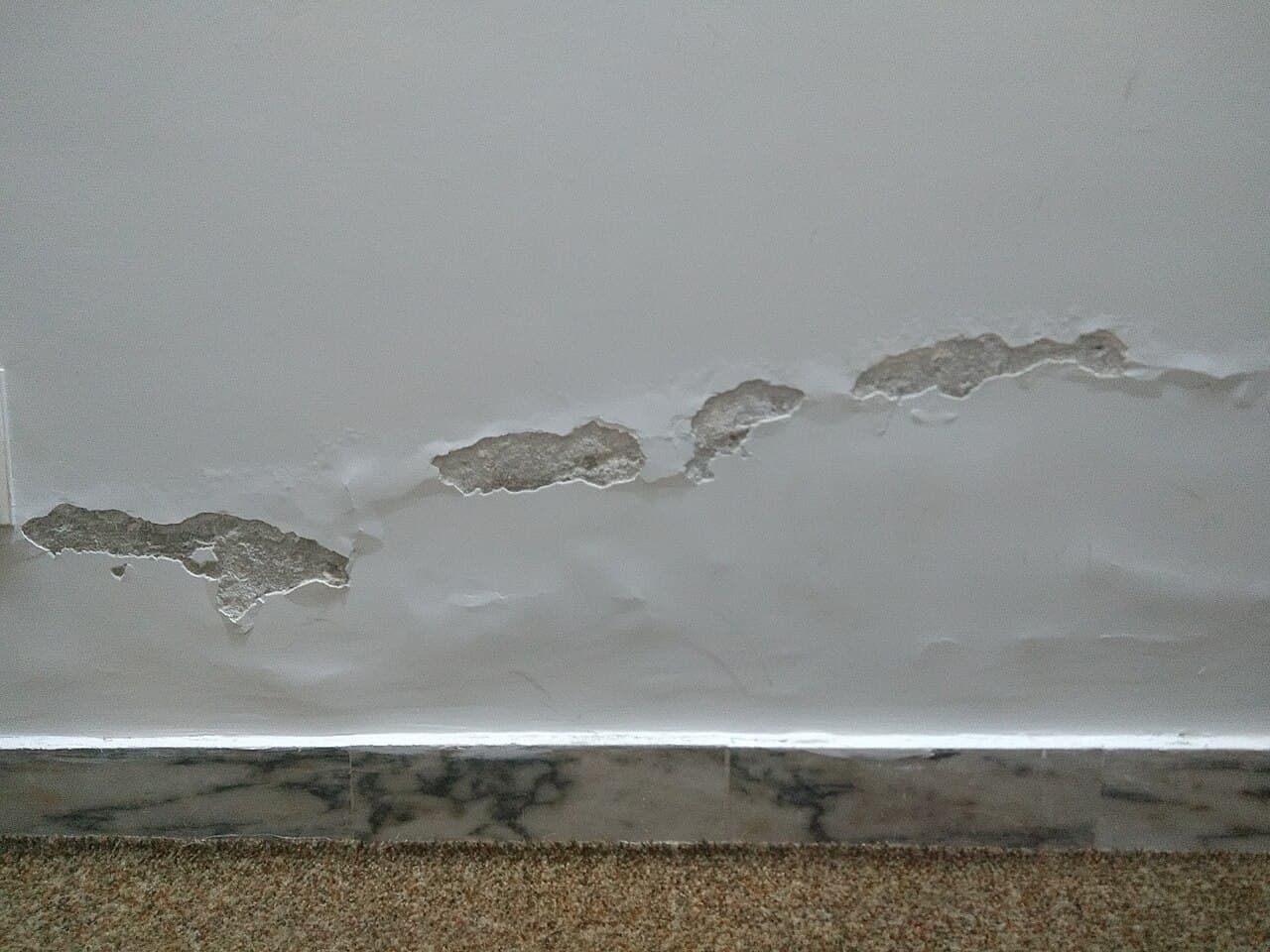
| Stain that grows after wind-driven rain, peak in the centre | water ingress | find where water gets in: façade, window frames, roof |
| Stain that grows every day, also in dry weather | plumbing leak | water meter test |
| Pins reading high wherever there are salts, dry air | hygroscopic salts | brush off the salts and measure again after a few dry days |
If the signs point in different directions, that is normal: some homes have two causes at once, such as condensation in the bedroom and rising damp in a ground-floor kitchen wall. The free diagnosis uses 12 questions to give each cause a probability and tells you when confidence is low and a technical visit is needed.
What a company should show you before proposing work
Many companies offer a free visit and sell their own system — the diagnosis and the work come from the same source. That is not necessarily bad, but it justifies asking for evidence. A serious technical visit leaves you, in writing:
- the instrument used and the method (pins, contact, carbide, thermal camera);
- the measured values with the location and height of each point, and the value of a dry reference area;
- air temperature and humidity at the time of the visit;
- thermal images, if any, with the temperature scale visible;
- the concluded cause and why the others were ruled out;
- for rising-damp treatments, the area in m² and, ideally, a carbide test or salt analysis.
If you already have a quote, the free second opinion checks whether the method and price per m² match the type of damp. The guide how to choose a damp company lists the questions to ask during the visit.
Frequently asked questions
There is no universal value. Each instrument has its own scale, each material responds differently and salts distort the readings. What matters is the difference from a dry wall in the same home, measured with the same instrument, on the same day and at the same height. A large, consistent difference indicates moisture; a single value with no reference tells you very little.
No. Phones have no sensors able to measure water inside a wall, and apps that promise to do so rely on weather forecasts or online data. There are thermal cameras that plug into a phone, but they measure surface temperature, not moisture. To start with, a ~€10 hygrometer and an infrared thermometer give you real information.
It makes small holes, usually the diameter of an ordinary drill bit, in a few chosen spots. They are then filled and, in most cases, barely visible after painting. If the wall is going to be treated and replastered anyway, the holes are irrelevant. Ask the technician to mark the points and the depth of each sample in the report.
It depends on thickness and material, but it is slow: thick old masonry walls can take many months to dry after the source of water has been dealt with. That is why it is worth repeating measurements every few weeks, with the same instrument and at the same marked points. A consistent fall is the best sign the treatment is working.
SOURCES
- Building physics: dew point (Magnus formula)
- Calcium carbide method for determining water content in building materials
- Prices observed on Google.pt and online shops, Oct 2026