How to choose a damp-proofing company: 12 questions, warning signs and documents
The 12 questions to ask at the visit, the warning signs, the documents to check and how to compare two quotes before you sign.

- Know the likely cause before the visit: condensation can almost always be fixed without building work or a treatment company.
- Insist on a written diagnosis with readings, an IMPIC licence, insurance and a quote with m² and price per m².
- Compare 2 quotes on the same basis (cause, area, scope, guarantee) and never sign on the day of the visit.
IN THIS GUIDE
How to choose a damp-proofing company without deciding under pressure
Choosing well starts before the visit: know which type of damp is likely, insist on a written diagnosis with measurements, check the company's documents and compare two quotes side by side. People who reach this stage informed rarely sign on the spot.
In Portugal, almost no damp treatment company publishes its prices, and the marketplaces contradict each other: one shows €4 to €50/m², another an average of €157.50/m². That opacity doesn't mean the companies are bad. It means the customer decides with very little information.
This guide gives you the questions, the warning signs and the documents to even out the conversation. We don't recommend or rank companies.
Do you actually need a company? Start with the cause
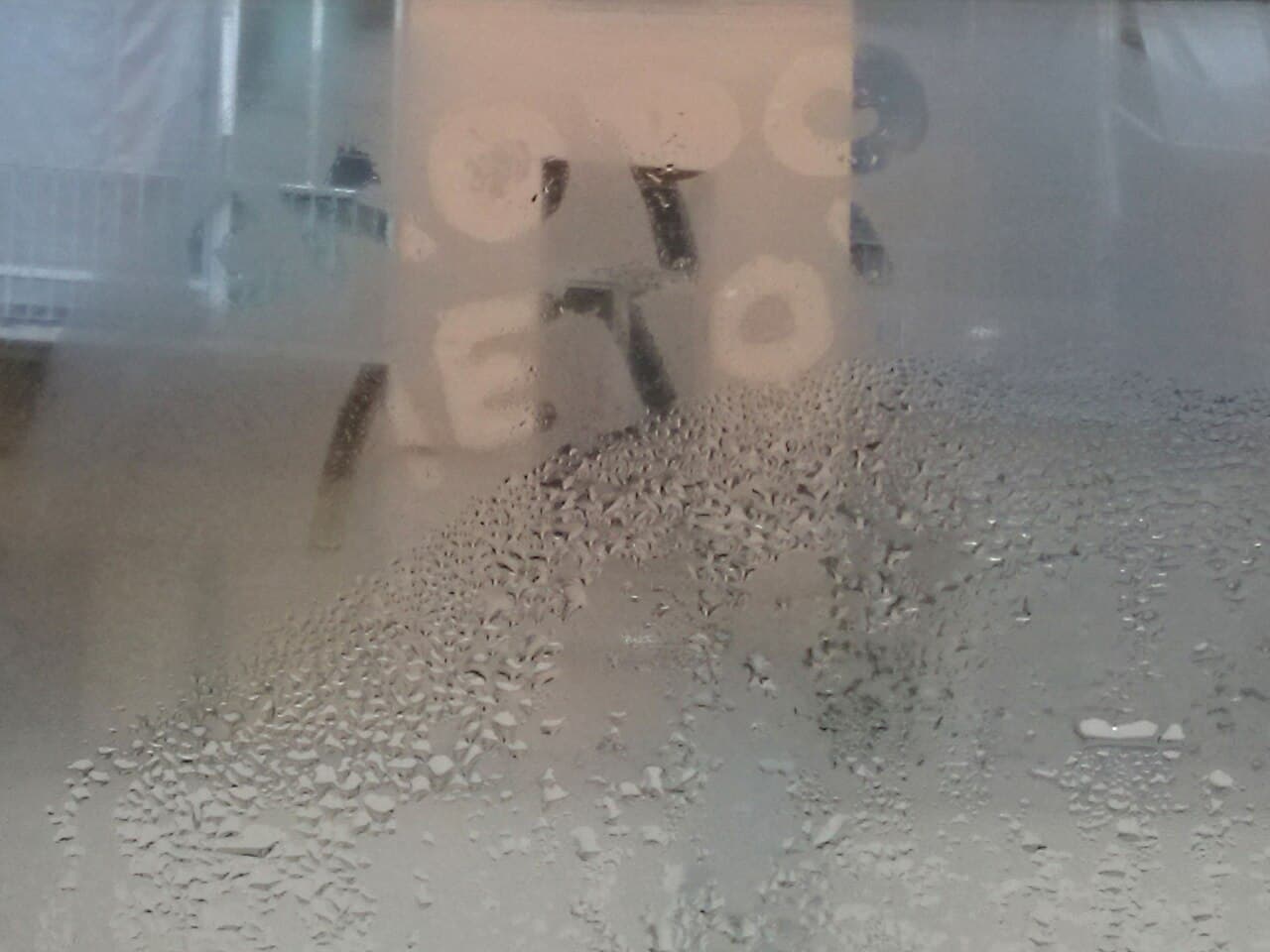
The three main causes — condensation, rising damp (moisture drawn up from the ground) and water ingress — need completely different solutions. Condensation, very common in flats, can almost always be fixed with ventilation, steady heating and habits, for €20 to €300, with no building work.
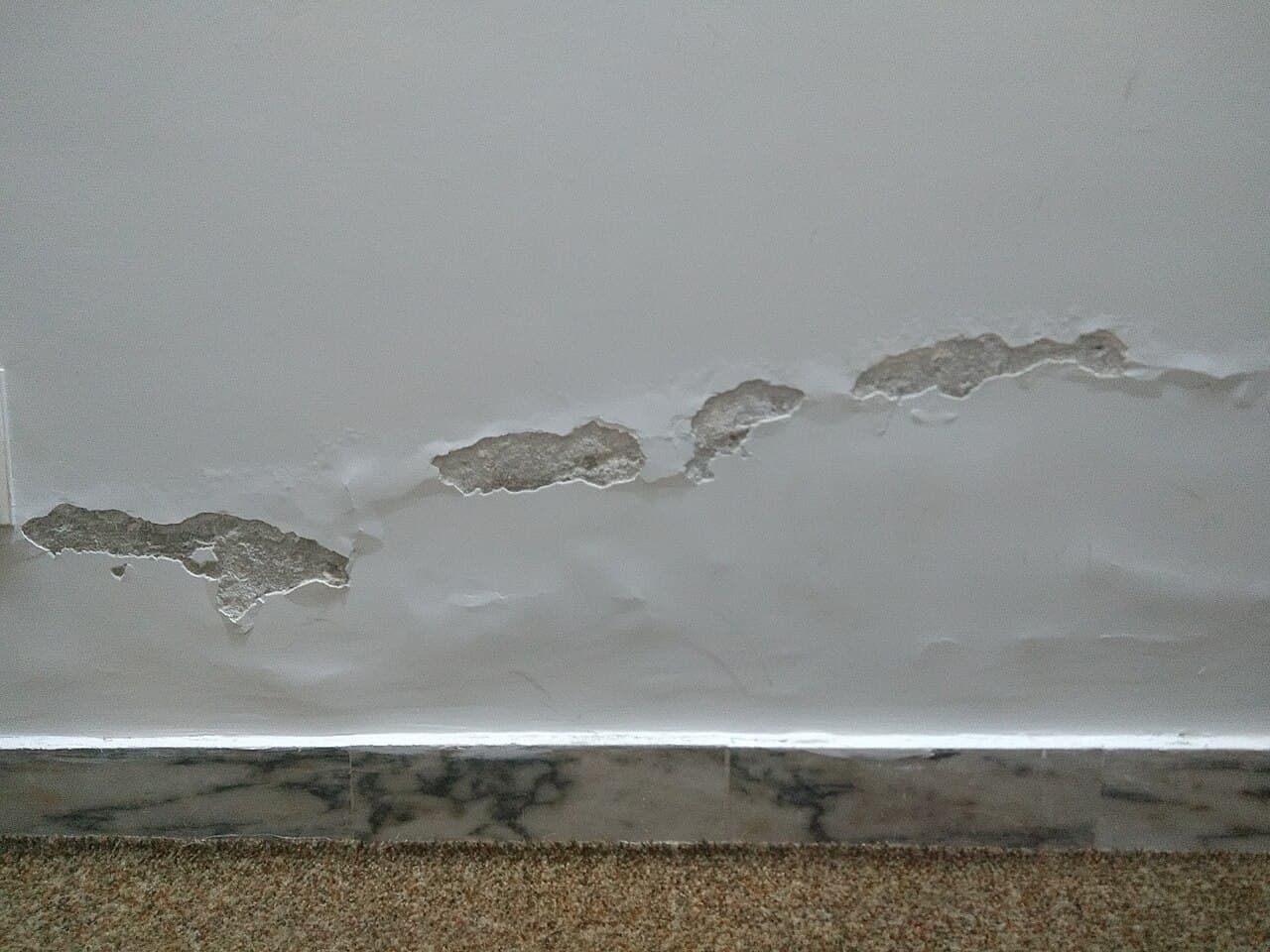
A specialist company makes sense mainly when there are signs of rising damp on a ground floor (rés-do-chão) or in a basement, or of water coming in through the façade, roof or terrace. If the stains are on a third floor, rising damp is practically impossible: ground moisture doesn't climb above the ground floor.
Before asking for quotes, take the free diagnosis: it has 12 steps and gives you the probability of each cause. If confidence is low, the result says so and recommends a technical visit. The guide to damp on walls helps you read the signs.
The 12 questions to ask at the technical visit
Take them printed or on your phone and write down the answers. A technician won't mind them; a salesperson tends to dodge questions 2, 3 and 8.
- What cause did you identify, and from which signs? (height of the stain, salts, link with rain or cold)
- What measurements did you take, with which instrument and at which points? Can you put them in writing, with the air temperature and relative humidity at the time?
- Did you rule out condensation? And a leak from pipes or from the neighbour upstairs? How?
- What exactly is the area to be treated, in m² or linear metres of wall?
- What is the price per m² (or per linear metre), and what is included in the total?
- Does it include stripping and redoing the plaster, with which material? And the painting and final clean-up?
- How long should the wall dry before it is replastered and painted?
- What exactly does the guarantee say — length, what it covers, what voids it — and can I read it before signing?
- Who honours the guarantee if the company closes or changes its name?
- Can you give me the contacts of 2 customers with similar work done more than 2 years ago?
- How long is the quote valid for? Will you hold the price if I get a second opinion?
- What is your contractor licence or certificate number, do you have public liability insurance and do you issue an invoice with VAT (IVA)?
Warning signs: when to stop the conversation
- The free visit always ends with the company's own system. Many companies visit for free and sell their own system — the diagnosis and the work come from the same source. It isn't illegal, but it is a conflict of interest to keep in mind.
- Pressure to sign the same day: «discount today only», «the team is in the area this week», «tomorrow the price won't be the same».
- A verbal-only diagnosis: nothing in writing, no readings, no photos of the points measured.
- A guarantee with no written conditions: «it's guaranteed for many years» said out loud, with no document stating what it covers, what it requires of you and what voids it.
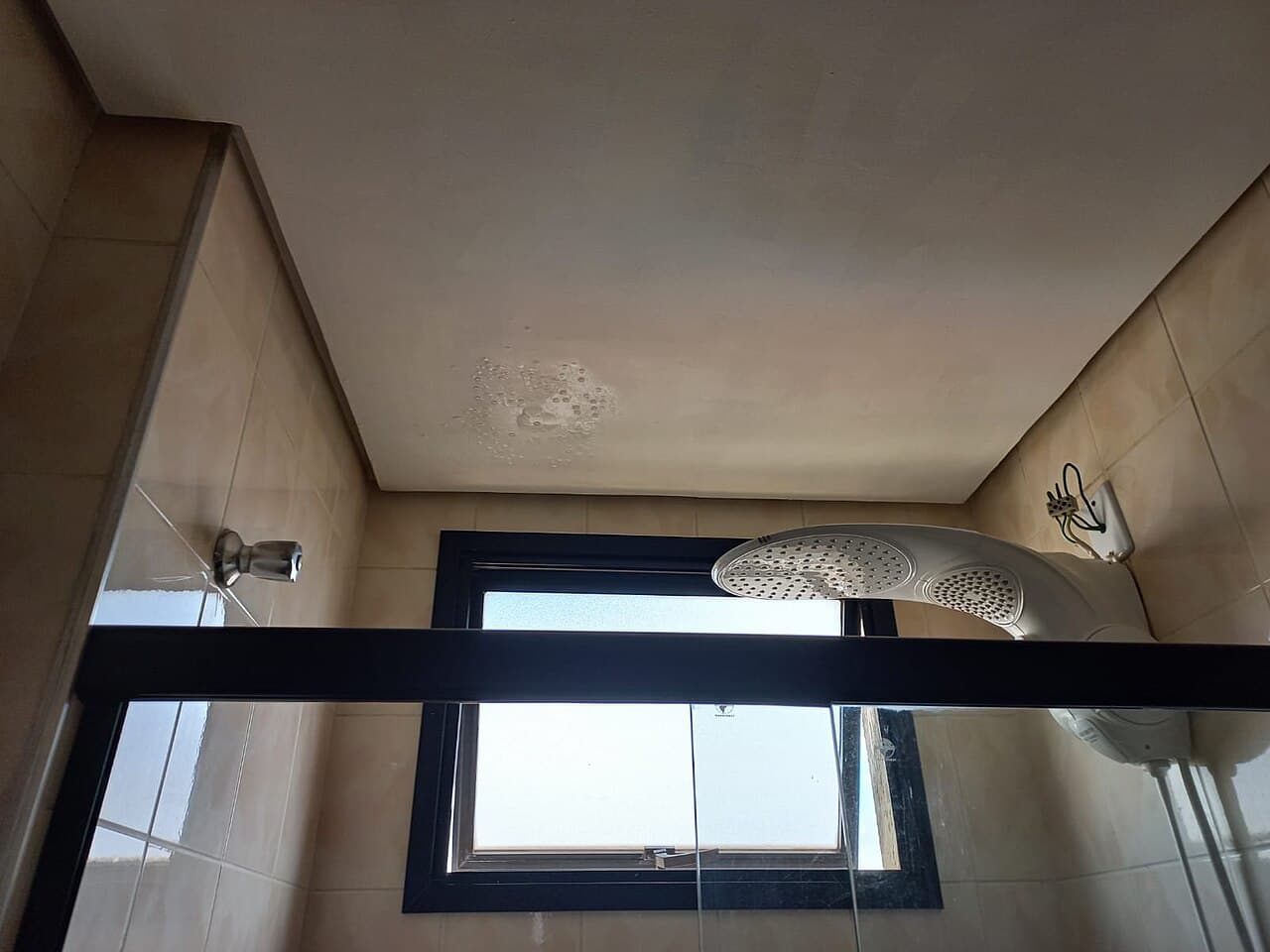
- The same treatment for every wall, whether the stain is at skirting level, on the ceiling or around the window.
- Only a lump sum, with no area and no price per m².
- A large deposit requested before any contract or quote is signed.
Documents to check before you sign
Five documents separate an organised company from an improvised one. Ask for them in writing or check them yourself.
| Document | What to confirm | How to check |
|---|---|---|
| Contractor licence or certificate (alvará / certificado de empreiteiro, issued by IMPIC) | That it exists, is valid and is in the name of whoever invoices; the type usually depends on the value of the work | Ask for the number and check it in IMPIC's public search |
| Company tax number (NIF) | That it is the same on the quote, the contract and the invoice | Compare the documents; be wary of invoices in a third party's name |
| Public liability insurance | That it is in force and covers damage caused during the work | Ask for the policy or an insurer's certificate |
| Written quote | Area in m², price per m², materials, plaster, painting, timescales, VAT | You should be able to redo the maths: m² × price/m² + extras = total |
| Guarantee terms | Length, what it covers, conditions (ventilation, maintenance), exclusions, who honours it | Read it before signing and attach it to the contract |
If the problem is in the common parts (façade, roof, roof terrace), the client is usually the condomínio (the owners' association), with costs split by each unit's share (permilagem). See the guide to damp in common parts.
How to compare two damp-proofing quotes
Comparing only the total is misleading. Put both quotes on the same basis: same cause, same area, same scope.
- Check that both identify the same cause. If one says rising damp and the other condensation, the problem isn't the price — it's the diagnosis.
- Work out the price per m² of each, even if they don't state it: divide the treatment cost by the area.
- See what is left out: stripping plaster, new plaster, painting, rubble removal, travel.
- Compare guarantees by their wording, not by the number of years.
- Compare drying times: painting the week after a damp-proof course is optimistic at best.
| Item | Quote A | Quote B |
|---|---|---|
| Stated cause | Rising damp, readings up to 1 m high | Rising damp, no readings |
| Method | Injections | The company's own «system» |
| Area | 14 m² | Not stated |
| Price per m² | €45/m² | Impossible to work out |
| Plaster and painting | Included, material stated | «To be agreed» |
| Guarantee | Written, with conditions and exclusions | Verbal |
In this hypothetical example, quote A is the only one you can actually assess, even if it isn't the cheapest. For reference, injections and electro-osmosis appear at €35–60/m² in observed prices; whole-house «systems» come in at €4,500–20,000 in customer reports. See how much injections cost and the comparison of injections vs electro-osmosis vs plaster.
During and after the work: keep evidence
- Photograph the walls before, during (with the plaster stripped) and after.
- Log the room's relative humidity and temperature with a hygrometer (about €10) for a few weeks before and after.
- Keep the quote, contract, invoice and guarantee terms together.
- If something goes wrong, contact the company in writing first. If there's no reply, use the Livro de Reclamações (the official complaints book), also available online.
Second opinion and independent diagnosis
If you already have a quote and aren't sure it makes sense, ask for a second opinion before signing. It is most useful when the amount is high, when the stated cause doesn't match the signs (ceiling stains blamed on rising damp, for example) or when you only received one quote. The guide to getting a second opinion on a damp quote explains what to send.
At humidade.pt the diagnosis is free. If you wish, and only with your explicit consent, your request goes to at most 2 partner companies covering your postcode. Companies pay per request received; none pays to appear first. It's all explained in how we make money.
Frequently asked questions
Two, ideally from companies with different approaches, are enough to see whether the diagnoses agree and whether the price is reasonable. With three or more, comparing gets confusing and your phone won't stop ringing. If the two diagnoses disagree on the cause, don't get a third quote: get an independent assessment, because the problem is the diagnosis, not the price.
It may be technically correct, but the person diagnosing is the person selling the treatment, which creates an incentive to find a problem their system solves. Treat it as one opinion. Ask for the readings in writing, check that condensation was ruled out and compare it with a second quote or an independent diagnosis before signing anything.
You can ask, and an organised company has no reason to refuse: area and unit price are the basis of any building quote. Without them you can't compare offers or check that the area invoiced at the end matches the area treated. If the company insists on a lump sum, ask at least for the area and what is included.
Gather photos, humidity logs and the guarantee terms, and contact the company in writing describing the problem and asking for a visit. If there is no reply or agreement, you can use the Livro de Reclamações (complaints book), on paper or online. For questions about your consumer rights, check with a lawyer or with DECO, the consumer association.
As a rule, anyone carrying out building work, including repairs, needs a permit issued by IMPIC: an alvará (licence) or a certificado de empreiteiro (contractor certificate), depending on the type and value of the work. Ask for the number and check it in IMPIC's public search. Be wary of anyone who can't answer or whose documents are in another entity's name.
SOURCES
- IMPIC — Portuguese institute for public procurement, real estate and construction: contractor licences and certificates
- Prices observed on Google.pt, cume.pt, Zaask and Habitissimo, Oct 2026
- Código Civil (Civil Code), arts. 1421 and 1424 (common parts of a building)
- Livro de Reclamações Eletrónico (official electronic complaints book)