Gas heaters and damp: the hidden problem
They give out heat, but also water vapour — and can give off carbon monoxide. Why they make condensation worse and what to use instead.
- Every kg of butane or propane burnt releases more than 1 kg of water vapour into the room: a 13 kg bottle is about 20 litres.
- Never use a gas heater in a bedroom while you sleep: besides the moisture, there is a carbon monoxide risk.
- Oil-filled radiators and heat pumps heat without adding vapour. Test the difference with a ~€10 hygrometer.
IN THIS GUIDE
Do gas heaters increase humidity at home?
Yes. A flueless gas heater — running on a butane or propane bottle, catalytic or infrared — burns the gas inside the room. The combustion products, including water vapour, stay in the air you breathe.
The chemistry is simple: butane and propane are made of carbon and hydrogen, and hydrogen turns into water when it burns. For every kilo of gas burnt, more than a kilo of water vapour is formed — by the combustion arithmetic, close to 1.5 kg. It is approximate physics, but the order of magnitude doesn't lie.
A 13 kg bottle, burnt to the end, releases about 20 litres of water into the air of your home. If it lasts two weeks, that is close to 1.5 L a day — on top of the roughly 10 L a family of 4 already produces by breathing, cooking, showering and drying clothes.
Why water appears on the windows and in the corners
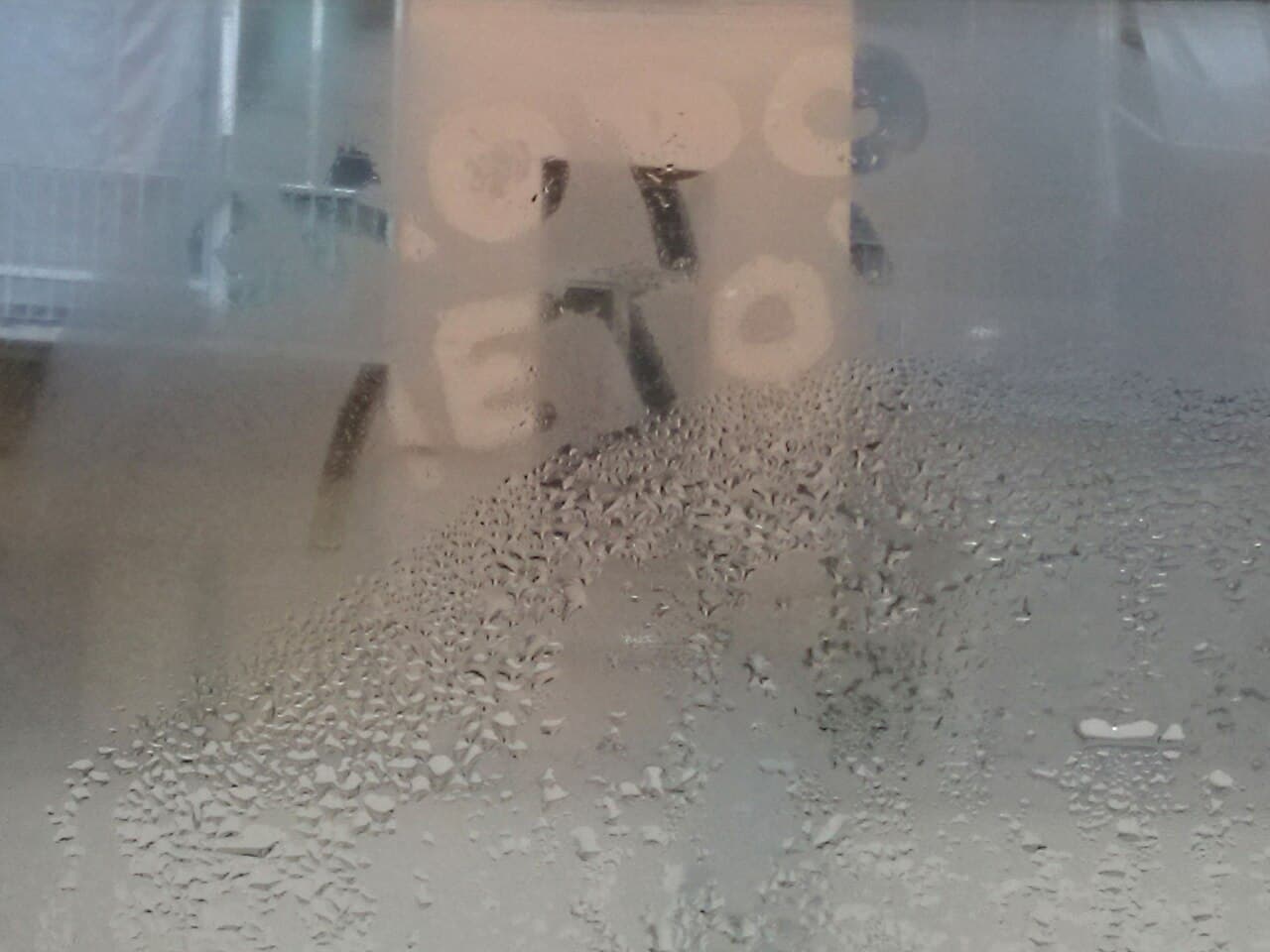
Warm air holds more vapour than cold air. While the heater is on, the room feels comfortable; when that air touches a cold surface — single glazing, an aluminium frame, the corner of an exterior wall — it cools below the dew point and the water is deposited.
Example: at 18 °C and 75% relative humidity, the dew point is about 13.5 °C. On a January night, the wall of an uninsulated 1970s building can drop below that temperature near the corners and around the windows. You can do the maths for your home with the dew point calculator.
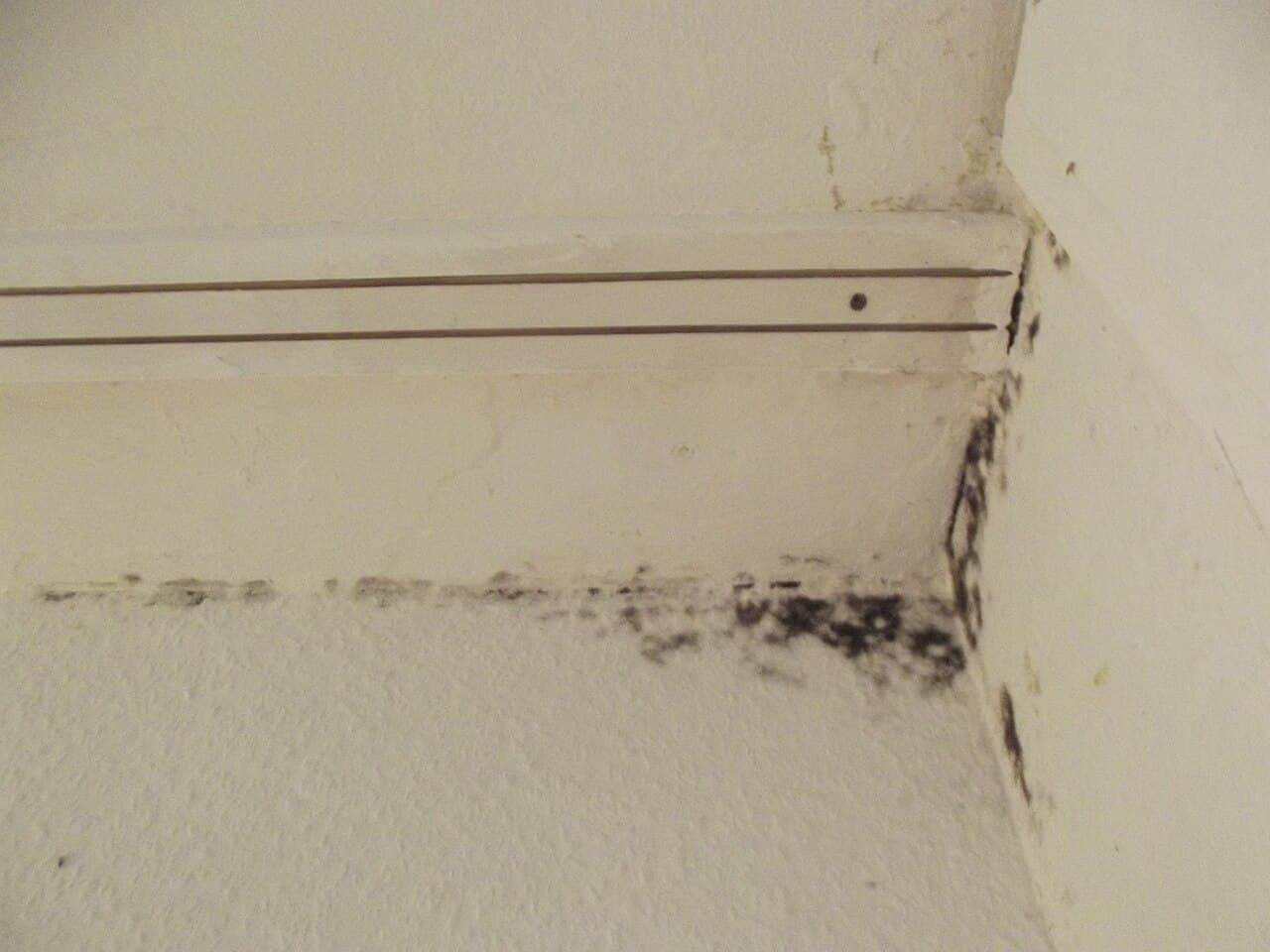
Even without visible droplets, if the surface stays above about 80% humidity for days, mould sets in. It is the classic picture of condensation: black spots behind the wardrobe, on the ceiling next to the façade and in the window sealant, worse on winter mornings.
Why the problem is so common in Portuguese homes
About 70% of homes in Portugal were built before thermal insulation rules, that is, before 1990. Cold walls, aluminium frames without a thermal break and single glazing give the heater's water cold surfaces everywhere to settle on.
At the same time, the cold indoors is real: 63.2% of Lisbon residents report thermal discomfort in winter. A gas bottle is easy to buy and to move from room to room, so it is often the first solution — especially in rented homes with no heating installed.
The outdoor air doesn't help either: in Lisbon, in January and February, relative humidity outside reaches 90–100%. Even so, airing is worth it, because that cold air, once warmed indoors, ends up with a much lower relative humidity. The air just needs to be renewed regularly, not occasionally.
The risk you can't see: carbon monoxide
Combustion also uses up the oxygen in the room. If it is incomplete — a badly adjusted or dirty appliance, poor ventilation, a small room — it produces carbon monoxide (CO), a gas with no smell or colour.
A battery-powered carbon monoxide detector in the room where you use the heater is a useful extra. It doesn't replace ventilation: it is an alarm for when something has gone wrong, not a licence to close the window.
If you use a gas heater: ventilation and safety rules
Many Portuguese homes have no immediate alternative, especially rented ones. If the gas heater is going to stay, these rules reduce both the moisture and the risk:
- Keep a permanent air inlet: a window slightly open or an unobstructed ventilation grille.
- Use it in larger rooms and for short periods, to warm up quickly — never all night.
- Don't use it to dry clothes: that puts two sources of vapour in the same room. See how to dry clothes indoors with less damp.
- Check the hose and the regulator: the hose has an expiry date printed on it and should be replaced when it expires or if it is cracked.
- After switching it off, air the room for 5–10 minutes to clear the built-up vapour.
- Follow the manufacturer's instructions on cleaning and servicing the appliance.
Note that airing removes water but also heat. That is the price of using a heat source that produces vapour — and one of the reasons other forms of heating pay off in the medium term.
Alternatives to a gas heater
Any electric heating — or heating that vents its fumes outside — warms the room without adding vapour to the air. It doesn't dry the house by itself, but it stops adding water to the problem.
| Heating | Water vapour in the room | CO risk in the room | Running cost (indicative) |
|---|---|---|---|
| Flueless gas heater | Yes, a lot | Yes | Depends on the bottle price |
| Electric oil-filled radiator | No | No | High per hour; gentle, steady heat |
| Fan heater or convector | No | No | High; useful for short bursts |
| Heat pump / air conditioning | No | No | As a rule, the lowest per unit of heat |
| Wood burner or fireplace with chimney | No, with a good draught | Low, if well installed and maintained | Variable |
Costs depend on your electricity tariff and the bottle price, so the comparison is only qualitative. A heat pump, as a rule, delivers several units of heat for every unit of electricity it uses, so it is usually the cheapest to run — although it needs an upfront investment.
In a rented home, installing air conditioning needs the agreement of the senhorio (landlord) and, in many buildings, permission from the condomínio (owners' association) because of the façade. See what you can ask for under tenants.
How to measure the heater's effect in your home
You don't have to take our word for it: a hygrometer of about €10 shows the effect in two evenings.
- One night, heat the living room with the gas heater for two hours and note the relative humidity before and after.
- The next night, do the same with an electric heater, with doors and windows in the same position.
- The morning after each test, check the state of the glass and the frame.
If humidity climbs to around 70% with gas and stays at 50–60% with electric, you know where some of the water comes from. The indoor target is 40–60% — more in ideal humidity at home.
If humidity is still above 70% in the morning without gas, there are other sources or ventilation is lacking. Take the free diagnosis: better airing may be enough, or you may need a dehumidifier.
Frequently asked questions
Not per kilo of gas. The amount of vapour depends on how much butane or propane is burnt, not on the type of burner: catalytic, infrared or flame, they all turn the hydrogen in the gas into water. An appliance may burn less gas per hour and so release less vapour in that time, but the principle is the same. You still need ventilation.
You can, and the dehumidifier will remove some of the water the heater releases. But it doesn't remove carbon monoxide or restore oxygen, so ventilation is still essential. In practice you are spending electricity to remove water another appliance has just produced; in that scenario, electric heating may make more sense.
Yes. Heating paraffin (kerosene) is also a fuel containing hydrogen and, when burnt inside the room, it releases water vapour and combustion gases. The rules are the same as for gas heaters: a permanent air inlet, short periods of use, never in a bedroom while sleeping, and servicing according to the manufacturer's instructions.
If properly installed, with a flue venting outside, the combustion products leave through the flue and don't stay in the home. The problem is appliances without a flue. Even so, check that the flue is clear and the servicing is up to date, because poor venting brings back the carbon monoxide risk.
In cooling or dry mode it removes water from the air and drains it through the condensate pipe. In heating mode it doesn't remove water, but it doesn't add vapour either: relative humidity falls because the air warms up, although the amount of water in the air stays the same. Even so, it is a big difference compared with a gas heater.
SOURCES
- Building physics: dew point (Magnus formula)
- Combustion chemistry of butane and propane (stoichiometry)
- WHO — Guidelines for indoor air quality: dampness and mould (2009)
- WHO — Guidelines for indoor air quality: selected pollutants (2010)