Damp-proofing companies in Lisbon: what to check before you hire
No paid rankings: when you really need a company in Lisbon, what to check for each type of building and what the most common jobs cost.
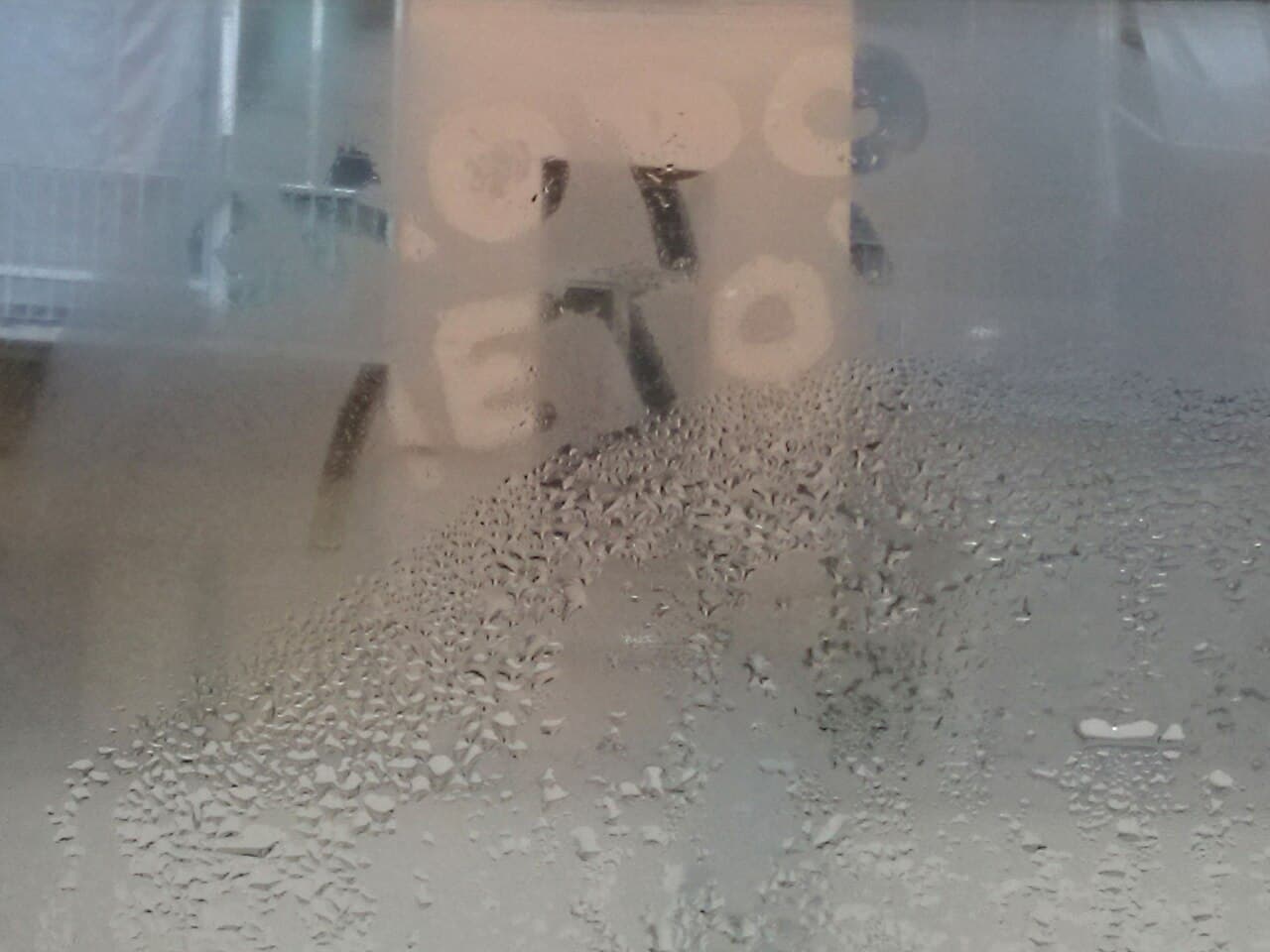
- In many Lisbon flats the likely cause is condensation, with outdoor RH of 90–100% in January and February — no building work needed.
- A company makes sense for water coming through roofs and terraces and for rising damp in old ground floors, such as in the Baixa.
- Through humidade.pt, and only with your consent, your request goes to at most 2 partners covering your postcode.
IN THIS GUIDE
Do you need a damp-proofing company in Lisbon?
It depends on the type of building and where the stain is. In many Lisbon flats, especially in 1960s–80s blocks, the most likely cause is condensation — and then a damp treatment company is rarely the answer. A company makes sense when water is coming in through roofs, terraces or façades, or when there is rising damp on an old ground floor (rés-do-chão).
This guide does not list, recommend or rank companies. It explains what is different in Lisbon, what to check before hiring and how requests made through this site work.
Before calling anyone, take the free diagnosis. In a few minutes you'll know whether your case points to condensation, rising damp or water ingress — and whether you need a technical visit.
What type of building do you live in? Typical damp in Lisbon's housing stock
Lisbon mixes buildings from very different periods, and each period has its weak points. About 70% of homes in Portugal were built before thermal insulation rules (1990), and Lisbon is no exception.
| Building type | Where it's common | Most likely cause | Who usually fixes it |
|---|---|---|---|
| Pombalino (rebuilt after 1755) | The Baixa and nearby areas | Rising damp on the ground floor; water through old roofs | A company experienced with old buildings; the condomínio for common parts |
| Gaioleiro (late 19th – early 20th century) | Neighbourhoods of that period, such as the Avenidas Novas | Water through façades, windows and roofs; condensation | Check façade and roof before touching the inside |
| 1960s–80s blocks | Expansion neighbourhoods and surrounding municipalities | Condensation: cold walls, aluminium frames without thermal break | Often the residents themselves; PIV (VMI) if it persists |
| Top floor with a flat roof terrace | Buildings of all periods | Water through the roof | The condomínio (common part) |
In pombalino buildings the internal structure includes timber (the so-called gaiola, or cage). If the damp is old and persistent, ask the company to assess the visible timber too and say whether a structural engineer is needed.
Winter in Lisbon: why condensation dominates in flats
Lisbon is known for its mild climate, but in January and February outdoor relative humidity reaches 90–100% on many days. 63.2% of Lisbon residents report thermal discomfort in winter. Cold, under-heated homes with aluminium window frames without a thermal break are the classic setting for condensation.
An example: at 18 °C and 75% relative humidity in a bedroom, the dew point is about 13.5 °C. The corner of a poorly insulated outside wall can drop below that before dawn, and two people sleeping release 0.5–1 L of water per night. You can check your own case with the dew point calculator.
If the mould appears in ceiling corners and behind furniture and the windows are wet in the morning, be wary of a quote for building work. Start by airing every day, heating steadily and, if needed, using a dehumidifier. If that isn't enough, PIV (positive input ventilation, VMI in Portuguese) in a flat costs around €800–2,500 (estimate). See condensation damp and how much PIV costs.
Roofs, terraces and old ground floors: when a company makes sense
If you live on the top floor and the ceiling stain grows after rain, water coming through the roof or terrace is most likely. In an apartment building the roof is, as a rule, a common part (Código Civil (Civil Code), art. 1421): the work is decided at the owners' meeting and paid by the owners according to each unit's share (permilagem). See the condomínio guide (building management / owners' association).
On old ground floors in the Baixa and other historic neighbourhoods, the masonry walls are in direct contact with the ground. A damp band up to about 1 m high, with salts and crumbling plaster, all year round, suggests rising damp. Here a company is needed, and the method should be justified with readings.
What to check in a damp-proofing company in Lisbon
- The basics, as in any city: a contractor licence or certificate (alvará / certificado de empreiteiro, issued by IMPIC), tax number (NIF), public liability insurance and a written quote with the area in m² and the price per m².
- Experience with your type of building: treating a pombalino masonry wall is not the same as treating a 1970s concrete block. Ask for examples of similar jobs.
- Permits and municipal rules: façade work or work in historic areas may have extra rules. Ask who handles them and check with the Câmara Municipal (city council).
- Itemised logistics: on narrow streets and in buildings without a lift, scaffolding, parking and rubble removal can add up. Ask for them on separate lines.
- If you rent: maintenance work is, as a rule, the landlord's (senhorio) responsibility (art. 1074). Talk to them in writing before getting quotes — see tenants.
The 12 questions, the warning signs and the documents are in the guide on how to choose a damp-proofing company.
How much does damp treatment cost in Lisbon?
There are no reliable price statistics by city, and we won't make them up. The ranges below are national, observed in searches and customer reports in October 2026.
| Job | Observed range | Typical situation in Lisbon |
|---|---|---|
| DIY condensation fixes | €20–300 | Flat with mould in the corners and wet windows |
| PIV (VMI) in a flat | ≈ €800–2,500 (estimate) | Condensation that persists despite good habits |
| Terrace waterproofing | €28–45/m² | Water coming in on the top floor |
| Injections or electro-osmosis | €35–60/m² | Rising damp on an old ground floor |
| Leak detection | From a few hundred euros | A stain unrelated to rain or cold |
| Whole-house «systems» | €4,500–20,000 (customer reports) | Always get a second opinion |
How humidade.pt routes requests in Greater Lisbon and Setúbal
The diagnosis is free. At the end, if you want a quote, you can ask for one — and only with your explicit consent does the request go to at most 2 partner companies covering your postcode, whether in Lisbon, the surrounding municipalities or the Setúbal peninsula.
We require partner companies to hold a contractor licence or certificate, insurance and a written guarantee. They pay per request received, not for position: there is no paid placement. The details are in how we make money; if you represent a company in the region, see for companies.
If you already have a quote in hand, you can ask for a second opinion before signing.
Frequently asked questions
It depends on where the problem starts. If water comes through the roof, the façade or shared pipes, these are, as a rule, common parts and the costs fall on the owners according to their share, the permilagem (Código Civil (Civil Code), arts. 1421 and 1424). If the cause is inside your unit, such as condensation or your own pipe, the cost is yours. If in doubt, check with a lawyer.
Before that, tell your landlord (senhorio) in writing, with photos and dates. Maintenance work is, as a rule, the landlord's responsibility, but if the cause is condensation linked to how the home is used, the conversation is different. Taking the diagnosis helps you understand the likely cause and support your request. Urgent repairs have their own legal rules: check with DECO.
With condensation it often helps a lot. A 10–12 L/day compressor model costs from about €90 and can keep a room between 40% and 60% relative humidity if you use it with the door closed. It won't fix water ingress or rising damp, and it doesn't replace airing the home every day.
Many do, in Lisbon as elsewhere in the country. The point to bear in mind is that, in that model, the diagnosis and the work come from the same source. Make use of the visit, but ask for readings and conclusions in writing, check that condensation was ruled out and don't sign on the day. Compare with a second quote.
SOURCES
- Building physics: dew point (Magnus formula)
- Código Civil (Civil Code), arts. 1074, 1421 and 1424
- Prices observed on Google.pt, cume.pt, Zaask and Habitissimo, Oct 2026
- IMPIC — contractor licences and certificates