Damp-proofing companies in Porto: what to check before you hire
Granite houses, «ilhas» and rainy winters: how to tell water ingress from rising damp in Porto and what to ask a company.
- Porto gets considerably more rain than Lisbon: check that the company tested for water coming through the façade or roof.
- Log the stain for 3–4 winter weeks: if it grows after rain, injections on the inside won't fix it.
- In granite houses, ask which plaster will be used and why, and get the justification in writing.
IN THIS GUIDE
What to check in a damp-proofing company in Porto
Porto gets considerably more rain than Lisbon, and the Atlantic winter puts façades, roofs and window frames to the test. So before accepting a treatment, check that the company tested for water ingress — not just rising damp or condensation.
A good quote explains the cause with readings, links the stain to rain (or rules that link out) and deals with where the water comes from, not just the damaged plaster. We don't list or rate companies: this guide helps you ask the right questions.
Start with the free diagnosis. One of the questions is exactly whether the stain gets worse with rain — and that answer weighs heavily in the result.
Granite houses, «ilhas» and apartment blocks: what's different in Porto
- Granite masonry houses in the historic centre and older neighbourhoods: thick walls with joints where rain can get in when they deteriorate, and ground floors in direct contact with the soil.
- «Ilhas»: clusters of small one- or two-storey houses built as workers' housing, often behind other buildings. Little ventilation, little sun and walls against the ground can combine condensation and rising damp in the same room.
- Narrow, deep houses with a skylight over the stairs: the skylight (claraboia), the roof and the gutters are classic entry points for water.
- Tile-clad façades, common on the city's older buildings: loose tiles or open joints let water in behind the cladding, and the stain may appear indoors far from where the water enters.
- 1960s–80s blocks: as in the rest of the country, condensation in cold bedrooms with aluminium frames without a thermal break.
Older houses often have more than one cause at once, and treating only one leaves the job half done. See the guide to damp in older homes.
Water ingress or rising damp? The rain test
The question that saves the most money in Porto is simple: does the stain get worse after it rains? Answer it with records, not memory. In a Porto winter, a few weeks are usually enough to see a pattern.
- For 3–4 winter weeks, photograph the stain from the same spot, with the date.
- Note the days of heavy rain and wind.
- If you have a hygrometer (about €10), log the room's relative humidity at 7 a.m.
- Compare: does the stain grow a day or two after rain? Does it stay the same all year? Does it get worse with cold, rain or no rain?
| What you see | Most likely cause | Type of work |
|---|---|---|
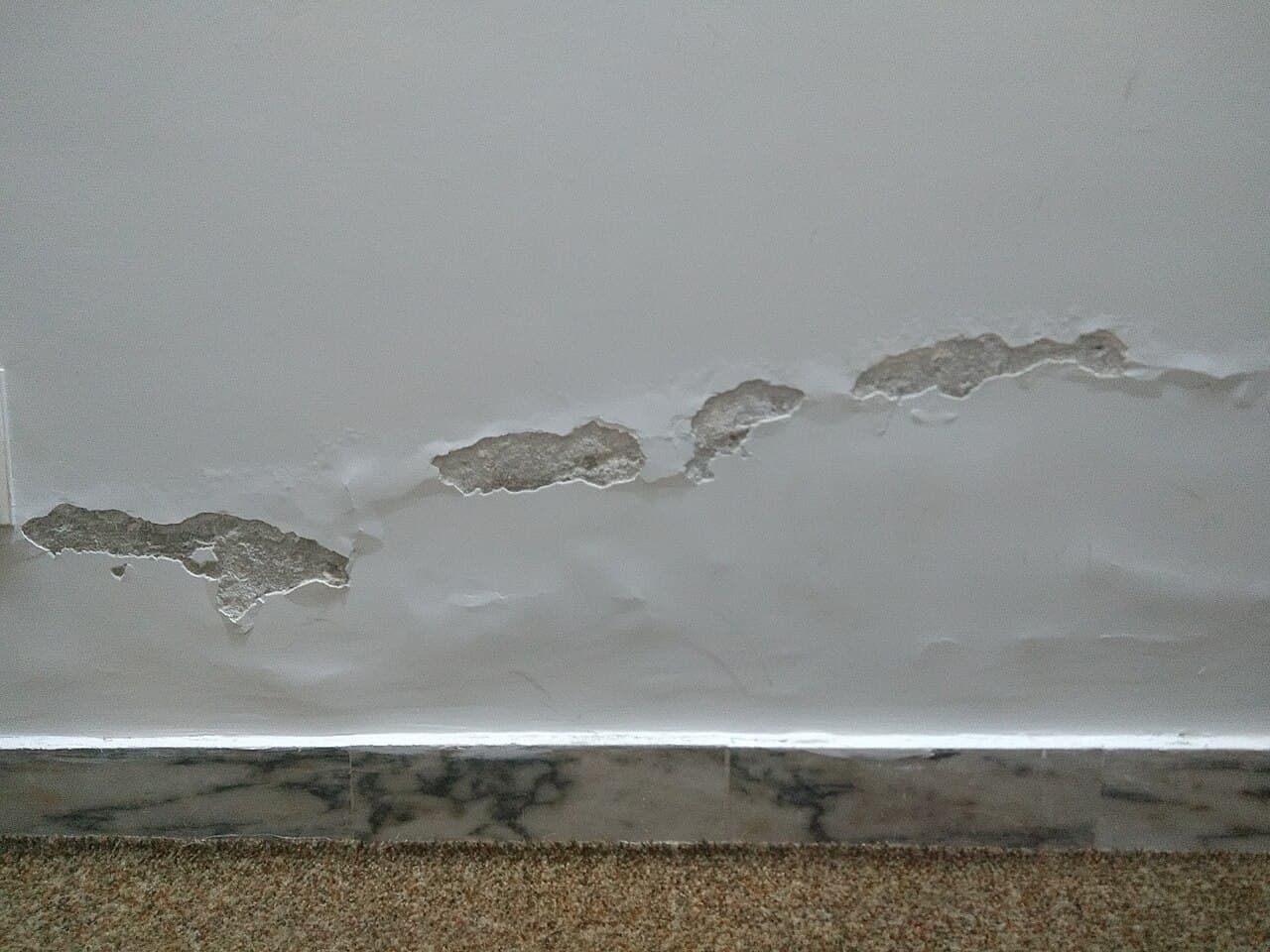
| Stain grows after wind-driven rain, on an outside wall | Water through the façade | Joints, external render, window frames, flashings |
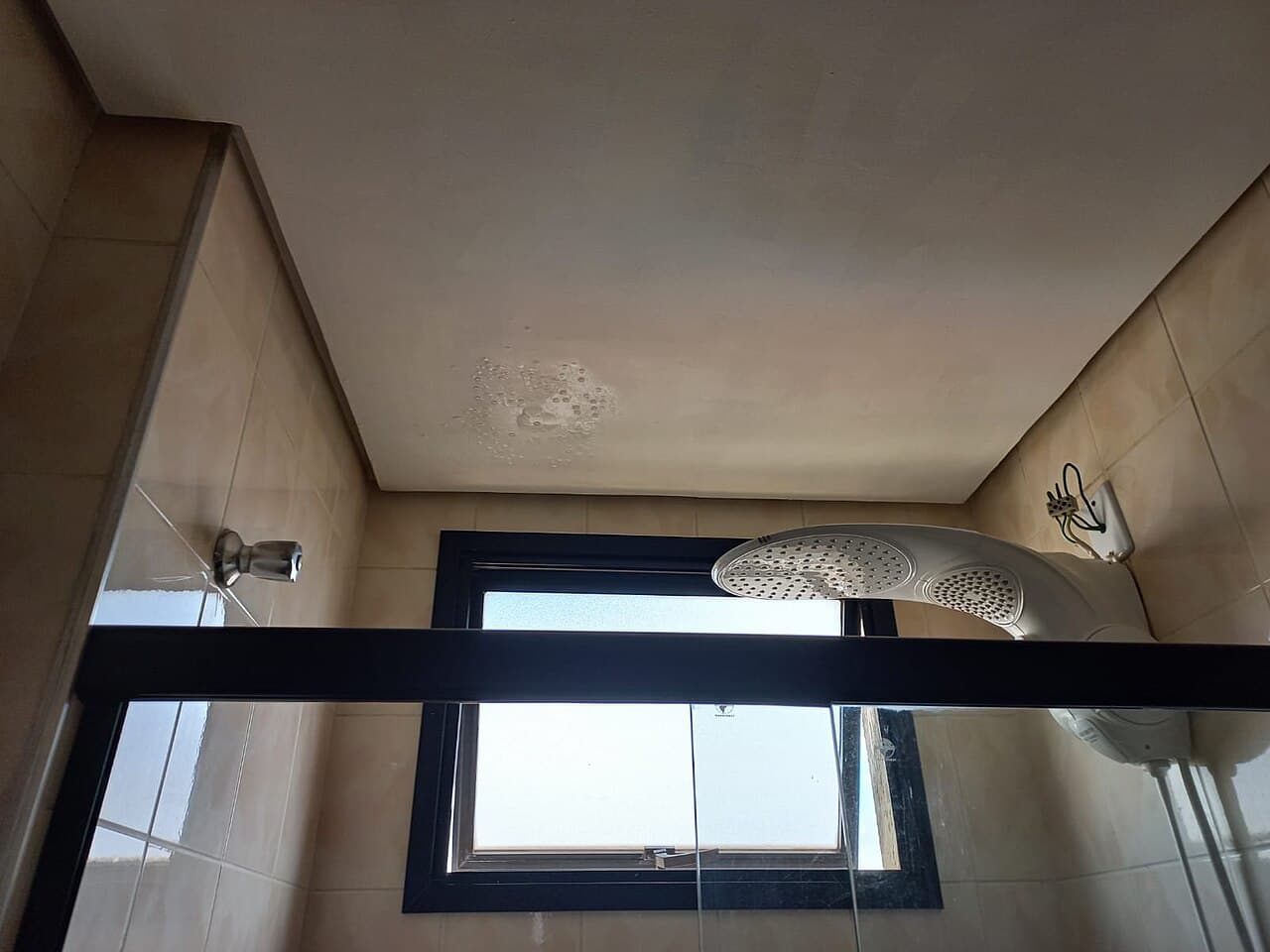
| Top-floor ceiling or area around the skylight worsens with rain | Water through the roof | Roof, gutters, skylight (a common part in a block) |
| Band up to about 1 m on the ground floor, with salts, all year | Rising damp | Damp-proof course and suitable plaster |
| Upper corners, wet windows in the morning, worse in cold weather | Condensation | Ventilation and habits; no building work in most cases |
Read more about water ingress and rising damp.
Granite walls: questions about materials
Granite itself is not very porous, but an old wall isn't just stone: it has mortar joints and infill, and that is where water moves. Over the decades, many were plastered or painted with materials that make drying harder.
Ask the company which plaster it will use and why. Cement plasters and low-permeability paints on old masonry can trap moisture in the wall; lime mortar is often recommended. It isn't an absolute rule, but the choice should be justified in writing.
Also ask for the quote to separate the outside work (joints, render, façade painting) from the inside work. If water is getting in from outside, redoing only the inside plaster means paying twice: the stain returns the following winter.
Specific questions for a company in Porto
- Is the stain related to rain? How did you reach that conclusion?
- Did you inspect the façade, joints, flashings and window frames from the outside — or only the wall from inside?
- If the cause is the roof or façade of an apartment block, should the work be the condomínio's (owners' association)? Can you quote the condomínio directly?
- On a granite ground floor, which damp-proof course method do you propose, at what price per m², and which plaster do you apply afterwards?
- Does the guarantee cover the stain coming back after a rainy winter?
As a national reference, injections and electro-osmosis appear at €35–60/m² in observed prices. The documents to check (IMPIC licence or certificate, tax number, insurance, guarantee) and how to compare two quotes are in the guide on how to choose a damp-proofing company.
How requests through humidade.pt work in Greater Porto
The diagnosis is free and you don't need to leave any contact details to see the result. If you want a quote, and only with your explicit consent, your request goes to at most 2 partner companies covering your postcode — in Porto, Gaia, Matosinhos, Maia, Gondomar or another municipality in the area.
We require partners to hold a contractor licence or certificate, insurance and a written guarantee. They pay per request received; none pays to appear first. We explain the model in how we make money. Companies in the region can see for companies.
If you've already received a quote and have doubts, ask for a second opinion.
Frequently asked questions
As a rule, the façade is a common part of the building (Código Civil (Civil Code), art. 1421). Maintenance costs are split among the owners according to their share, the permilagem (art. 1424), and the work is decided at the owners' meeting. If water is already damaging your unit, notify the building administrator in writing, with photos. For specific cases, check with a lawyer.
Not always. If water enters through open joints, cracks, flashings or window frames, paint may not reach those points. On old masonry walls, very low-permeability coatings can even make drying harder and worsen damp inside. Ask the company to identify where the water is getting in before proposing any coating.
It often improves a lot, but rarely with a single job. These small houses usually combine condensation, from poor ventilation, with rising damp in walls against the ground. Ventilating, heating steadily and dealing with rainwater around the house come first; treating the walls should be decided after a technical visit with readings.
It depends on the work. Simple interior jobs may not need one, but work on façades and roofs, especially in the Historic Centre, a UNESCO World Heritage Site, may be subject to rules and prior approval by the Câmara Municipal (city council). Ask the company who handles it and check directly with the planning department before starting.
SOURCES
- Código Civil (Civil Code), arts. 1421 and 1424 (common parts of a building)
- IMPIC — contractor licences and certificates
- Prices observed on Google.pt, cume.pt, Zaask and Habitissimo, Oct 2026