Damp in older homes (built before 1990): what to expect
Around 70% of Portugal's housing stock was built before insulation rules. What's normal, what's a warning sign and where to start on a tight budget.
- Around 70% of homes in Portugal predate 1990 and insulation rules: cold walls and some condensation are to be expected.
- Cement renders and plastic paints on stone walls trap water. An old wall needs to be able to dry out.
- On a tight budget: first stop water getting in, then leaks and ventilation. Insulation and windows come last.
IN THIS GUIDE
Why do older homes have more damp?
Around 70% of Portugal's housing stock was built before 1990, when there were still no thermal insulation rules. That doesn't make these homes bad — many have thick, well-built walls. It means the outside walls get cold in winter, and a cold wall is where moisture in the air turns into water.
Add to that the way we live now. Old wooden windows, which let air through everywhere, have been replaced with tightly sealed aluminium frames. Laundry is dried indoors, gas heaters are used and homes stay shut for longer. The house has become more airtight but hasn't gained any ventilation — so the water vapour stays inside.
The result is predictable: in a 1960s–80s block in Lisbon or Porto, with outdoor relative humidity of 90–100% in January and February, condensation is the most common problem. In older houses and ground-floor flats, rising damp often joins in.
Cold walls and damp go hand in hand with discomfort: 63,2% of Lisbon residents report thermal discomfort in winter. In an older home, heating a little more and more regularly helps — as long as it isn't with a gas or kerosene heater, which releases water vapour as it burns and ends up increasing condensation.
The five typical weak points of a pre-1990 home
| Weak point | What it causes | Where you see it |
|---|---|---|
| Uninsulated walls (stone, brick, empty cavity) | Cold inner surface, condensation | North-facing walls, upper corners |
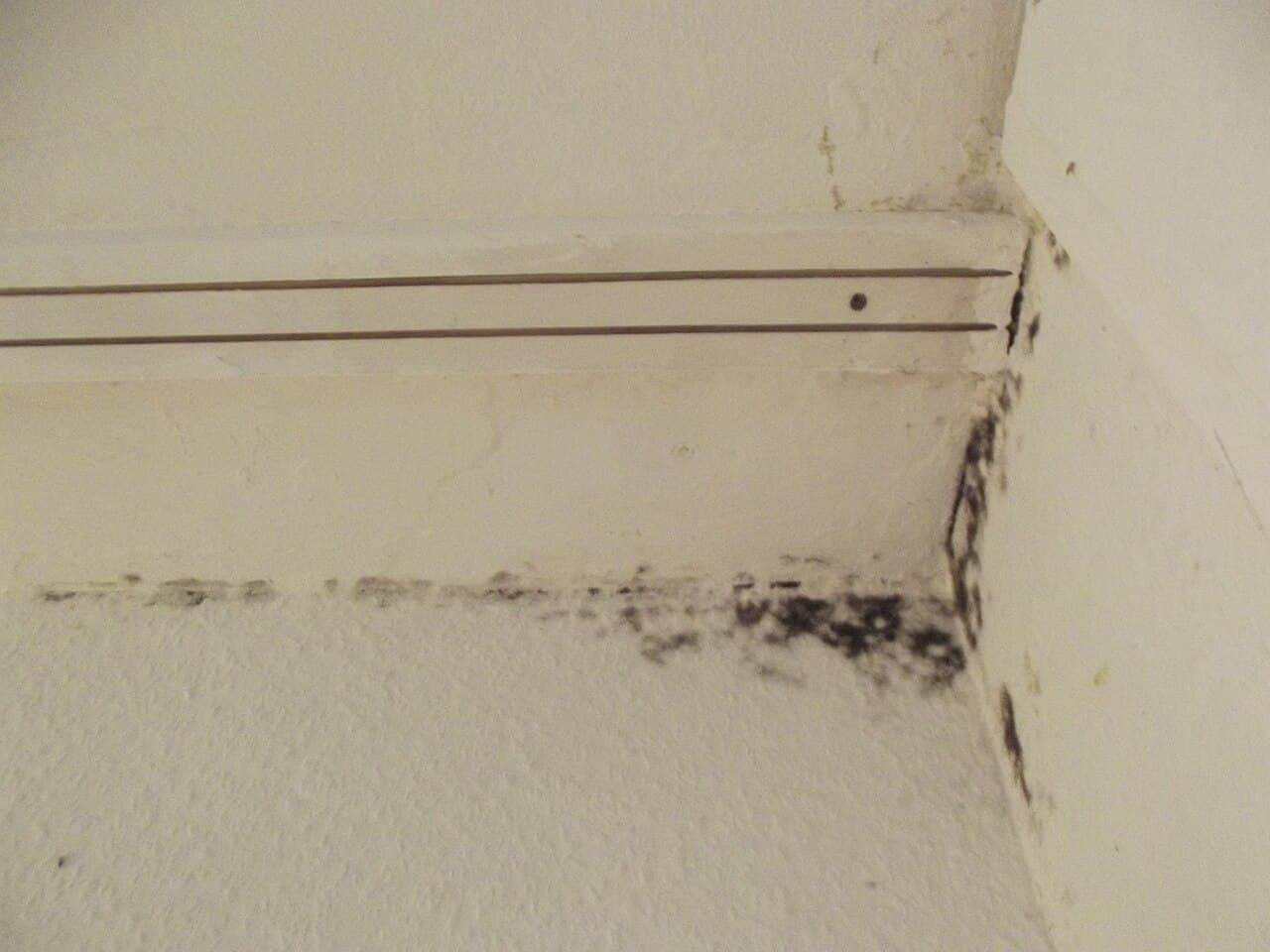
| Thermal bridges (columns, beams, balconies, roller-shutter boxes) | Lines and patches colder than the rest of the wall | Bands of mould under the ceiling, above windows |
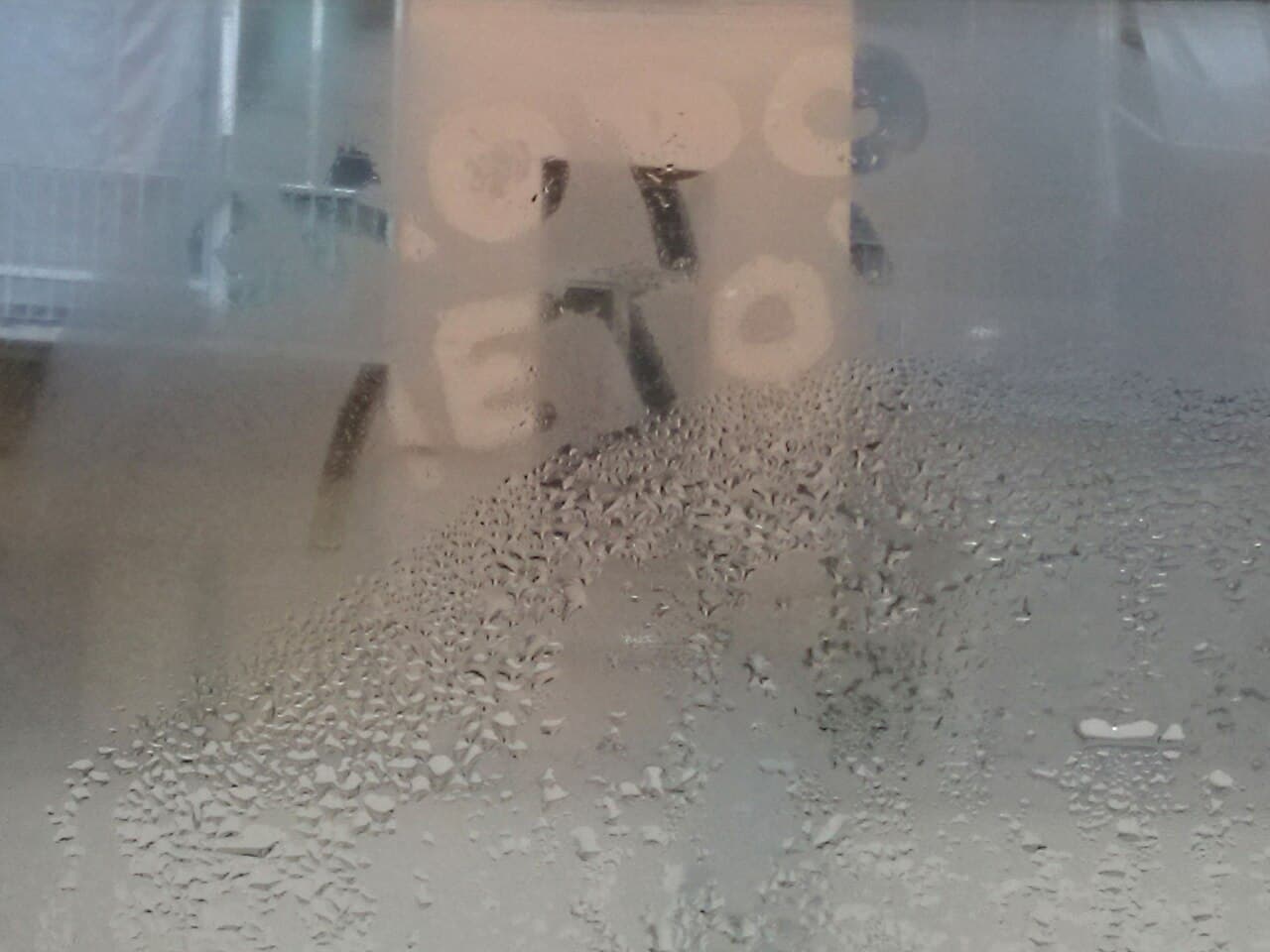
| Single glazing and aluminium without a thermal break | Water running off glass and frames | Sills, window corners, curtains |
| No mechanical ventilation | Steam from cooking and showers stays indoors | Bathroom ceilings, kitchens, bedrooms |
| Walls with no barrier against the ground | Water rising from the floor | Band up to ~1 m on ground floors, basements and houses |
Thermal bridges deserve special attention. In a 1970s concrete block, the column and beam are several degrees colder than the brick wall next to them. The mould literally draws the building's structure: a line just below the ceiling, a rectangle above the window where the roller-shutter box (caixa de estore) sits.
Stone walls and cement renders: the most common mistake
Old stone, adobe or rammed-earth (taipa) walls were built with lime mortars and lime renders. Lime lets water vapour through: moisture that gets in at the base or from rain leaves through the surface and the wall keeps drying. It was an imperfect system, but a balanced one.
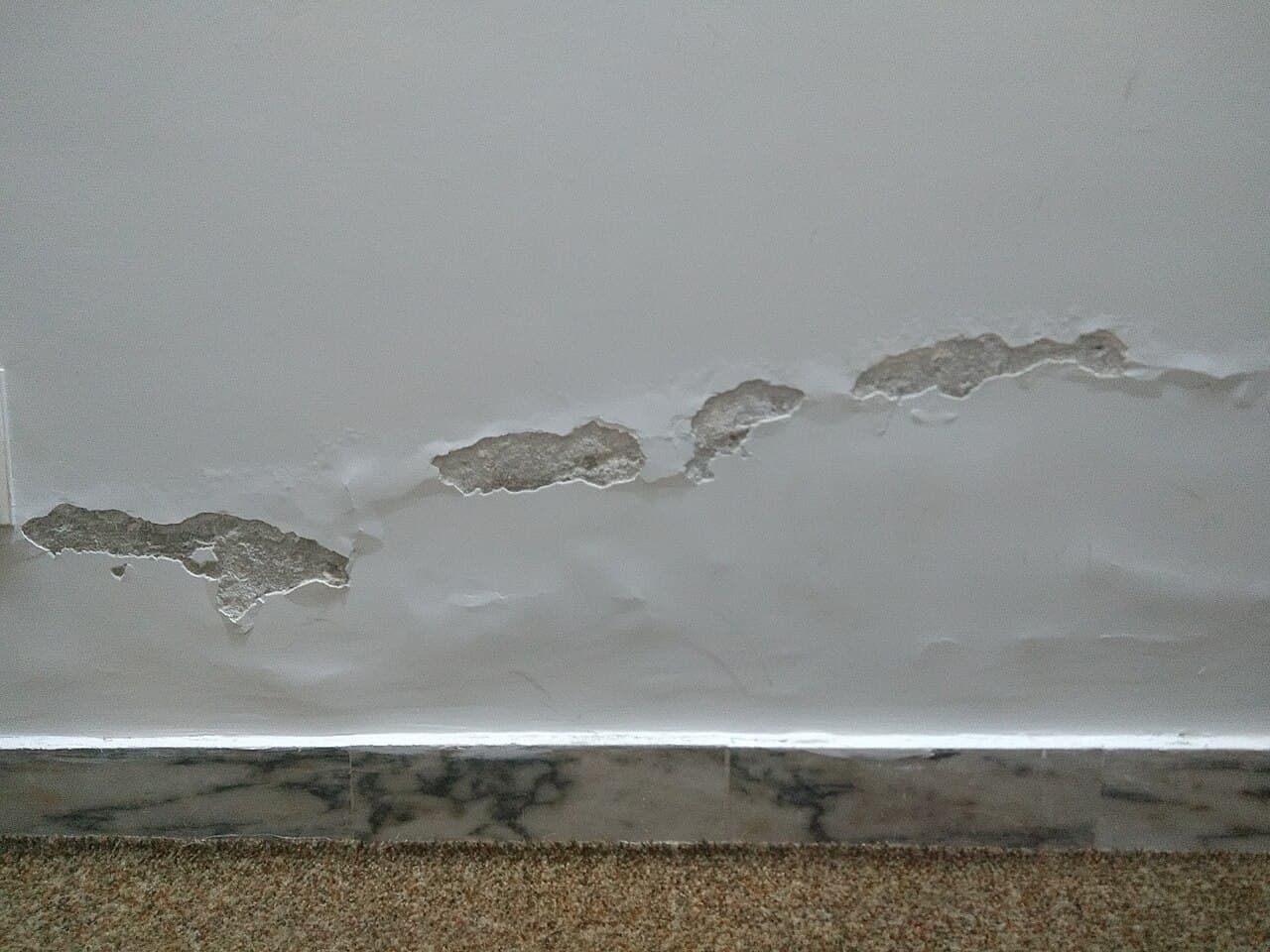
In recent decades, many of these walls were rendered with cement and painted with plastic paints. Cement is far less permeable to vapour than lime. Water still gets in, but can no longer get out — so it finds the easiest route: it climbs higher up the wall or appears on the inside, with salts above the line of the new render.
In stone houses, the fix often involves removing the cement render in the affected area and redoing it with lime mortar or a salt-retardant (renovation) plaster, which lets the wall dry and stores the salts. The guide injections vs electro-osmosis vs plaster compares the options.
What's normal in an older home and what's a warning sign
In an older home, some sign of damp is to be expected. The useful question isn't «is there damp?» but «is it getting worse, and is it damaging anything?». This table helps separate the two.
| Normal (keep an eye on it) | Warning sign (act now) |
|---|---|
| Single glazing misting up on cold winter mornings | Water running off the frames and rotting sills or floorboards |
| Outside walls cold to the touch | Mould returning less than 3 weeks after cleaning |
| Some salts on a basement skirting | Plaster falling off in chunks, or a damp band rising year after year |
| RH of 60–65% at 7am on rainy days | RH above 70% at 7am for weeks on end |
| Old, dry, stable stain on the ceiling | A stain that grows after rain or in dry weather |
| Stuffy smell after days with the house closed | Constant musty smell, soft timber or cracks with water |
The signs in the right-hand column mean water is getting in or building up — ingress, a leak or active rising damp. Airing won't be enough. Take the diagnosis and, if confidence is low, ask for a technical visit before agreeing to any work.
A simple way to keep track: photograph the same areas at the start of each winter month, with the date, and note the humidity at 7am. After one season you'll know whether the home is stable or getting worse — and you'll have evidence if you need to show it to the landlord, the condomínio or a company.
Priorities on a limited budget
The public subsidies E-Lar and Vale Eficiência have been closed since July 2026, with no new schemes announced. With limited money, the right order avoids spending on finishes that water will ruin again.
- Stop water getting in. Roof, gutters, downpipes, flashings, terrace drains and window seals. Clearing a blocked gutter costs little; letting water run down the façade for a whole winter costs much more.
- Fix leaks. In older homes, the original plumbing may be several decades old. The water-meter test, with all taps off, shows whether water is escaping.
- Reduce vapour and ventilate. Air for 5–10 minutes in the morning, use extractor fans in the kitchen and bathroom, dry laundry outside or with a dehumidifier. DIY condensation fixes cost €20–300, and a 10–12 L/day compressor dehumidifier starts at around €90.
- Let the walls dry. Move furniture away from outside walls, remove cement render and plastic paint at skirting level, lower the outside ground if it sits above the inside floor.
- Improve the envelope. Windows with a thermal break and double glazing, external insulation, PIV (VMI) (≈ €800–2 500 in a flat) or mechanical ventilation, VMC (≈ €2 500 or more). These are the most expensive steps and make most sense once the previous ones are sorted.
The most expensive mistake is starting at the end: painting, replastering or insulating a wall that is still taking on water. Within a few months the stain comes back through the new finish and the money is lost twice — on the work and on repairing the work.
Buying or renting an older home? What to check
- Visit in the morning and, if possible, after a few days of rain. A home viewed at 3pm on a dry summer day hides almost everything.
- Look behind wardrobes, inside built-in cupboards, in the upper corners and along the skirting of outside walls.
- Notice walls freshly painted in just one area: it may be maintenance, or a stain being covered up.
- In a block of flats, ask for the condomínio (owners' association) minutes for recent years and check for pending roof or façade work.
- Bring a €10 hygrometer and note the humidity in each room.
With an older house, also walk around the outside: gutters, downpipes discharging next to the wall, soil or flower beds against the façade above the inside floor level, cement render on the plinth. These are cheap causes to fix and often explain damp on the lower part of the walls.
Before buying, the guide buying a home with damp helps you put numbers into the negotiation. If you've already had a quote for work and want to check it makes sense, see the second opinion on quotes. If you're renting, find out who pays for repairs before you sign.
Frequently asked questions
It can improve comfort and reduce condensation, but only once any water ingress has been dealt with. Insulating a wall with rising damp or ingress from the inside hides the water behind the insulation, where it keeps doing damage. On stone walls, the materials should let vapour through. Ask for the opinion of a professional who doesn't sell the insulation.
Windows with a thermal break and double glazing stop being the coldest spot in the room, so the glass stops dripping. But a more airtight home holds more vapour: without ventilation, the condensation moves to the walls and corners. Replacing windows should come with a ventilation plan.
No. Rising damp only occurs in walls in contact with the ground — ground floors, basements and houses — and practically never above the ground floor. In a flat in an older block, condensation is much more likely. Be wary of quotes that diagnose rising damp on a 2nd or 3rd floor.
It means water vapour has to be able to pass through the wall and escape. Old stone walls were designed with lime, which is permeable to vapour. Cement renders, plastic paints and waterproof skims close off that exit and moisture builds up. On these walls, lime mortars and paints or equivalent breathable products are preferred.
In July 2026, the E-Lar and Vale Eficiência schemes were closed and no new ones had been announced. It's worth keeping an eye out. In a block of flats, remember that work on common parts such as the façade and roof is, as a rule, decided and paid for by the condomínio, in proportion to each unit's permilagem (ownership share).
SOURCES
- Housing stock: around 70% of buildings predate thermal insulation rules (before 1990)
- INE — Survey on Income and Living Conditions, 2025 (via idealista)
- Building physics: dew point (Magnus formula)
- Prices observed on Google.pt, cume.pt, Zaask and Habitissimo, Oct 2026
- E-Lar and Vale Eficiência schemes — status in July 2026