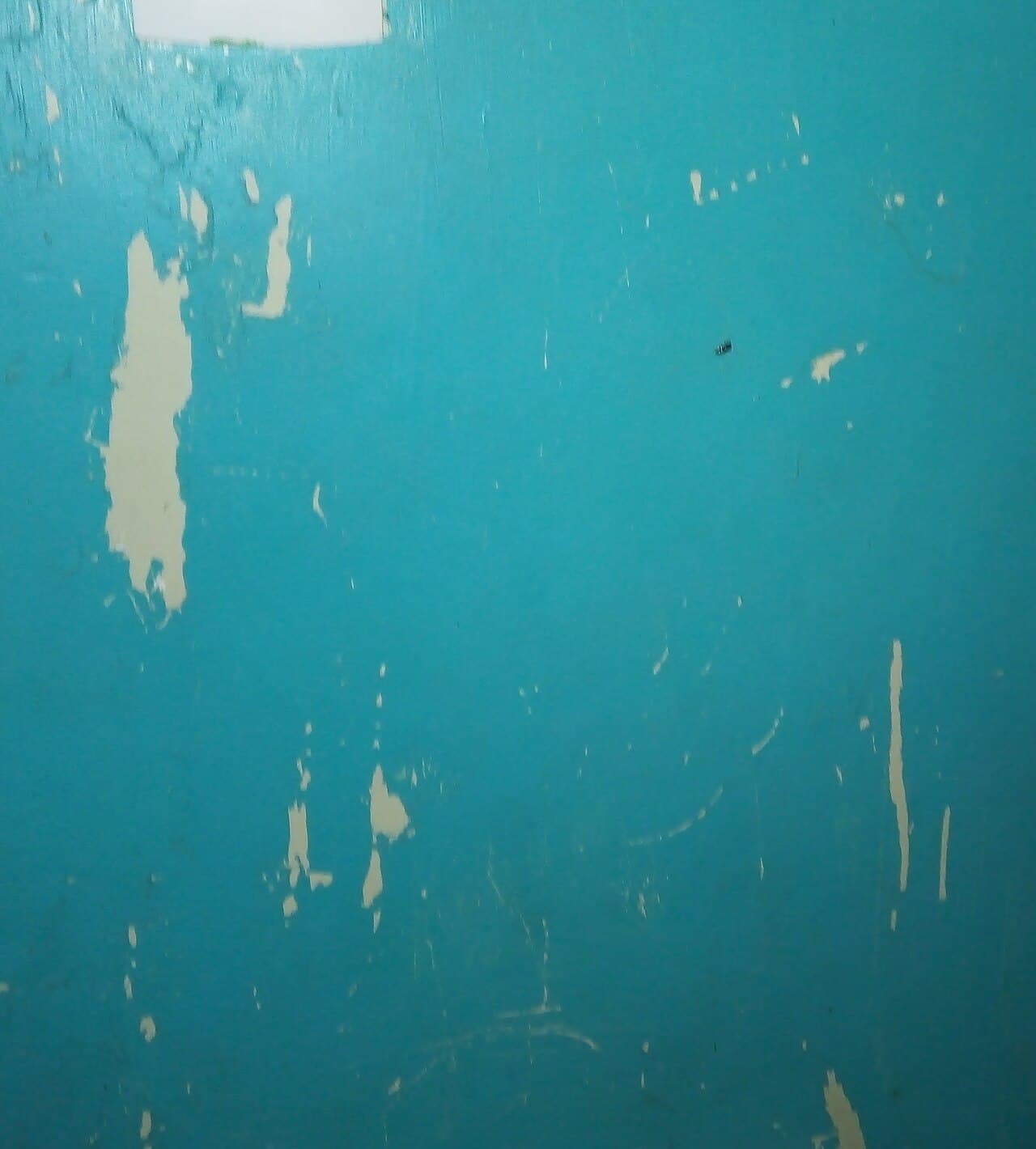
Damp in a rented home: who pays, the landlord or the tenant?
As a rule, maintenance work is the landlord's job. But the cause matters: how to document, notify, what deadlines to ask for and what not to do.
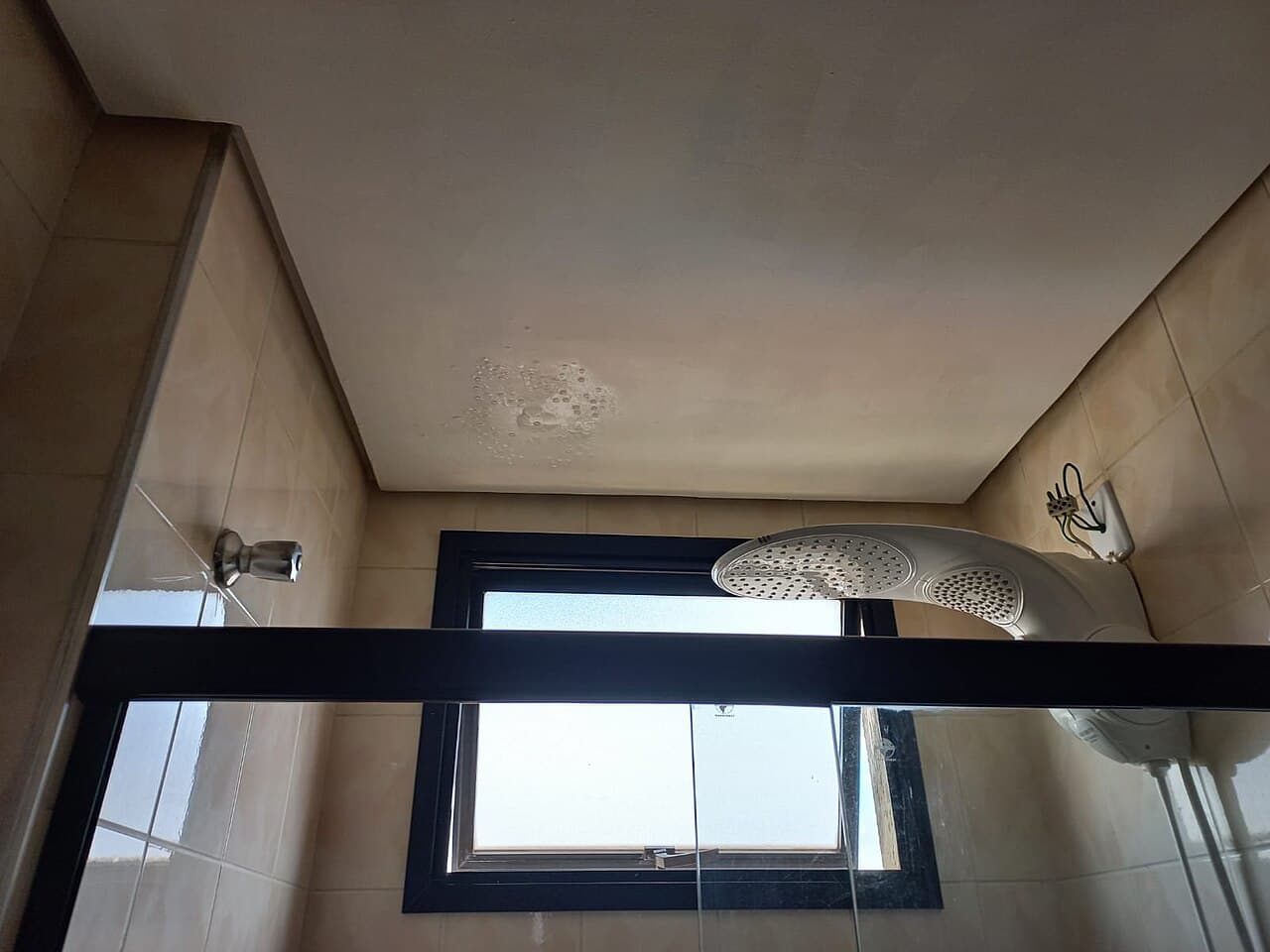
- As a rule, maintenance work falls to the landlord (Código Civil, art. 1074), unless the contract says otherwise.
- Before notifying, log humidity at 7 am for 2 weeks and photograph the patches with dates: that is what separates a defect from use.
- Notify in writing (registered letter or email with receipt) and ask for a visit within ~15 days. Never stop paying rent on your own.
IN THIS GUIDE
Who pays for damp in a rented home?
The short answer: it depends on the cause. As a rule, the Código Civil (Portuguese Civil Code) assigns maintenance work (obras de conservação), routine or extraordinary, to the senhorio (landlord) under art. 1074, unless the contract says otherwise. The landlord must also ensure the tenant can use the home for its intended purpose (art. 1031).
Water coming through the roof, a leak in a pipe inside the wall or damp rising from the ground are, in principle, defects of the building — and the repair falls to the landlord. Mould caused by drying laundry in the living room all winter without ever opening a window, on the other hand, may be presented by the landlord as a consequence of use.
Building defect or how the home is used: telling them apart
In practice, most disputes start with condensation. A flat in a 1970s block, with aluminium window frames without a thermal break and uninsulated walls, condenses even with good habits. But habits count too. The table sums up the most common situations — it is guidance, not a rule.
| Situation | Likely cause | Who tends to be responsible, as a rule |
|---|---|---|
| Ceiling patch on the top floor after rain | Water ingress through the roof | Landlord (or the condomínio, if it is a common part) |
| Damp band up to 1 m on the ground floor, with salts | Rising damp | Landlord |
| Patch growing at a fixed spot, even without rain | Pipe leak | Landlord, neighbour or condomínio, depending on the source |
| Black spots in corners and behind furniture, wet glass in the morning | Condensation | It depends: building and use overlap |
| Mould in a bathroom with no window and no extractor fan | Condensation from lack of ventilation | Arguable: the lack of extraction is a feature of the home |
If you don't know the cause, start with the free diagnosis: 12 questions and a probability for condensation, rising damp and water ingress. If confidence is low, the result recommends a technical visit — which is also useful information for the landlord. To understand the differences, see the guides on condensation and water ingress.
How to document the damp before talking to the landlord
Organised evidence makes for an easier conversation. The aim is to show two things: that the problem exists and that you have done your part.
- Dated photos: every patch, with a tape measure next to it, close up and from a distance. Repeat at the same spot after 1 and 2 weeks.
- A hygrometer log (~€10) over 2 weeks: relative humidity and temperature at 7 am in the bedroom and in the affected room, plus one evening reading. Note rainy days too.
- A log of your habits: when you aired, where you dried laundry, whether you used the extractor fan. A simple note on your phone is enough.
- The diagnosis report: it includes your answers, the likely cause and the percentage.
- If needed, a technical opinion: a report by an independent technician carries more weight than any conversation.
How to notify the landlord and what deadline to ask for
The notice should be in writing and provable. The two most common options are a registered letter with proof of receipt (carta registada com aviso de receção) and an email with a read receipt (or a reply from the landlord confirming receipt). A phone message is fine as a first contact, but it does not replace the letter.
In the letter, describe where the damp is, how long it has been there, what you have already done and what you are asking for: a technical visit and the repair. Attach photos and the report. A 15-day deadline to schedule the visit is common and reasonable. For the work itself, the timing depends on what is needed — waterproofing a terrace is not done in a week, especially in winter.
The site generates a free template letter from your diagnosis result, with the affected rooms, how long it has been going on and the likely cause. You will also find it on the tenants page. It is a template, not legal advice: read it, adapt it and, if your case is complex, show it to a lawyer.
What the tenant should do themselves
Doing your part is not admitting fault — it takes away the landlord's misuse argument and often reduces the problem. A family of 4 puts about 10 litres of water a day into the air, through breathing, showers, cooking and laundry.
- Air the home for 5–10 minutes in the morning with opposite windows open, rather than leaving one window ajar all day.
- Don't dry laundry indoors or, if there is no alternative, dry it in a closed room with the window open or with a dehumidifier. See drying laundry indoors.
- Use the extractor fan when cooking and showering, and keep the bathroom door closed.
- Move furniture 5–10 cm away from external walls.
- Avoid gas or paraffin heaters, which release water vapour as they burn.
- Clean surface mould as soon as it appears: diluted bleach (1 part to 4 of water), with gloves, a mask and the window open, never mixed with other products.
If humidity drops to 50–60% with these habits and the mould doesn't return, the problem was mainly about use. If it stays above 70% at 7 am with all of this done, the building carries a large share of the responsibility — and your log shows it.
Urgent repairs: what article 1036 provides
Some situations cannot wait: a burst pipe, water coming through the ceiling on a rainy day, a wet fuse box. Article 1036 of the Código Civil allows the tenant (arrendatário) to carry out urgent repairs or expenses when the urgency does not allow waiting for the landlord, or when the landlord is in delay, with a right to reimbursement — provided the landlord is notified at the same time.
In practice: turn off the water, protect your belongings, call a plumber if needed to stop the leak and notify the landlord immediately, in writing. Keep the invoice and photos. Do only what is essential to contain the damage; the permanent repair remains, as a rule, the landlord's decision.
What not to do: stop paying rent on your own initiative
It is the most common temptation and the riskiest. Even if the damp is clearly the landlord's responsibility, stopping rent payments on your own initiative may give them grounds to claim the arrears with compensation, or even to seek termination of the contract. You become the party in breach.
There are legal mechanisms for cases where the home can no longer be used, but they depend on the specific case and on formal steps. If it gets to that point, get advice: a lawyer, DECO, a tenants' association or, for smaller disputes, the Julgados de Paz (small-claims justice of the peace courts).
- Don't carry out improvement works without the landlord's written permission.
- Don't paint over the mould before documenting it: it erases the evidence and the mould comes back.
- Don't rely on verbal agreements alone; confirm by email what was agreed.
If the cause is the façade, the roof or a shared stack, the repair may fall to the condomínio (owners' association). The landlord, as a unit owner, should contact the building management — see the guide on common parts of the condominium and the condominium page.
Frequently asked questions
As a rule, maintenance work does not, by itself, justify a rent increase outside the legal update rules. Improvement works agreed between the parties may be a different matter, especially if they are put in writing. Because the rules depend on the type and date of the contract, check your case with a lawyer or with DECO before accepting any change.
Article 1074 of the Código Civil allows the parties to agree otherwise, so some clauses shift works onto the tenant. The scope and validity of such clauses depend on the wording and the specific case. Read the contract carefully, keep your documentation and ask a lawyer or DECO for an opinion before taking on an expensive job.
You can always end the contract on the terms and with the notice period set out in the contract and the law. Leaving without that notice, claiming the home is uninhabitable, is a different situation and carries risks: it depends on evidence and formal steps. Before handing back the keys, document the state of the home and get legal advice.
As a rule, the tenant must allow the landlord to examine the home, on a date and at a time agreed with reasonable notice. It is actually in your interest: without a visit there is no assessment and no repair. Use it to show your photos and measurement log, and confirm by email what was agreed during the visit.
A dehumidifier bought by the tenant is, as a rule, the tenant's property, like any appliance. It can help while you wait for the repair, but it does not replace the work when the cause is a building defect. If the landlord offers a device instead of a repair, ask for the agreement in writing and check whether it actually addresses the cause.
SOURCES
- Código Civil (Civil Code), arts. 1031, 1036 and 1074
- Novo Regime do Arrendamento Urbano (NRAU — New Urban Lease Regime)
- Building physics: dew point (Magnus formula)