Drying laundry indoors without causing mould
One wash load releases about 2 litres of water into the air. How to dry it without soaking the walls.
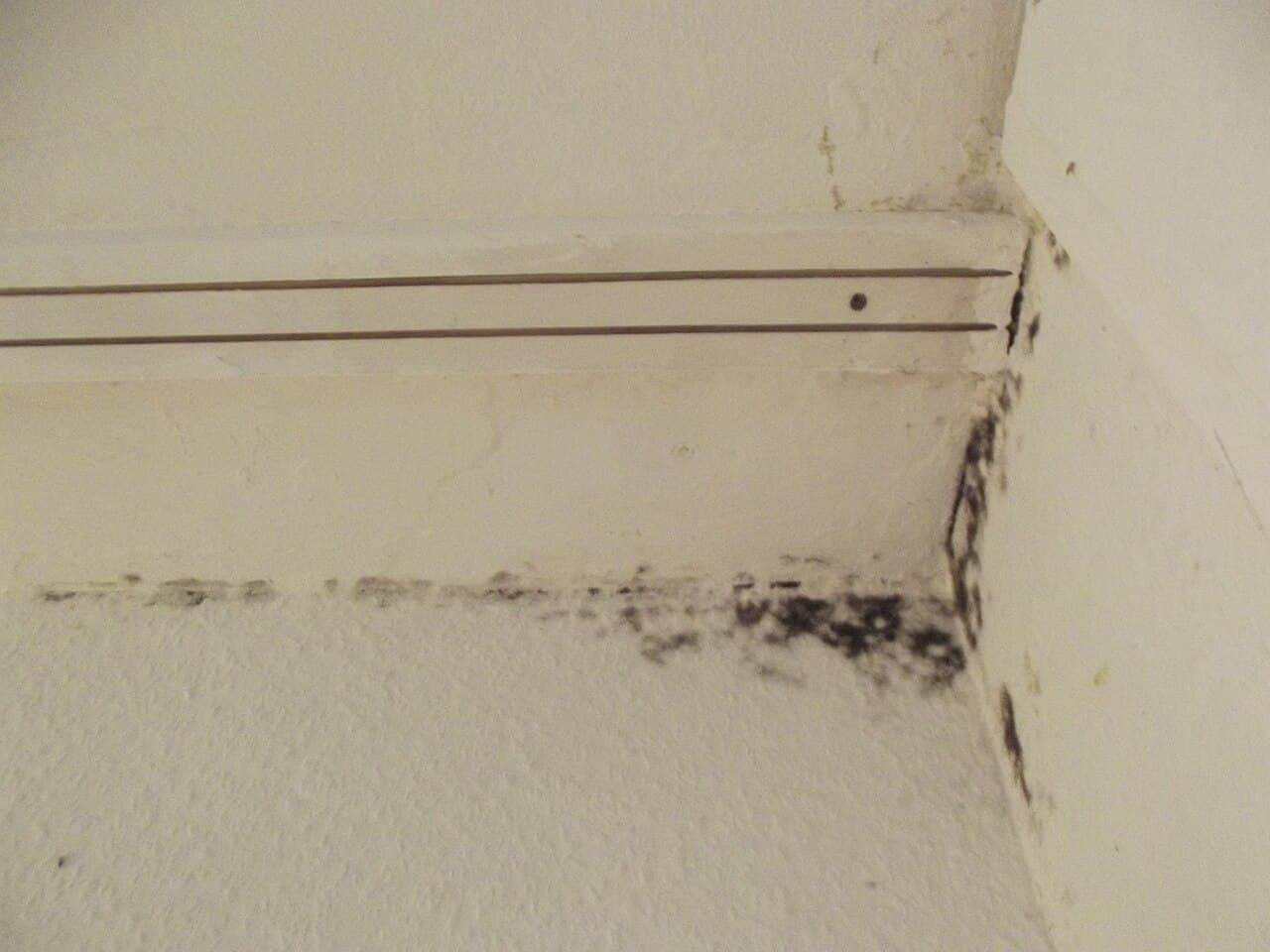
- One wash load leaves about 2 litres of water in the air as it dries — twice or more what two people release in a night.
- Dry in one room with the door closed, using a window ajar, an extractor fan or a dehumidifier — never in the bedroom you sleep in.
- Spin at the highest speed the fabric allows. Tumble dryer: heat pump or condenser; vented only with the hose leading outside.
IN THIS GUIDE
Does drying laundry indoors cause mould?
It can, if the water has nowhere to go. Every washed and spun load still holds about 2 litres of water — an approximate figure that depends on the load, the fabric and the spin. As it dries on a clothes horse, all that water passes into the air of your home within a few hours.
In a family of four, which already puts around 10 litres of water a day into the air, two or three loads a week drying in the living room make a difference. In a 1970s flat with aluminium windows without a thermal break, you see the result in the morning: streaming windows, black specks in the ceiling corners, a musty smell in the wardrobes.
You don't have to stop drying laundry indoors. You have to control where and how. If you already have mould, check with the free diagnosis whether the pattern is condensation — the typical case when laundry is dried indoors in winter.
How much water does laundry put into the air in a week?
Do the maths for your own home. With three loads a week, laundry alone puts around 6 litres of water into the air — concentrated in the hours while it dries. Add breathing, showers and cooking, and a household of four in winter deals with dozens of litres of water a week that have to leave somehow.
That water has three possible exits: ventilation (window, extractor fan, vents), a tank (dehumidifier or condenser dryer) or the coldest surfaces in the home. If the first two aren't enough, the third is what's left — windows, ceiling corners, the wall behind the wardrobe.
That's why the same habit causes mould in one home and not in another. In a recent building with mechanical ventilation, the water gets out; in a 1960s ground-floor flat with single glazing and cold walls, it stays. Knowing which case is yours is worth more than any trick — and mould in the bedroom is often the first sign.
Where to dry laundry (and where never to)
| Place | Rating | Condition |
|---|---|---|
| Balcony or covered outdoor line | best option | even in damp weather, as long as rain doesn't fall on the laundry |
| Enclosed balcony (marquise) | good | with a window ajar |
| Bathroom with extractor fan | good | door closed, fan running or window open |
| Small room with dehumidifier | good | door and windows closed |
| Living room or hallway without ventilation | bad | the vapour spreads through the home |
| Bedroom you sleep in | avoid | adds to the overnight vapour |
| On top of heaters | avoid | fire risk and concentrated vapour |
The rule is simple: one room, door closed, and the vapour goes outside or into a tank. If laundry dries in the living room with the door open to the hallway, the moisture ends up on the coldest walls in the home — usually the north-facing bedroom or the wall behind the wardrobe.
Even in January, with outdoor air at 90–100% relative humidity in Lisbon, a covered outdoor line with some wind takes part of the water out of the laundry. Bring it in and finish drying it indoors in a controlled room: that's less water reaching the walls.
Using a dehumidifier as a laundry dryer
A dehumidifier in a small, closed room is one of the most effective ways to dry laundry indoors: the water leaving the clothes goes into the tank instead of onto the walls. Many units have a laundry mode, which runs continuously with more airflow.
- Choose the smallest room available — a box room, or the bathroom if there's space.
- Close the door and windows.
- Set up the clothes horse with space between items and the dehumidifier about 1 m away, with the air outlet facing the laundry.
- Switch to laundry or continuous mode; once the laundry is dry, go back to the humidistat at 50–55%.
- Empty the tank or use continuous drainage through a hose to a drain.
In cold rooms, below ~15 °C, a desiccant unit works better than a compressor one, and the heat it gives off also helps drying. In an unheated box room, that counts when choosing.
Tumble dryer: heat pump, condenser or vented?
| Type | Where the water goes | Note |
|---|---|---|
| Vented | hot, humid air leaves through a hose | must go outside; with the hose indoors, the water stays in the home |
| Condenser | tank or drain | no hose to the outside needed; uses more energy than a heat-pump model |
| Heat pump | tank or drain | the most energy-efficient; longer cycles |
The vented dryer is the one that causes problems most often. With the hose hanging out of a window left ajar, some of the hot, humid air comes back in; if the hose stays indoors, it's like drying the laundry in the room — with all the water at once.
Condenser and heat-pump dryers collect the water in a tank or send it to a drain, so they don't soak the home. Heat-pump models generally have the best energy class: check the energy label and the stated annual consumption, and multiply it by the price on your tariff to compare models.
Clean the lint filter every cycle and the condenser filter as the manual says. With clogged filters, the machine takes longer and uses more electricity per load.
Spin speed: less water from the start
Every extra revolution in the spin is water that doesn't go into the air. A machine spinning at 1 200–1 400 rpm leaves laundry considerably drier than at 800. Use the highest spin each fabric can take — it's on the care label.
- Towels, sheets and heavy cotton: high spin.
- Synthetics and delicates: lower spin, but they dry quickly anyway.
- If the machine has an extra-spin option, use it for heavy winter loads.
- Don't overload the drum: laundry spins less well and comes out wetter.
- Hang it out as soon as the machine finishes — wet laundry forgotten in the drum picks up a musty smell.
If you're thinking of replacing your washing machine, the maximum spin speed and the spin-drying efficiency class on the energy label matter as much for the humidity in your home as for your electricity bill.
A winter routine
- Wash in the morning, so the laundry dries during the day rather than at night, when the walls are coldest.
- Hang it out straight away, with space between items, in a room with the door closed.
- Ventilate that room: window ajar, extractor fan on, or a dehumidifier.
- Measure with a hygrometer in the laundry room and another in the bedroom. In the morning, the bedroom should ideally be below 60%.
- Air the home for 5–10 minutes in the morning with a cross-draught, even when it's raining.
- Keep an eye on the cold spots: ceiling corners, behind furniture, around the windows.
If, even with this routine, humidity at 7 am stays above 65–70% for weeks, the problem goes beyond laundry: insufficient ventilation, a gas heater or a cold wall. Use the dew point calculator with your readings and see the guide on mould.
If you rent and there's a dispute about where the mould comes from, log your readings and the routine you followed: they help separate habits from problems with the building. See the guide for tenants.
Frequently asked questions
It depends on the room, the temperature and the humidity. In a living room at 18 °C without ventilation, heavy cotton can take more than a day; with a dehumidifier in a small, closed room, it often dries in a few hours. If laundry takes more than 24 hours to dry and starts to smell, the room has too much moisture and too little air movement.
Not if the bathroom has an extractor fan or a window. It's actually a good spot: the walls are tiled, the door closes and the air can be extracted outside. Run the fan while the laundry dries or leave the window ajar with the door closed. Without a fan or a window, the bathroom keeps all the moisture and mould appears on the ceiling and grout.
It helps laundry dry faster, because it replaces the humid air next to the fabric. But it doesn't remove water from the home: it just spreads it around the room faster. It works well combined with a window left ajar, to push humid air outside, or with a dehumidifier. On its own, in a closed room, it speeds up both drying and condensation on the walls.
Because it stayed wet too long in a cold spot with little air movement, giving microorganisms time to grow in the fibres. To avoid it, spin well, hang it out as soon as the machine finishes, leave space between items and dry it in a ventilated room or with a dehumidifier. If the smell persists, wash it again and dry it faster.
It depends on your space and how much you wash. If you dry several loads a week indoors and have no balcony, a heat-pump or condenser dryer removes that water from the air predictably. If you dry little laundry, a dehumidifier can do both jobs: drying laundry and controlling condensation in the rest of the home. Compare consumption on the energy labels.
SOURCES
- Building physics: water vapour production in homes and dew point (Magnus formula)
- WHO — Guidelines for indoor air quality: dampness and mould (2009)
- Energy labels and spec sheets of tumble dryers and dehumidifiers, Oct 2026