Buying a home with damp: what to check before you sign
Smell, fresh paint in corners, furniture against walls: the checklist to take to the viewing and how to use damp in the negotiation.
- View with a hygrometer (~€10) and, if you can, after rain: over 70% relative humidity in a closed-up home is a sign to investigate.
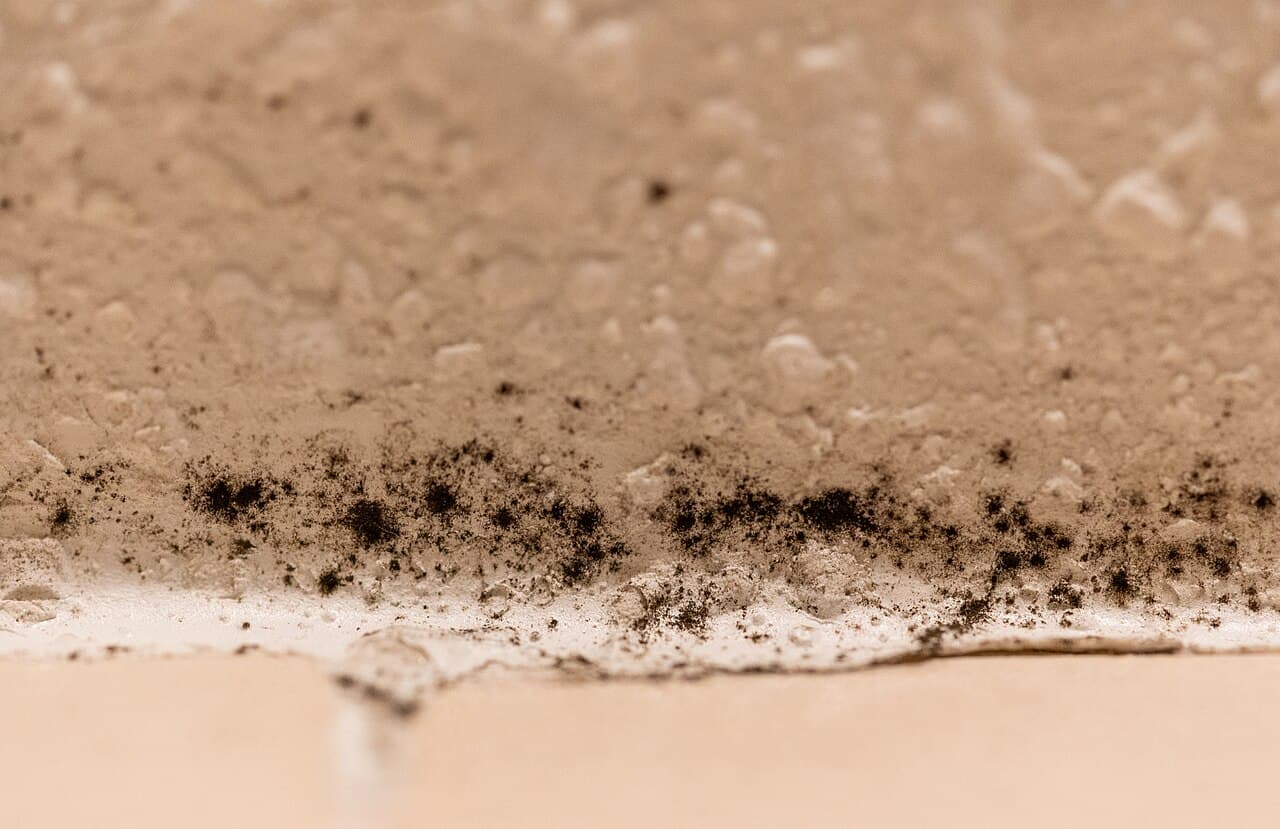
- Be wary of fresh paint only in corners, a musty smell and furniture against external walls. Check ground floors at floor level and top-floor ceilings.
- Ask for the condomínio's minutes on façade and roof, and negotiate with real price ranges before the promissory contract.
IN THIS GUIDE
Is it worth buying a home with damp?
It can be, as long as you know the cause and what it costs to fix before you sign. With about 70% of Portugal's housing stock built before thermal insulation rules and 32.1% of residents living in homes with damp or leaks (INE 2025), finding signs of damp at a viewing is the rule rather than the exception.
The difference between a good and a bad deal is the cause. Condensation in a flat with single-glazed windows is often fixed with ventilation and habits, for €20–300. Rising damp in an old house, or a building roof that needs work, can cost thousands — in the second case, shared among all the owners.
This guide gives you a viewing checklist, the documents to ask for and price ranges for negotiating. To understand the three types of damp, see condensation, rising damp and water ingress.
Viewing checklist: what to look for, room by room
Take this list printed or on your phone. Open wardrobes, ask to move a sofa, look up and down. A rushed viewing shows the home the seller wants you to see.
| Where to look | What to look for | What it may indicate |
|---|---|---|
| At the door | A musty or earthy smell, especially in a closed-up home | Persistent damp, hidden mould |
| Corners and ceilings | Newer paint only in some areas; stains under the paint | Recently covered mould or water ingress |
| Behind furniture | Large furniture against external walls; black spots when moved | Condensation |
| Ground floor (rés-do-chão) and basements | Damp band up to about 1 m, salts (white powder), swollen skirting | Rising damp |
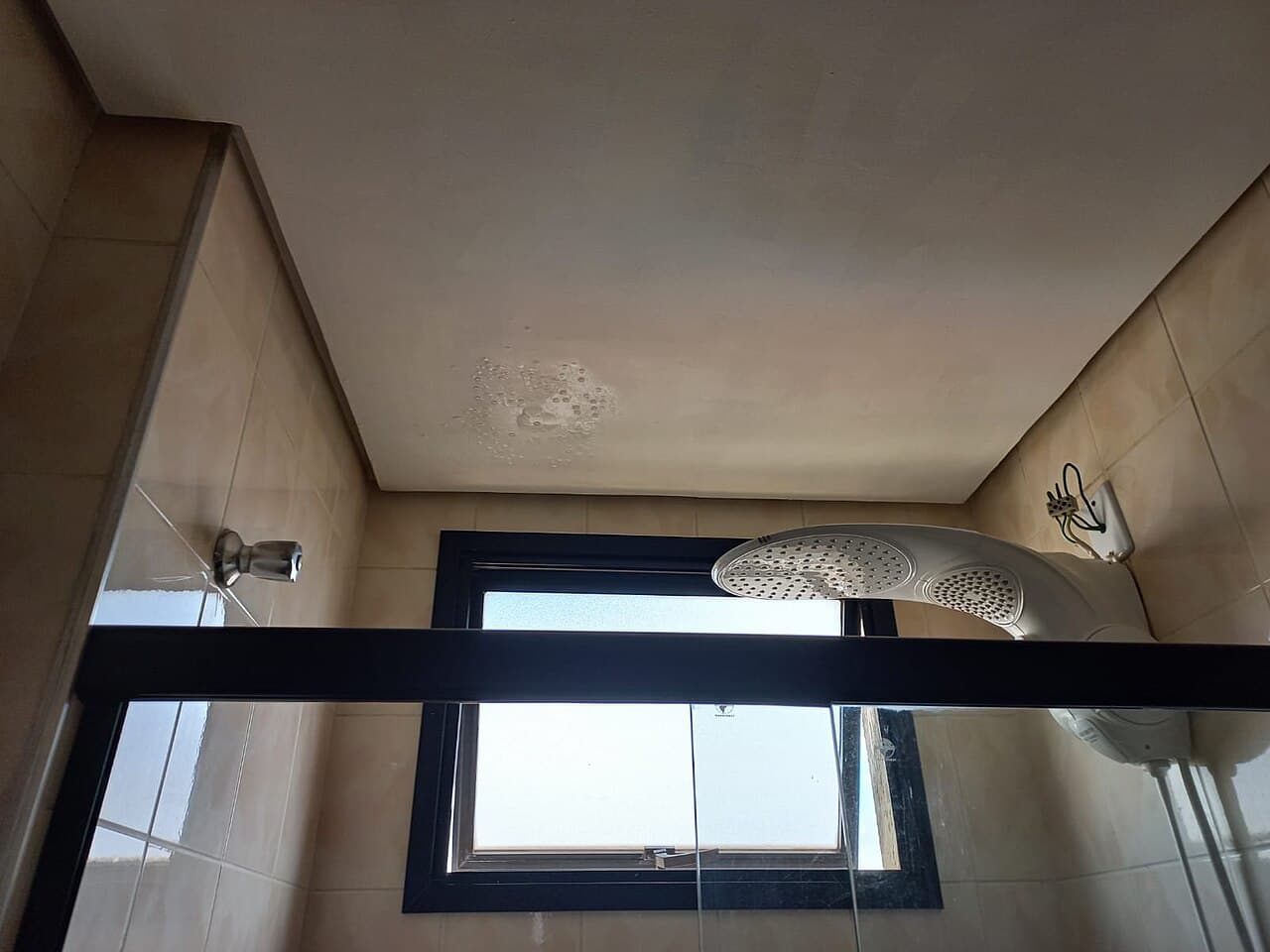
| Top floor | Ring-shaped ceiling patches, especially near external walls | Water ingress through the roof or terrace |
| Windows | Aluminium without a thermal break, black seals, water marks on the sill | Condensation or water ingress through the frames |
| Bathroom and kitchen | Extractor fan (is there one? does it work?), black grout, stained ceiling | Lack of ventilation |
| Water meter | Meter moving with everything turned off | Pipe leak |
You can do the meter test during the viewing: with every tap off, watch the meter for a few minutes. If the smallest dial turns with nothing running, water is being used — which points to a leak. A slow leak may take 30–60 minutes to show, so a still meter doesn't rule everything out.
In a house, check the outside too: soil banked against the walls above the indoor floor level, blocked or broken gutters and downpipes, cement skirting outside and the state of the roof seen from the street. Many of these causes are fixed from the outside, before any indoor treatment.
And ask the seller direct questions: how long has the home been empty? Have there been leaks or insurance claims? What work has been done, and are there invoices? The answers, and how they are given, count too.
Bring a hygrometer and view after rain
A hygrometer at €10 gives you a number instead of an impression. Measure in the living room and a bedroom, away from windows. In a closed-up home, readings above 70% are a sign to investigate; 40–60% is typical. An infrared thermometer (€15–20) shows cold walls, where condensation starts. See which hygrometer to buy.
If you can, book a second viewing after a few days of rain and, ideally, early on a winter morning. Water ingress shows after rain; condensation shows at 7 am on a January morning, with wet window panes. A viewing at 3 pm on a sunny July day shows the home at its best.
With the living room's temperature and humidity, the dew point calculator tells you at what temperature walls start getting wet. Example: at 18 °C and 75% relative humidity, any surface below about 13.5 °C condenses.
In a flat: ask for the condominium minutes
In a flat, part of the risk is not in the unit — it is in the building. A cracked façade or a worn roof is a common part, and the work is paid by all the owners in proportion to their permilagem (share of the building, in thousandths). If the work has already been discussed, it is in the minutes (atas).
- Ask for the minutes of the owners' meetings for the last 2–3 years and look for "fachada" (façade), "cobertura" (roof), "terraço" (terrace), "infiltração" (water ingress) and "colunas" (stacks).
- Ask whether there is approved work still to be paid, or extraordinary levies under way — and who pays them after completion (escritura).
- Ask whether there is a common reserve fund (fundo comum de reserva) and its balance.
- If you get the chance, talk to a neighbour on the top or ground floor: they are the first to feel the building's problems.
Who pays for work approved before the sale should be written into the promissory contract (contrato-promessa). Check the wording with your lawyer or solicitador. See also the guide on common parts of the condominium.
What it costs to fix: ranges for negotiating
If you have spotted damp, the next step is to turn it into a figure. These ranges were observed on Google.pt, cume.pt, Zaask, Habitissimo and in customer reports (October 2026). They give orders of magnitude and do not replace a quote.
| Cause or fix | Observed range |
|---|---|
| Condensation — simple measures (ventilation, dehumidifier, window film) | €20–300 |
| Positive input ventilation (VMI) in a flat | ≈€800–2,500 (estimate) |
| Mechanical ventilation with heat recovery (VMC) | ≈€2,500 or more |
| Rising damp — injections or electro-osmosis | €35–60/m² |
| Whole-house "systems" (customer reports) | €4,500–20,000 |
| Terrace waterproofing | €28–45/m² |
| Leak detection | From a few hundred euros |
| Professional mould cleaning | From €48 |
Marketplaces contradict each other — one shows €4–50/m², another an average of €157.50/m² for similar work. Use the ranges to back up a discount or to ask for the repair before completion, not to fix an exact figure. More detail in how much rising damp treatment costs and how much a VMI costs.
Pre-purchase screening: an independent opinion before you sign
If the home has signs you can't interpret, run the free diagnosis with what you saw at the viewing: 12 questions, a probability for each cause and, when confidence is low, a recommendation for a technical visit. It doesn't replace seeing the home in person, but it helps you know what to ask.
humidade.pt is preparing a pre-purchase screening service (triagem pré-compra), which will appear under services. A screening is an assessment focused on damp — signs, readings, likely cause and next steps — and not an engineering inspection of the building. For structure, installations or compliance you need an engineer or an inspection company.
What to do before the promissory contract
- Do the viewing with the checklist and the hygrometer and, if possible, a second one after rain.
- Ask for the condominium minutes and the energy certificate (certificado energético), which gives clues about insulation and windows.
- If there are signs, get a quote or an independent assessment.
- Negotiate with numbers: a discount, a repair by the seller before completion, or both.
- Put what was agreed in writing in the promissory contract — with help from your lawyer or solicitador.
After you buy, the damp is your problem. Before, it is a negotiating argument.
Frequently asked questions
Require, no; negotiate, yes. You can propose that the seller carries out the repair before completion, lowers the price, or a combination of both. What matters is that the agreement is written into the promissory contract, stating what will be done and by when. Ask your lawyer or solicitador to review that clause before you sign.
It depends on who sold (a private individual, a company or a builder), on what the seller knew and on deadlines that tend to be short. The rules are not the same in every situation. If you find a serious problem, document it straight away with dated photos and talk early to a lawyer or DECO, because time works against you.
Not necessarily. It all depends on the affected area, the price and whether the cause is confirmed. At €35–60/m², treating 20 m² of wall is very different from treating a whole house. First confirm it really is rising damp, because it is often condensation, and only then use the estimated cost to negotiate.
Between 40% and 60% relative humidity is the usual range in a lived-in home. A home closed up for months may read higher without having a defect, so compare several rooms and note the difference between them. Readings above 70% with the home aired, or one room far above the others, deserve investigation.
That is not its purpose. The valuation requested by the bank estimates the property's value as security for the loan, and the valuer may or may not mention signs of damp. Don't rely on it as a diagnosis. Do your own checks at the viewing and, if in doubt, ask for an independent assessment.
SOURCES
- INE — Survey on Income and Living Conditions, 2025 (via idealista)
- Building physics: dew point (Magnus formula)
- Código Civil (Civil Code), arts. 1421 and 1424 (horizontal property)
- Prices observed on Google.pt, cume.pt, Zaask and Habitissimo, Oct 2026