Condensation or rising damp? 5 simple tests you can do at home
Stain height, season, floor, aluminium foil and a 7 am hygrometer reading: five tests that cost almost nothing and stop you paying for the wrong treatment.
- Stain in the upper corners, worse on winter mornings: likely condensation. Band up to ~1 m with salts, all year, ground floor: rising damp.
- Above the ground floor, rising damp is practically impossible — look for condensation, water ingress or a leak.
- Tape foil to the wall for ~2 days: water on top comes from the air; water underneath comes from inside the wall.
IN THIS GUIDE
Condensation or rising damp: how to tell at home
In most cases you can tell the two causes apart yourself, within a week, with a sheet of aluminium foil, some tape and a ~€10 hygrometer. Condensation is water from the air settling on cold surfaces. Rising damp is water climbing from the ground through the pores of the wall. The signs, the season and the treatment are very different.
Getting it right is worth money. Condensation is often solved with habits and fixes costing €20–300; a rising-damp treatment costs €35–60 per m² of wall, and whole-house work reaches €4,500–20,000, according to customer reports. Treating one cause while thinking it is the other is the most expensive mistake people make with damp.
Do the five tests in order. The first three take five minutes, just by looking. The last two confirm with numbers.
Test 1: how high is the stain and what shape is it?
Look at the wall from a distance and then up close. The shape of the stain is the quickest sign.
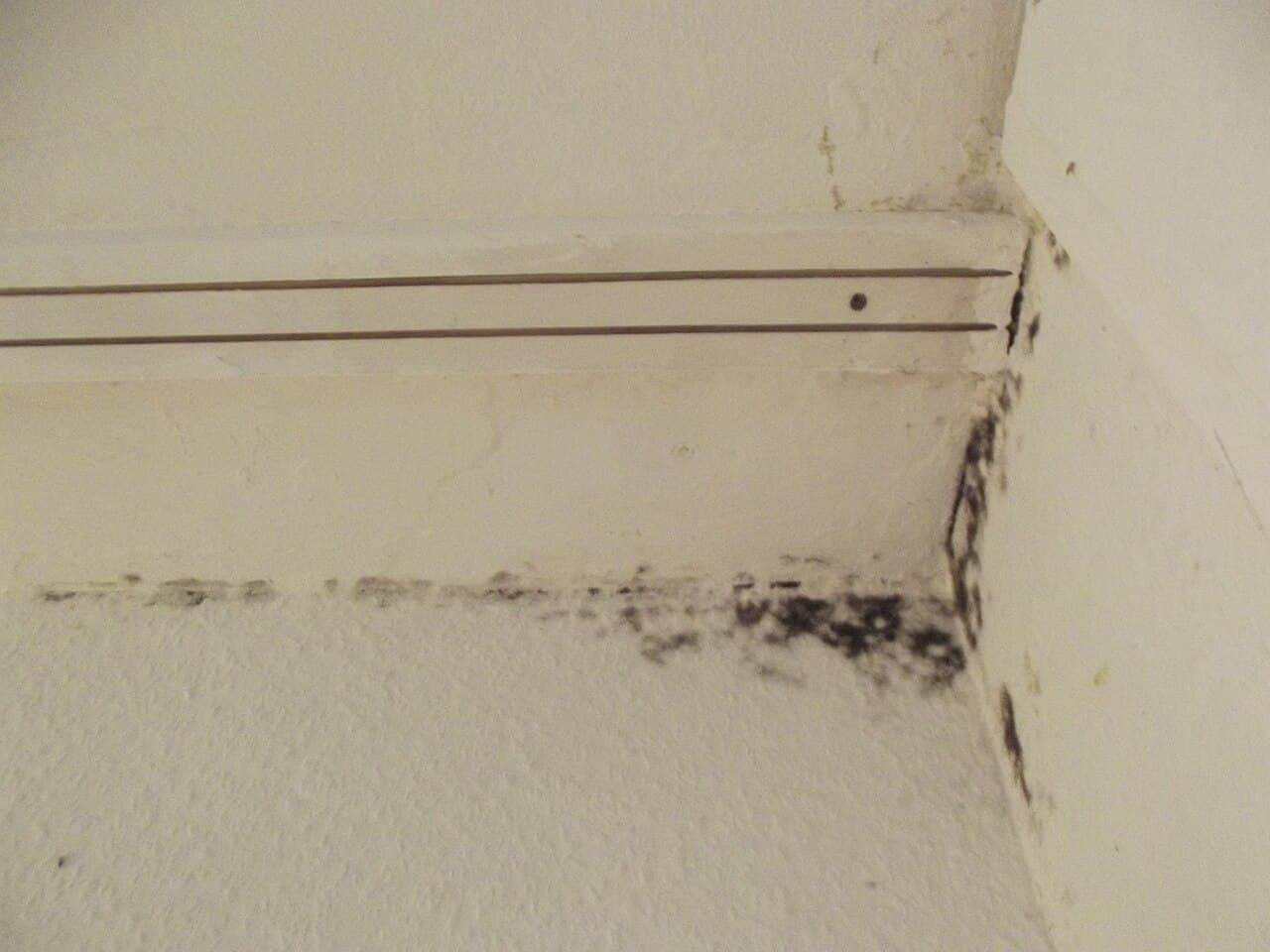
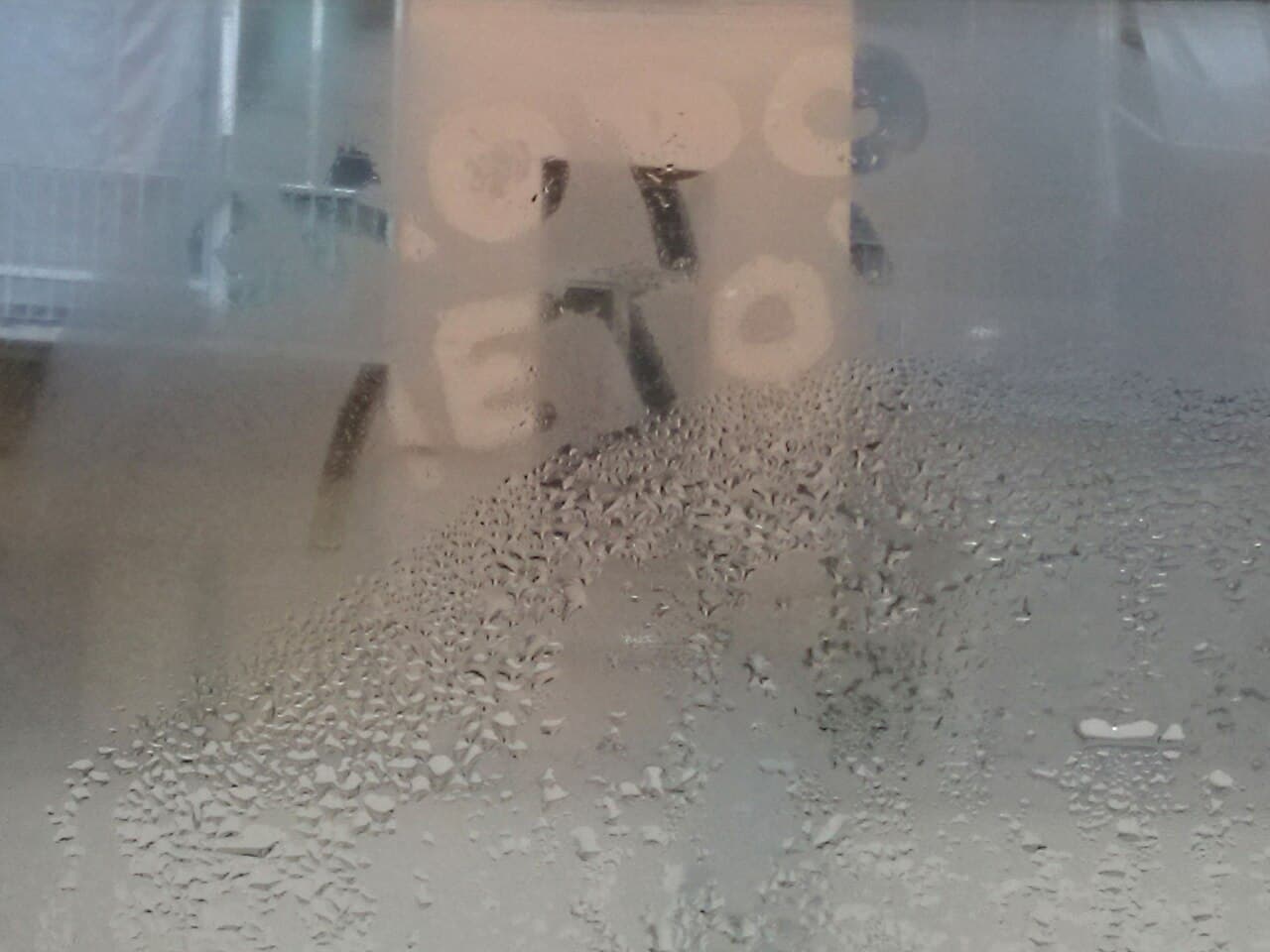
- Condensation: upper corners, next to the ceiling, behind wardrobes and beds, around windows and on the roller-shutter box. Black mould spots that spread. Wet window panes in the morning.
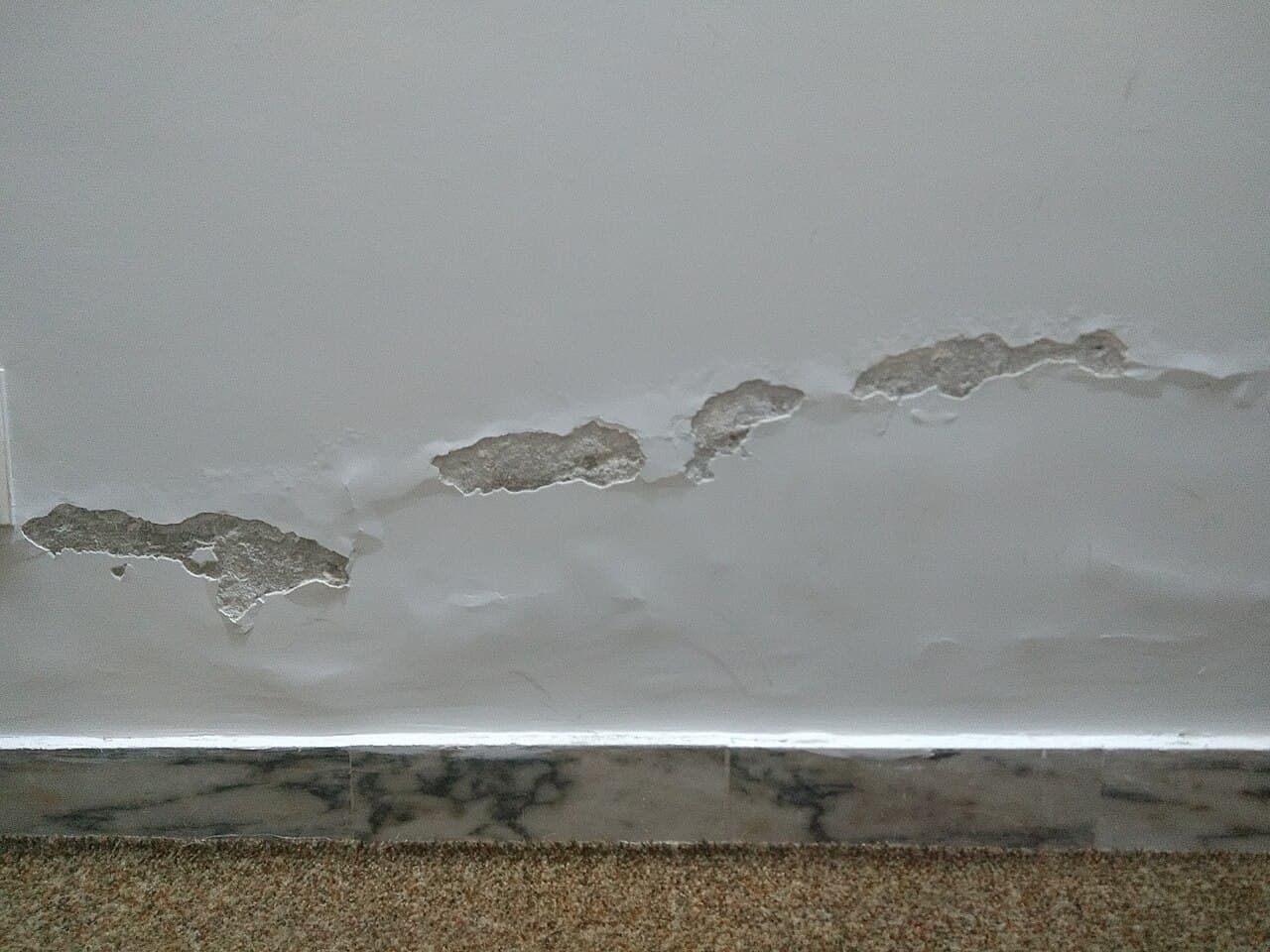
- Rising damp: a horizontal band from the floor, up to about 1 metre, with an irregular top edge like a tide mark. White salts (salitre), crumbling plaster, blistering paint. Little black mould.
- Another cause: a round stain in the middle of a wall or on the ceiling, with rings, points to water ingress or a leak.
Beware of one misleading case: the lower corner of an outside wall, behind a sofa, can grow mould from condensation near the floor. The difference is in the look — dark mould spots, no salts and no crumbling plaster.
Test 2: which season and what time of day is it worse?
Condensation follows cold and vapour. It gets worse between November and March, is most visible early in the morning and almost disappears in summer. In Lisbon winters, with outdoor air at 90–100% relative humidity in January and February, closed windows and laundry drying indoors do the rest.
Rising damp is more stubborn: it is there all year, with little difference between summer and winter, and can get worse after weeks of rain when the ground is saturated. If the stain shrinks a lot in July and returns in December, condensation is much more likely.
Test 3: which floor is the home on?
This is the simplest and most decisive test. Rising damp comes from the ground and practically never happens above the ground floor (rés-do-chão, r/c). On a 2nd, 4th or 7th floor, a stain on the wall is not rising damp, however much it looks like it.
In upper flats the realistic options are condensation, water coming through the façade or the roof (on the top floor) and plumbing leaks, yours or from the neighbour upstairs. If you have been quoted for injections in a mid-floor flat, it is worth getting a free second opinion before signing.
On the ground floor and in basements both causes are possible — and they often coexist. Walls near the floor are cold, and summer condensation in cool basements is common. The guide damp in basements and ground floors covers these cases.
Test 4: aluminium foil taped to the wall
This is the best-known home test and it works well when the wall is active, meaning new moisture is appearing. It shows which side the water comes from.
- Cut a square of kitchen foil, or plastic film, about 30 × 30 cm.
- Choose the dampest part of the stain, clean it and dry the surface with a cloth.
- Stick the square to the wall and seal all four sides with wide tape, leaving no gaps.
- Leave it for about 2 days, with no heaters right next to it and the room used as normal.
- Peel it off carefully and look at both sides of the foil and at the wall underneath.
| What you find | What it means |
|---|---|
| Droplets or a film of water on the room side | water comes from the air: condensation |
| Water or a dark wall under the foil | water comes from inside the wall: rising damp, water ingress or a leak |
| Water on both sides | probably two causes at once |
| Everything dry | wall not very active those days; repeat after rain or on a cold morning |
A negative test proves nothing on its own: in dry weather with the home well aired, even a wall with rising damp may not wet the foil in two days. Repeat it in a rainy week.
Test 5: a 7 am hygrometer reading and the dew point
Put a hygrometer in the affected room, away from the window and 1–1.5 m off the floor, and read it at 7 am for 5–7 days. If relative humidity is almost always above 65–70%, there is too much vapour and condensation is likely. Two adults sleeping in a closed bedroom release about 0.5–1 L of water per night, which is where these readings tend to be highest.
To confirm, measure the wall temperature with an infrared thermometer (~€15–20) at the same time and compare it with the dew point. Example: at 18 °C and 75% RH, the dew point is ≈13.5 °C. If the mouldy corner is at 14 °C, humidity at the surface exceeds 80% and mould grows even without visible droplets. The dew point calculator does the maths for you.
If the air is at 50–55% and the wall stays wet and salty, the water is not coming from the air. The guide how to measure damp in a wall explains the instruments a technician can use next.
Decision table: what the results mean
| Test | Points to condensation | Points to rising damp |
|---|---|---|
| 1. Height and shape | upper corners, behind furniture, windows, black spots | band up to ~1 m, irregular edge, salts, falling plaster |
| 2. Season | winter, mornings, almost nothing in summer | all year, worse after weeks of rain |
| 3. Floor | any floor | ground floor and basement only |
| 4. Aluminium foil | water on the room side | water under the foil |
| 5. Hygrometer and dew point | RH above 65–70% at 7 am, wall near the dew point | normal air (50–60%), wall wet anyway |
Four or five answers in the same column give a fairly reliable answer. Split results are common in old ground-floor homes and justify a technical visit with measurements at several heights.
To pull everything together into an answer with probabilities, take the free diagnosis: 12 questions, a probability for condensation, rising damp and water ingress, and a warning when confidence is low. Then follow the right guide: condensation or rising damp.
Frequently asked questions
Rarely. Condensation water comes from the air and carries almost no dissolved salts, so the typical result is black mould and stained paint, not white crystals. Some white powder can appear on very old walls, where condensed water dissolves salts already in the plaster, but a well-defined band of salts near the floor is a classic sign of rising damp.
It doesn't fix the cause. A dehumidifier removes vapour from the air and helps dry the surface, but water keeps rising from the ground through the wall. It can reduce smell and mould in a basement or ground floor while you decide what to do. For rising damp, the answers are a barrier in the wall, outside drainage or suitable plasters, once the cause is confirmed.
Yes, especially on ground floors and in old houses. The wall near the floor is damp and cold, which also makes condensation easier there. In those cases, deal first with what is cheapest and reversible — ventilation, vapour and heating — and measure again. Whatever stays wet after that is more likely water coming from the wall.
It works, but it is less sensitive. A very tight plastic paint holds back part of the moisture coming from inside, and the wall under the foil may take longer to darken. If the result comes out dry, repeat the test on a spot with blistering paint or bare plaster, or leave it a few more days, especially after a spell of rain.
SOURCES
- Building physics: dew point (Magnus formula)
- Prices observed on Google.pt, cume.pt, Zaask and Habitissimo, Oct 2026
- Customer reports on damp treatment quotes, 2026