Damp and health: what the evidence says (without scaremongering)
What the WHO guidelines say about damp, mould and health, what's exaggerated, who is more sensitive and when to talk to a doctor.
- The WHO (2009) links damp and mould at home with more respiratory symptoms and with asthma. It's an association, not a verdict.
- Children, older people and those with asthma, allergies or weakened immunity tend to be more sensitive.
- What matters most is getting the moisture out of the home: find the cause, ventilate and clean mould carefully.
IN THIS GUIDE
Is damp at home bad for your health?
The short answer: living in a home with persistent damp and mould is associated with more respiratory problems. In 2009, the World Health Organization (WHO) published guidelines on dampness and mould in indoor spaces and concluded that there is sufficient evidence of an association between these conditions and respiratory symptoms, as well as asthma.
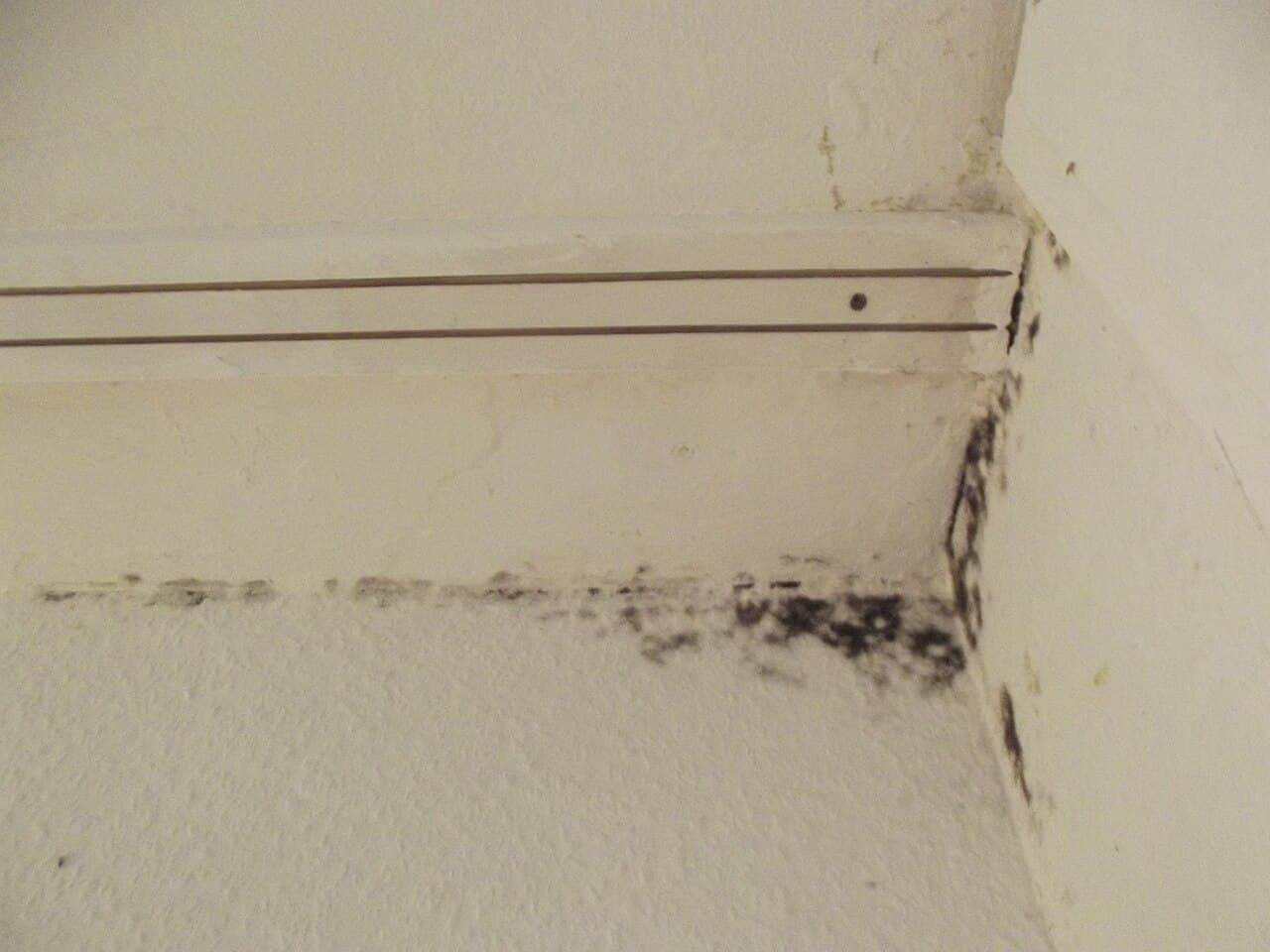
Association doesn't mean everyone in a damp home will fall ill, nor that a patch in the corner of the bedroom is an emergency. It means that, on average, people living with persistent damp have more respiratory complaints — and that it's worth fixing the problem rather than letting it drag on from one winter to the next.
In Portugal, this is not a fringe issue. According to INE, the national statistics institute (2025), 32,1% of residents live in homes with damp or leaks, rising to 41,8% among low-income households. Portugal ranks 2nd in the EU on this indicator.
Damp and cold often go together: 63,2% of Lisbon residents report thermal discomfort in winter. A cold home has cold walls, and cold walls are exactly where moisture in the air condenses and mould grows.
What's proven and what's exaggerated
| Claim | What we know |
|---|---|
| «Damp and mould at home are associated with more respiratory symptoms.» | Yes. It's one of the conclusions of the 2009 WHO guidelines. |
| «Mould at home is linked to asthma.» | Yes, the WHO associates damp and mould with asthma. That doesn't mean every case of asthma has this origin. |
| «Any patch of mould is an immediate danger.» | Exaggerated. What counts is persistent damp over months, not a one-off patch cleaned in time. |
| «You need to have the mould analysed.» | As a rule, no. The WHO recommends acting on the damp; knowing the species rarely changes the fix. |
| «A device will solve the health problem.» | No. Dehumidifiers and ventilation lower humidity; they're not medical treatments. |
The central message of the WHO guidelines is practical: rather than setting «safe» mould levels, they recommend preventing and correcting persistent dampness in buildings. In other words, the focus is the home, not the stain.
This also means you don't need expensive tests to know whether to act. If there's mould that keeps coming back, damp walls or a persistent musty smell, you already have the information you need: what's missing is finding out where the water comes from.
Who is more sensitive to damp and mould
In general terms, some people tend to feel the effects of a damp home more. It's no reason to panic, but it's a good guide for deciding what to do first and in which room.
- Children, especially the youngest.
- Older people.
- People with asthma, allergies or other chronic respiratory conditions.
- People with a weakened immune system, due to illness or treatment.
- Anyone who spends most of the day at home: babies, retired people, those working from home.
If someone in this group lives in the home, the room where they sleep is the priority. It's where they spend the most consecutive hours and often the room with the highest morning humidity.
Practical steps to reduce exposure
- Find the cause. Condensation, ingress, rising damp and leaks are fixed in very different ways. The free diagnosis gives a probability for each.
- Bring humidity down to 40–60%. Measure at 7am with a ~€10 hygrometer. The guide ideal humidity at home explains where and how to measure.
- Ventilate every day. 5–10 minutes in the morning with opposite windows open, the extractor on while cooking and showering, laundry dried outside or with a dehumidifier.
- Clean visible mould carefully. Diluted bleach, 1 part to 4 of water, wearing gloves and a mask with the window open, never mixed with other products.
- Remove what can't be cleaned. Cardboard, fabrics and cushions badly affected by mould, preferably taken out of the home.
- Move the bed and wardrobe 5–10 cm away from outside walls.
Use biocides safely. Always read the label and product information before use.
In a sensitive person's bedroom, avoid drying laundry and using gas or kerosene heaters. If the 7am humidity is still above 70% after two weeks of airing, a dehumidifier run at night with the humidistat at 50–55% is usually the measure with the best cost-to-effect ratio: 10–12 L/day compressor models start at around €90.
Cold, heating and damp: what helps and what makes it worse
Heating the home moderately and regularly helps: warmer air lowers relative humidity and the walls are less cold. What makes it worse is heating with a flame indoors. Gas and kerosene heaters release water vapour as they burn, and in a closed room that adds to the vapour from breathing and drying laundry.
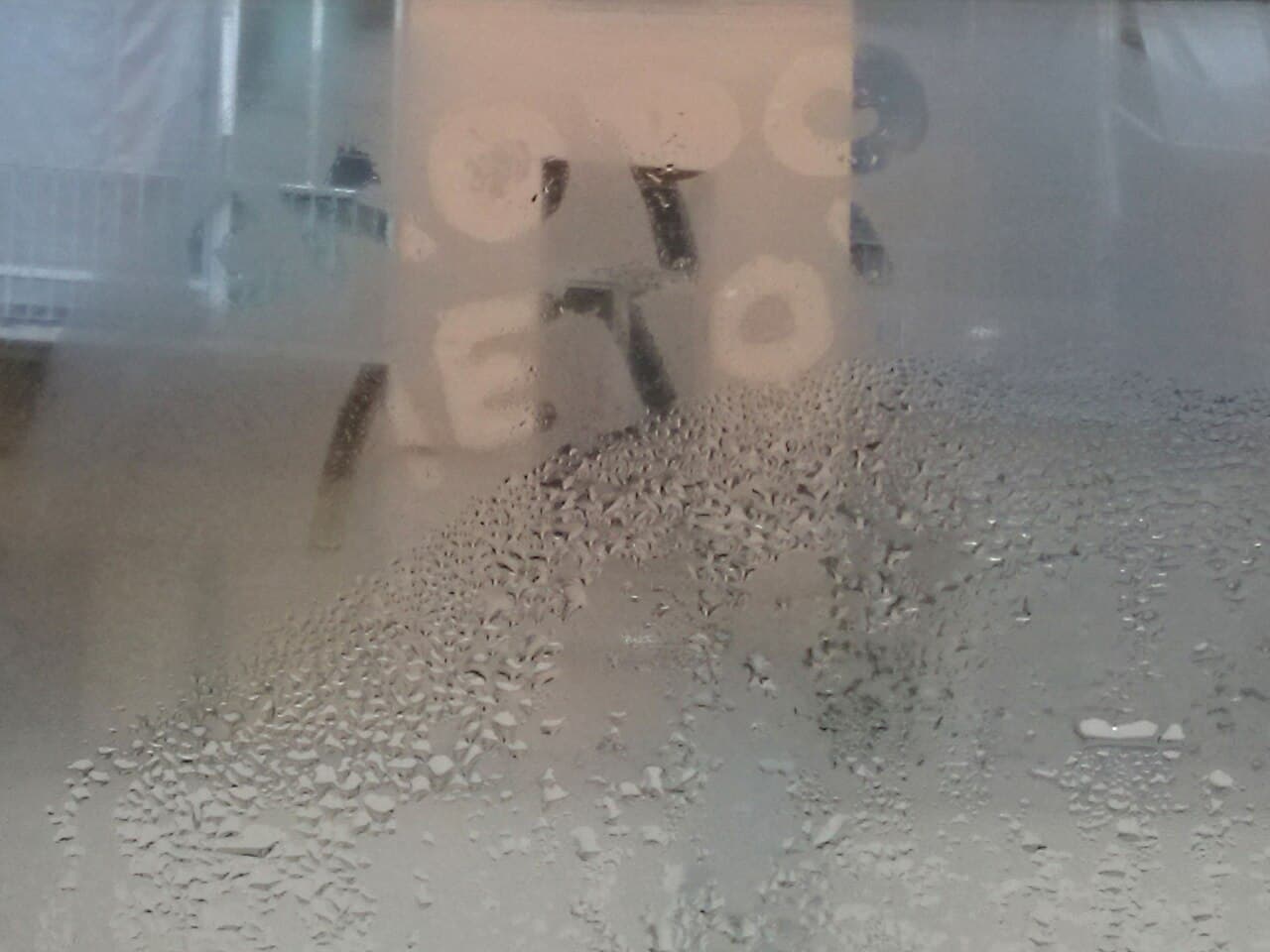
Aluminium windows without a thermal break and single glazing are another cold spot where water condenses every winter morning. Wiping the glass and frames first thing stops the water running onto sills and curtains. The guide gas heaters and damp explains the alternatives.
When to talk to a doctor
This site doesn't give medical advice and is no substitute for a consultation. In general terms, it makes sense to talk to your family doctor, or call SNS 24, the national health line (808 24 24 24), when someone at home has respiratory symptoms that persist — coughing, wheezing, shortness of breath — or when someone's asthma gets worse for no apparent reason.
It can help to bring information about the home: photos of the stains, the rooms affected, your humidity readings and how long the problem has been going on. It gives the doctor the full picture, and it's the same information you'll need to fix the damp.
There's no need to wait for the building work to be finished before seeking medical help: the two can run in parallel. If symptoms improve when the person spends a few days away from home, it's worth mentioning that at the appointment.
Renting: does health make the request more urgent?
As a rule, the senhorio (landlord) must ensure the tenant can use the home for its intended purpose under the Código Civil (Civil Code), art. 1031, and maintenance work falls to the landlord unless otherwise agreed (art. 1074). Urgent repairs can be carried out by the tenant, with notice to the landlord (art. 1036).
Having a sensitive person at home doesn't change the law, but it's a good reason to report the problem early, in writing, with photos and readings. The guide for tenants and the article on who pays for damp in a rented home explain the steps. Check your case with a lawyer or with DECO, the consumer association.
Why our diagnosis doesn't ask about health
The diagnosis's 12 questions are all about the home: where the patch is, what it looks like, when it gets worse, how you air and heat the place. We don't ask about symptoms, illnesses or medication — and we don't want that data.
There are two reasons. First, health doesn't change the cause of the damp: water ingress is water ingress, whether or not someone at home has asthma. Second, data protection: health data is sensitive, and the safest approach is not to collect it. The methodology describes what the model uses and how it calculates the probabilities.
Frequently asked questions
«Black mould» is a popular name, not a species: many different moulds are dark in colour. The WHO doesn't recommend treating some species as dangerous and others as harmless; it recommends avoiding the persistent damp that lets any mould grow. Clean carefully, fix the cause and, if someone has persistent symptoms, talk to your doctor.
Regularly sleeping in a room with persistent damp and mould is associated with more respiratory symptoms, according to the WHO. A small patch cleaned in time is very different from walls covered in mould all winter. Move the bed away from the wall, clean the mould, air the room in the morning and measure the humidity at 7am. If it persists, switch rooms while you fix it.
It can help the home: if the cause of the damp is condensation, bringing humidity down to 50–55% stops mould growing on the walls. But it isn't a treatment for asthma, and it doesn't replace medication or medical follow-up. Talk to your doctor about the condition and treat the damp as a building problem.
Yes, in general terms: house dust mites multiply more in humid environments, especially in mattresses, pillows and fabrics. Keeping humidity between 40% and 60%, airing the bedroom every morning and washing bedding regularly helps reduce them. For diagnosed allergies, follow your doctor's advice.
They release some water vapour, and watered soil also evaporates. A few plants in a large living room are barely noticeable; lots of plants in a small, poorly ventilated bedroom can add to the vapour from breathing and drying laundry. If you have mould, avoid overwatering and don't place them against cold outside walls.
SOURCES
- WHO — Guidelines for indoor air quality: dampness and mould (2009)
- INE — Survey on Income and Living Conditions, 2025 (via idealista)
- Eurostat — population living in dwellings with damp or leaks, 2023
- Código Civil (Civil Code), arts. 1031, 1036 and 1074