Aluminium windows without a thermal break and condensation
One of the most common window frames in Portuguese homes is also the coldest. Why water runs down it, what to do now and what to ask before replacing.
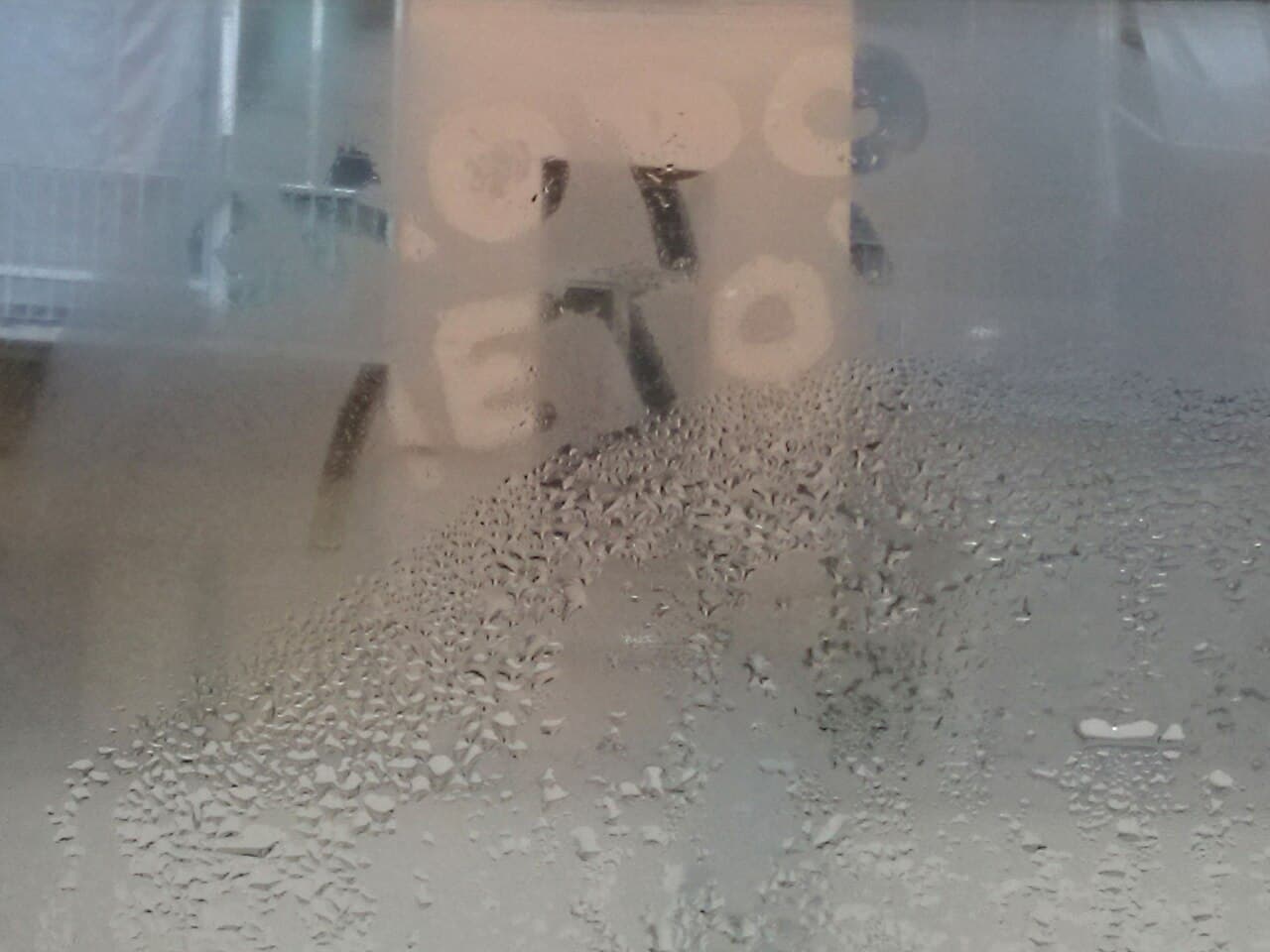
- Aluminium without a thermal break sits close to the outdoor temperature: at 18 °C and 75% RH, anything below ~13.5 °C gets wet.
- Before replacing: wipe every morning, insulating film (~€6), clear drainage holes and a controlled air inlet.
- Airtight new windows without ventilation move the mould elsewhere. Get 2–3 quotes with vents included.
IN THIS GUIDE
Why do aluminium windows «sweat»?
Aluminium conducts heat very well. In a frame without a thermal break, the profile is one continuous piece of metal between outside and inside: if it is 6 °C outdoors, the inside face of the frame is very close to that temperature.
Indoor air carries water vapour — a family of 4 puts about 10 L a day into the air, and two people sleeping release 0.5–1 L a night. When that air meets a surface below the dew point, the water condenses. At 18 °C and 75% relative humidity, the dew point is about 13.5 °C; on a winter morning, an aluminium frame is often below that.
That is why water shows up first on the frame and the single glazing, in the morning, and runs down to the sill. It isn't a fault in the window: it is physics. And it is a frequent scenario, because about 70% of homes were built before 1990, without thermal insulation rules, and many still have their original frames. Check the figures for your home with the dew point calculator.
Mould on the reveals, the sill and the shutter box
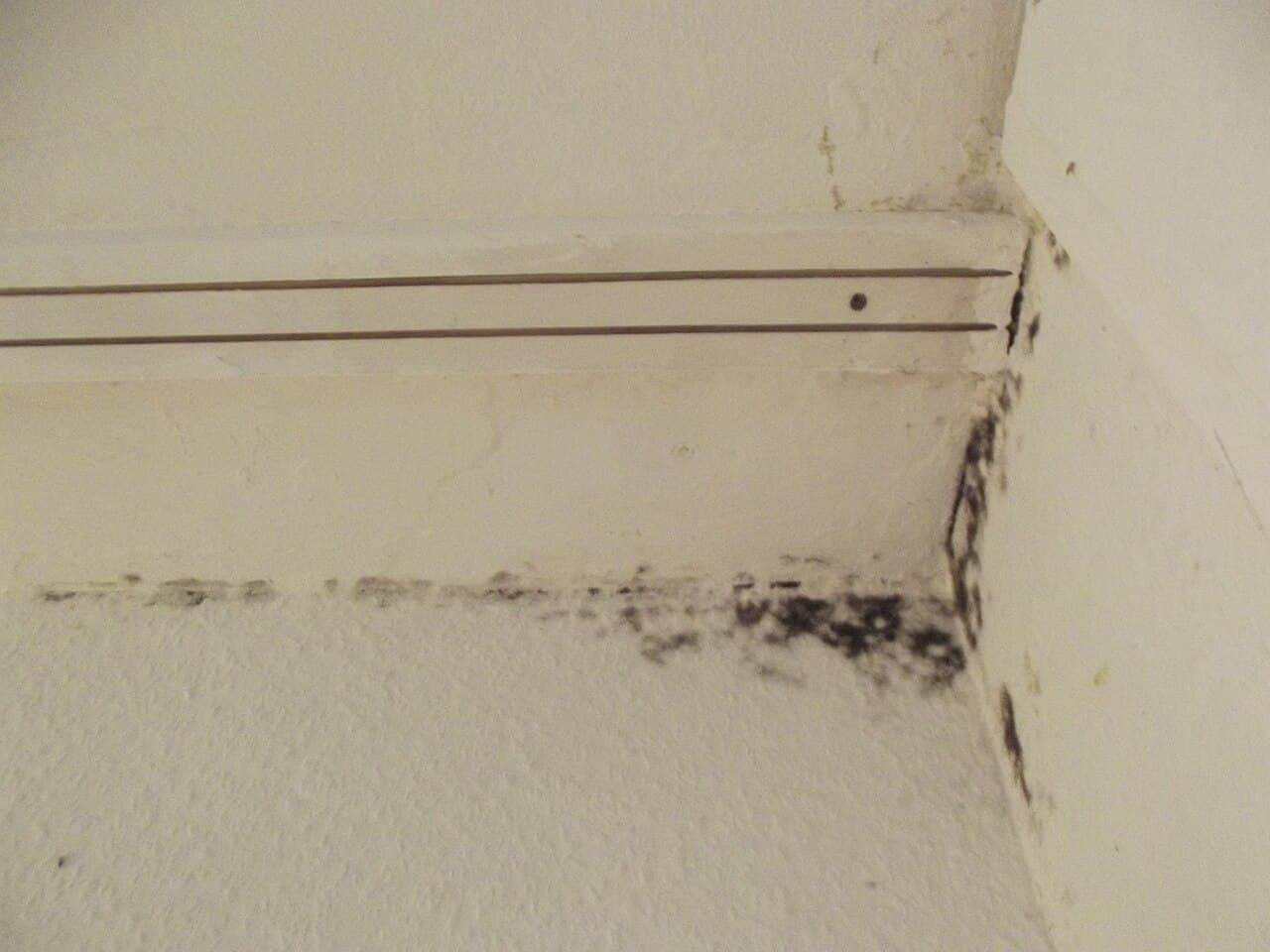
The water that runs down every morning ends up on the sill, in the silicone joint and in the plaster around the window. The reveals and the lintel are thermal bridges: parts of the wall colder than the rest, where the surface stays damp for hours.
The surface only needs to spend days above about 80% humidity for mould to appear, even without visible droplets. The typical result in buildings from the 1960s–80s: black spots in the window corners, darkened silicone and stains on the caixa de estore (roller-shutter box), which often has no insulation at all.
- Black silicone that comes back after cleaning: the joint is damp almost every day.
- Plaster peeling below the inside sill: water running down that never gets the chance to dry.
- Stains below the window that get worse after rain: this may be water ingress through the frame, not condensation — see water ingress.
What to do now, without replacing the windows
- Wipe the glass and the frame every morning with a squeegee and an absorbent cloth, before the water reaches the sill.
- Air for 5–10 minutes in the morning with opposite windows open, and leave the bedroom window ajar at night if humidity goes above 70%.
- Unblock the drainage holes in the bottom channel of the frame, so the water drains outside instead of sitting there.
- Apply clear insulating film (tesa-type, about €6): it creates a layer of air that warms the inner face of the glass.
- Pull heavy curtains and furniture away from the window, so the room's warm air reaches the glass.
- Cut the vapour: lids on pans, extractor hood on, clothes drying outside or next to an open window, and avoid gas heaters.
To clean mould from the reveals and the sill, use diluted bleach (1 part to 4 of water), with gloves, a mask and the window open, and never mix it with other products. Use biocides safely. Always read the label and product information before use. More detail in the guide on mould.
Darkened silicone rarely comes clean: the mould gets into the material. Once the cause is under control, remove it and apply new silicone, with the joint thoroughly dry.
Ventilation and dehumidifiers: when they help
Many old windows let air through the gaps; sealing them with tape or silicone to stop draughts makes indoor humidity rise. A ventilation grille in the frame or the shutter box gives a controlled air inlet without leaving the window open.
If morning humidity is still above 70%, a dehumidifier in the bedroom helps. In persistent cases, PIV (positive input ventilation, VMI in Portuguese) renews the air of the whole flat, at an estimated €800–2 500.
If water also appears on walls, in ceiling corners and behind furniture, the problem is the humidity of the indoor air, not just the window. Take the free diagnosis before spending money on new frames.
Replacing the windows: thermal break, PVC and double glazing
If you decide to replace them, there are three main routes. They all warm the inner face of the window, but in different ways:
| Option | What changes | What to check |
|---|---|---|
| Aluminium with a thermal break | An insulating bar separates the outer face from the inner one; the inside frame stays warmer. | That the thermal break runs through the whole profile (frame and sashes) and the Uw of the complete window. |
| PVC | Plastic profile with air chambers, which conducts little heat. | Internal reinforcement, certification of the system and how the finishing is done. |
| Double glazing | Two panes with a cavity: the inner face stays warmer than single glazing. | Gas-filled cavity, low-emissivity glass and «warm edge» spacer. |
| Replacing only the glass | Improves the glass, but the aluminium frame stays cold. | Whether the old profile can take the weight and thickness of double glazing. |
Replacing windows fixes condensation on the frame, but not the humidity in the air. If the home produces a lot of vapour and has no ventilation, the water will look for the next coldest surface: usually a corner of an exterior wall or the ceiling next to the façade.
So is replacing worth it? It pays off mainly when the frame is already deteriorated, lets in water or air, or when the home is being renovated anyway. If the windows are in good condition, film, daily wiping and ventilation may be enough to keep condensation under control. Better windows also reduce the cold near the glass and noise — factors to weigh up with the quotes in hand.
What to ask window installers
There is no reliable reference price for windows: it depends on the sizes, the system chosen and the finishing work. Get 2–3 quotes with the same specification and compare them line by line.
- Does the profile have a thermal break throughout, including frame and sashes? What is the Uw of the complete window?
- What glazing do you propose: double with what cavity width, gas-filled, low-emissivity?
- Are ventilation grilles included? Where do they go and how much air do they let through?
- Is the shutter box replaced or insulated?
- How will the reveals and the sill be finished, and who repairs the plaster and paint?
- What written guarantee do you give for frame, glass and fitting?
In a building, the façade is a common part under the Código Civil (Civil Code), art. 1421. Check with the administração do condomínio (building management) whether there are rules on window colour and design before ordering. If you rent, replacement needs the agreement of the senhorio (landlord) — see what you can ask for under tenants.
Frequently asked questions
It works on the glass: the air layer between the film and the pane warms the inner surface and reduces condensation, especially on single glazing. It doesn't fix the aluminium frame, which stays cold and may keep running with water. It is a cheap solution, around €6, and temporary — useful for one winter while you decide whether to replace the windows.
It depends on where it appears. On the outside face, on cold clear mornings, it is normal and even a sign of good insulation. On the inside face, it points to very high humidity in the room or old, inefficient double glazing. Between the two panes, it means the cavity seal has failed and the glazing unit should be replaced.
Open the window and look at the profile in cross-section, for example near the catch: a thermally broken frame shows a strip of insulating material, usually dark plastic, separating the outer part from the inner part. On a cold day, also touch the frame: if it is almost as cold as single glazing and much colder than the wall, it probably has no thermal break.
Usually it is the one in the room with the most vapour or the coldest surface. A bedroom with two people sleeping gets 0.5–1 L of water a night, with the door shut; a north-facing or more wind-exposed window cools down more. Measure the humidity in that room at 7 am with a hygrometer and compare with the others.
As a rule, conservation works fall to the senhorio (landlord) under the Código Civil (Civil Code), art. 1074, unless agreed otherwise, but swapping working windows for more efficient ones may be seen as an improvement rather than conservation. If the frame is deteriorated or lets water in, that changes things. Ask in writing and check your case with a lawyer or with DECO, the consumer association.
SOURCES
- Building physics: dew point (Magnus formula)
- Código Civil (Civil Code), arts. 1074 and 1421
- WHO — Guidelines for indoor air quality: dampness and mould (2009)