Efflorescence (salitre) on walls: what it is, where it comes from and how to treat it
The white powder that blisters paint and crumbles plaster is a sign of water passing through the wall. Find out where it comes from and why painting over it fails.
- Efflorescence is dissolved salts carried through the wall by water and left at the surface when it evaporates: water is on the move.
- The usual sources are rising damp (band up to ~1 m on the ground floor), water ingress or a new wall still drying out.
- Brush it off dry, don't wash it with lots of water and don't paint over it: treat the source first, then use a suitable plaster.
IN THIS GUIDE
What is efflorescence (salitre) on a wall?
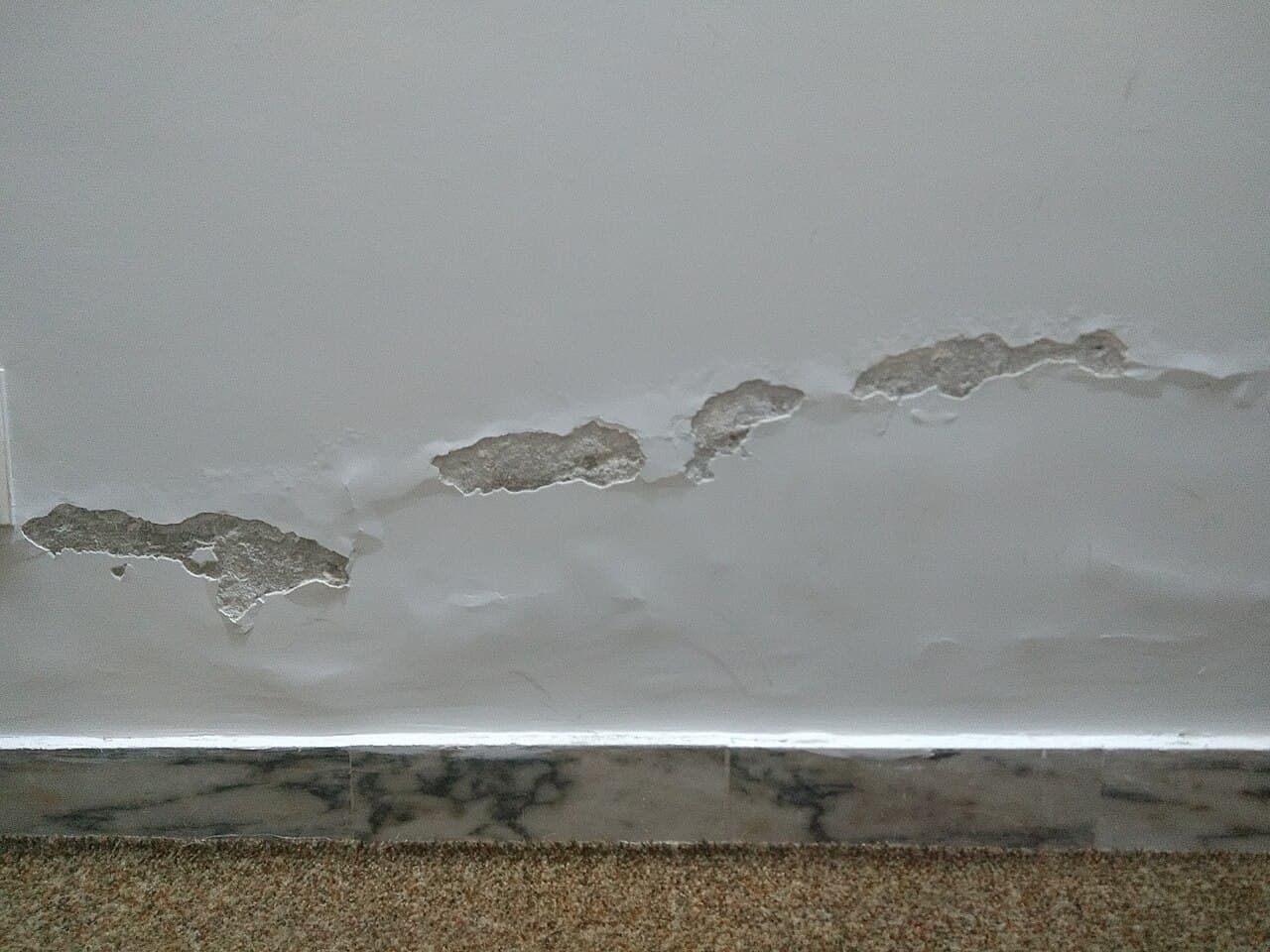
Efflorescence — known in Portugal as salitre — is the white crystals that appear on the surface of walls, garden walls and floors. It can look like fine powder, a hard crust or a kind of «cotton wool» that grows under the paint and makes it blister.
The salts are dissolved in the water moving through the wall. They come from the ground, from the materials themselves (brick, stone, mortar, cement) or from pollution. When that water reaches the surface and evaporates, the salts stay behind and crystallise. So efflorescence has a simple message: water is passing through the wall, from the inside out.
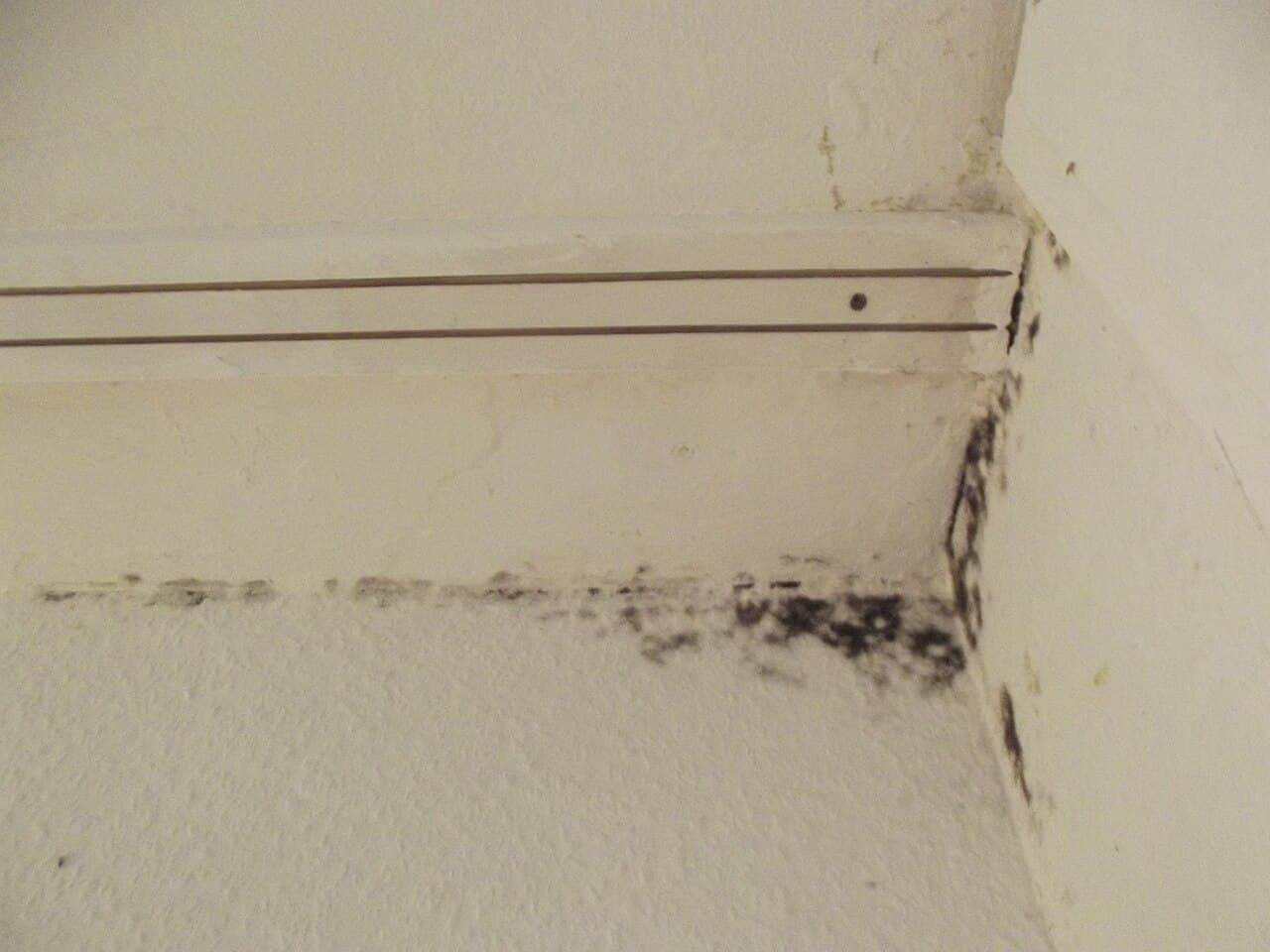
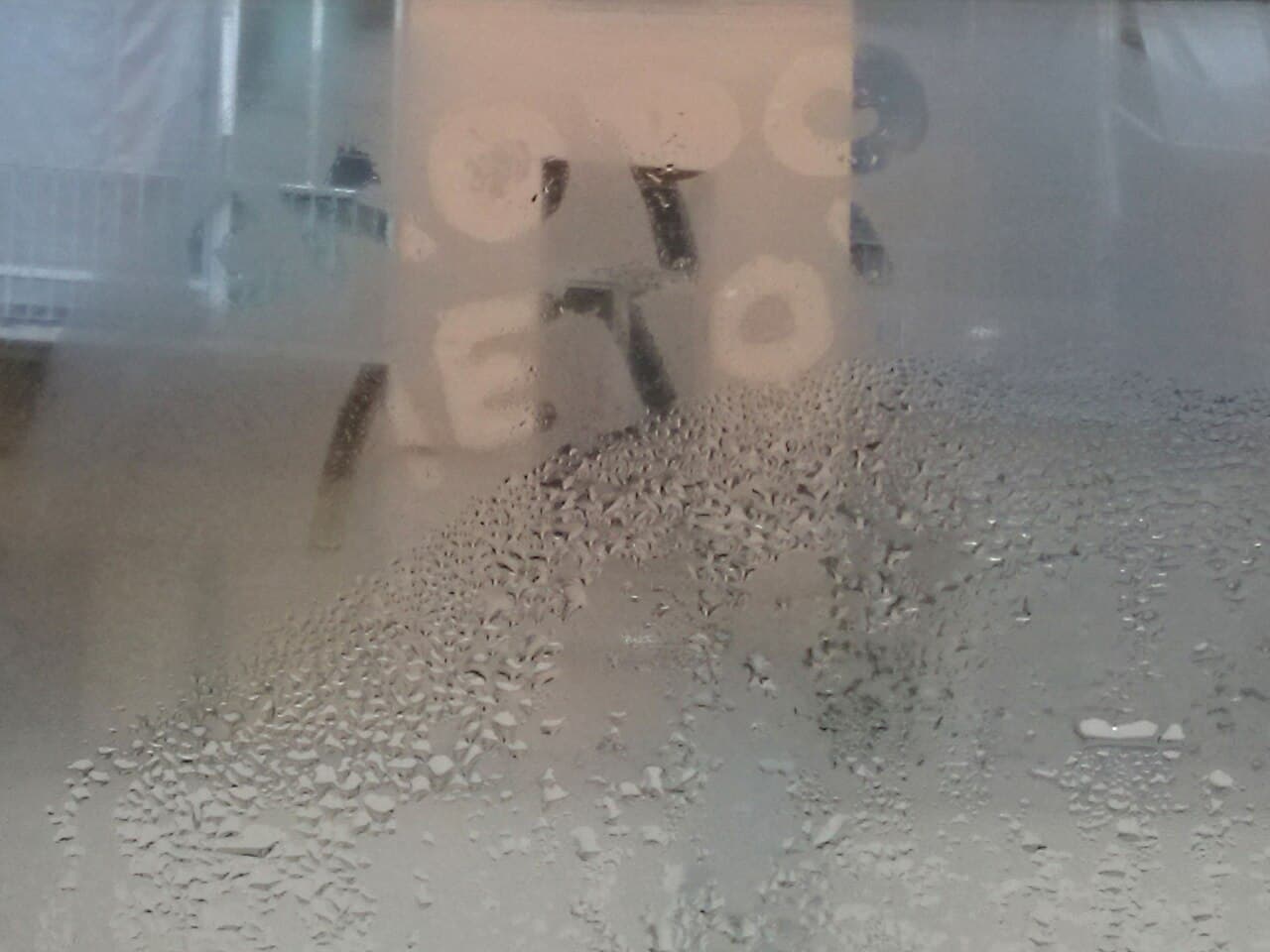
That sets it apart from mould. Mould is a living organism, usually in black, green or grey spots, and grows on cold surfaces where air moisture condenses. Efflorescence is mineral and white, and almost never comes from condensation, because water from the air carries no salts.
Where efflorescence comes from: rising damp, water ingress or a new wall
Knowing there is water isn't enough: you need to know where it comes from. The position and behaviour of the salts help a lot.
| Source | Where it appears | Other signs |
|---|---|---|
| Rising damp | horizontal band from the floor up to ~1 m, ground floor or basement | present all year, crumbling plaster, stained skirting |
| Water ingress | patches on the façade, under windows, next to terraces, balconies and roofs | worse after wind-driven rain; tide rings |
| Plumbing leak | around buried pipes, next to bathrooms and kitchens | also grows in dry weather; water meter test |
| New wall drying out | walls built or plastered a few months ago | fades over time and doesn't return once dry |
| Retaining and buried walls | basements, retaining walls, walls against soil | water from the ground on the outside |
Rising damp is the classic cause: water climbs from the ground through the pores of the wall, like a wick, and evaporates in a band where the salts build up. Since rising damp practically never happens above the ground floor, salts on a 3rd floor point to water ingress or a leak.
On new walls, efflorescence is often temporary. The water used in mortars and concrete takes months to leave and brings salts from the materials with it. If it fades month by month, just brush it off and wait before painting.
Why efflorescence ruins plaster and paint
When salts crystallise inside the pores, just under the surface, the crystals grow and push outwards. That is what makes paint blister, plaster crumble and new paintwork crack after a few months. The more wet-and-dry cycles, the greater the damage.
There is a second, less well-known effect: many of these salts are hygroscopic, meaning they absorb moisture from the air. A salt-laden wall can look damp on rainy days even after the source of water has been dealt with. It is also why pin moisture meters show very high readings on salty walls, even almost dry ones — the guide how to measure damp in a wall explains how not to be fooled by those numbers.
Brush or wash? How to clean efflorescence
Cleaning efflorescence doesn't treat the cause, but it stops the salts dissolving again and going deeper. Do it with the wall as dry as possible:
- Protect the floor with plastic sheeting and wear a mask and goggles: salt and plaster dust irritates eyes and airways.
- Brush dry with a stiff nylon brush, from top to bottom. Avoid wire brushes on soft plaster.
- Vacuum the dust straight away, so it isn't walked around the home.
- Remove blistered paint and loose plaster back to a firm base.
- Repeat after one or two weeks: as long as water is passing through, new crystals will appear.
Washing with lots of water is a common mistake. The water dissolves the salts again and carries them back into the wall, and the efflorescence returns stronger when it dries. If you need to clean residue, use a cloth that is only damp and let it dry well.
Why painting over efflorescence doesn't work
Painting is the natural reaction: the wall is white again and the problem seems to vanish. It doesn't last. Water keeps arriving, salts keep crystallising and, within weeks or months, the paint blisters again in the same place.
Worse still are fixes that seal the wall: waterproof paints, gloss enamels, very dense cement renders or tiles up to half height. Water can no longer evaporate where it used to and climbs higher until it finds an open area. It is common to see a band of salts go from 60 cm to 1.2 m after a «repair» like this.
The same applies to anti-mould paints: they are designed for condensation, not for salty walls. In old stone houses, cement render over traditional masonry is one of the most common mistakes — the guide damp in old houses explains why.
Salt-retardant plasters: the right finish once the cause is treated
Once the source of water has been fixed or stopped, the old salt-laden plaster usually has to come off, typically up to about 50 cm above the highest damp mark. To replace it there are plasters made for salty walls, called renovation plasters or macroporous plasters (rebocos de saneamento).
The idea is different from ordinary plaster. They are very porous and let water vapour through, but they store salts in their pores, away from the surface. The wall keeps drying and the paint stays protected for years. They should be finished with vapour-permeable paints, such as silicate or lime paints.
Note: a renovation plaster is a finish, not a treatment. On a wall with active rising damp and no barrier, it eventually becomes saturated. The options for stopping the water — injections, electro-osmosis, drainage — and the €35–60 per m² prices are compared in injections vs electro-osmosis vs plaster and in how much rising-damp treatment costs.
When efflorescence needs a technician
You can deal yourself with efflorescence on a new wall that is drying out, or on a small area next to a pipe that has already been repaired. Ask for a technical assessment when:
- the band of salts rises or widens from one winter to the next;
- it appears on a floor above the ground floor, where rising damp is unlikely;
- plaster is falling off in pieces or the masonry is exposed;
- salts appear after rain, next to windows, balconies or terraces;
- you are buying the home and need to know what the repair might cost.
Before calling anyone, take the free diagnosis: 12 questions about the stain, the floor and the time of year, with a probability for each cause. If you already have a quote, the free second opinion checks whether the proposed method matches the type of damp and whether the price per m² is within the observed range.
Frequently asked questions
Efflorescence itself is a mineral deposit and isn't comparable to mould. The dust can irritate eyes and airways while you brush it off, so wear a mask and goggles then. What deserves attention is the moisture causing it: walls that stay damp for a long time encourage mould and damage materials. Treat the source of water and keep the room ventilated.
It rarely disappears straight away. A thick wall can take many months to dry, and during that time salts keep being pushed to the surface. It is normal to brush several times in the first year. That is why many technicians recommend waiting for the wall to dry, or using a renovation plaster, before the final coat of paint.
On a garden wall, a fair-faced brick façade or an outdoor floor, some efflorescence is common and may just reflect rain or new materials drying out. It becomes a concern when it always appears in the same place, grows, also shows on the inside of the wall or comes with falling plaster and cracks.
It isn't a good idea. Vinegar is a weak acid and, on lime plaster or some stones, it can attack the material. On top of that, the water in the mixture dissolves the salts and carries them back into the wall. The safest way is to brush dry and vacuum, repeating as long as crystals reappear, and to treat the source of the water.
SOURCES
- Building physics: water and salt transport in porous materials
- Prices observed on Google.pt, cume.pt, Zaask and Habitissimo, Oct 2026