Mould in the bedroom: why it appears and how to get rid of it
The bedroom is where mould appears most — and there is a physical reason for it. The plan to get rid of it, in most cases without building work.
- Bedroom mould is almost always condensation: two sleepers release 0.5–1 L of water a night and outside walls are cold.
- Move the wardrobe and bed 5–10 cm off the outside wall, air for 5–10 minutes each morning and don't dry laundry there.
- If humidity at 7 am stays above 70% for 2 weeks, run a dehumidifier overnight with the humidistat at 50–55%.
IN THIS GUIDE
Why does mould appear in the bedroom?
In the vast majority of cases, bedroom mould is condensation. Overnight, two people sleeping release about half a litre to a litre of water into the air, just by breathing. The door is shut, so is the window, and the bedroom is often the coldest room in the home. By morning, relative humidity easily goes above 75–80%.
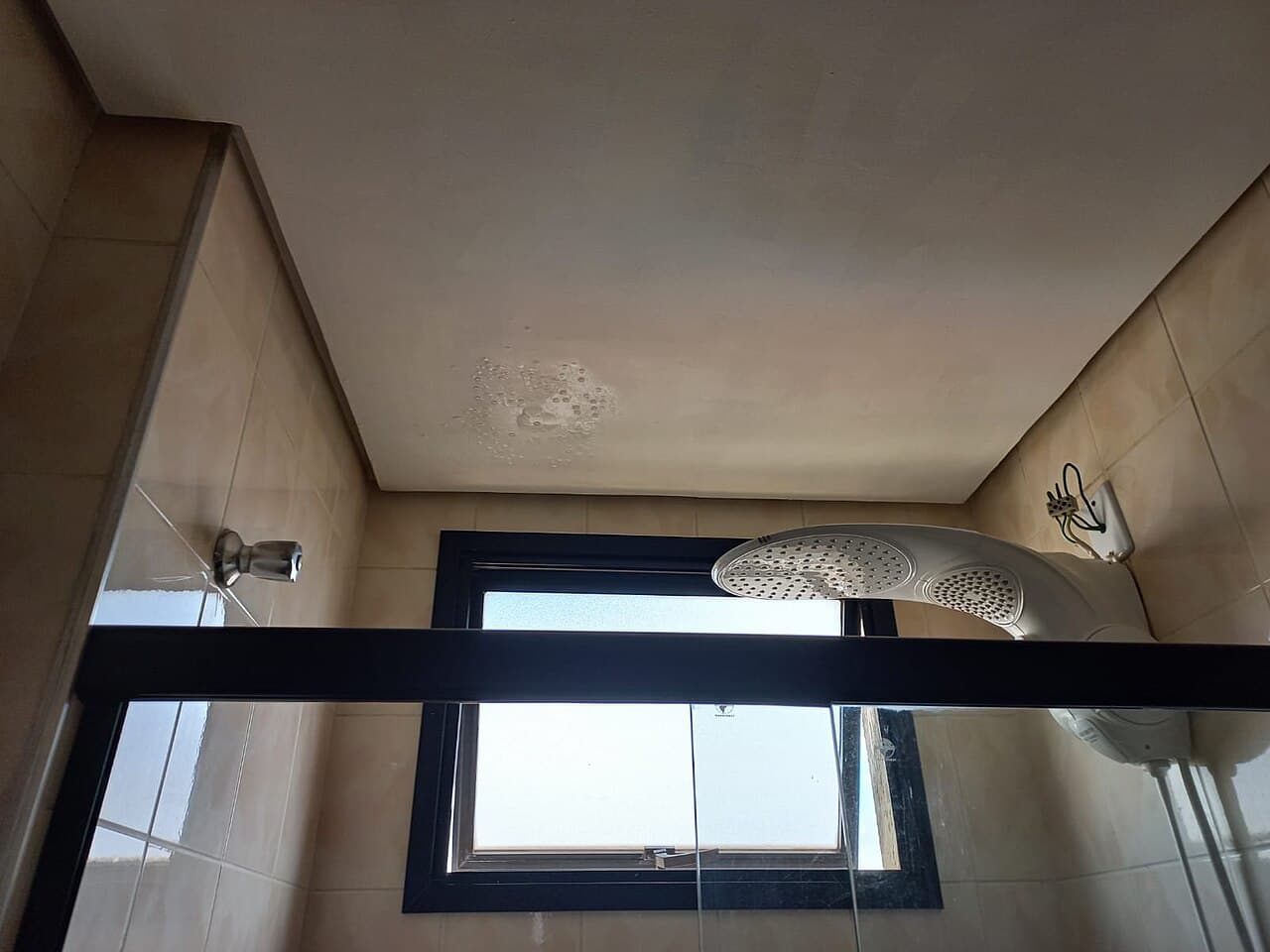
When that humid air touches a cold surface — the corner where the outside wall meets the ceiling, the wall behind the wardrobe, the aluminium window frame — the water condenses. With the room at 18 °C and 75% humidity, any surface below roughly 13.5 °C will get condensation. You can check these figures with the dew point calculator.
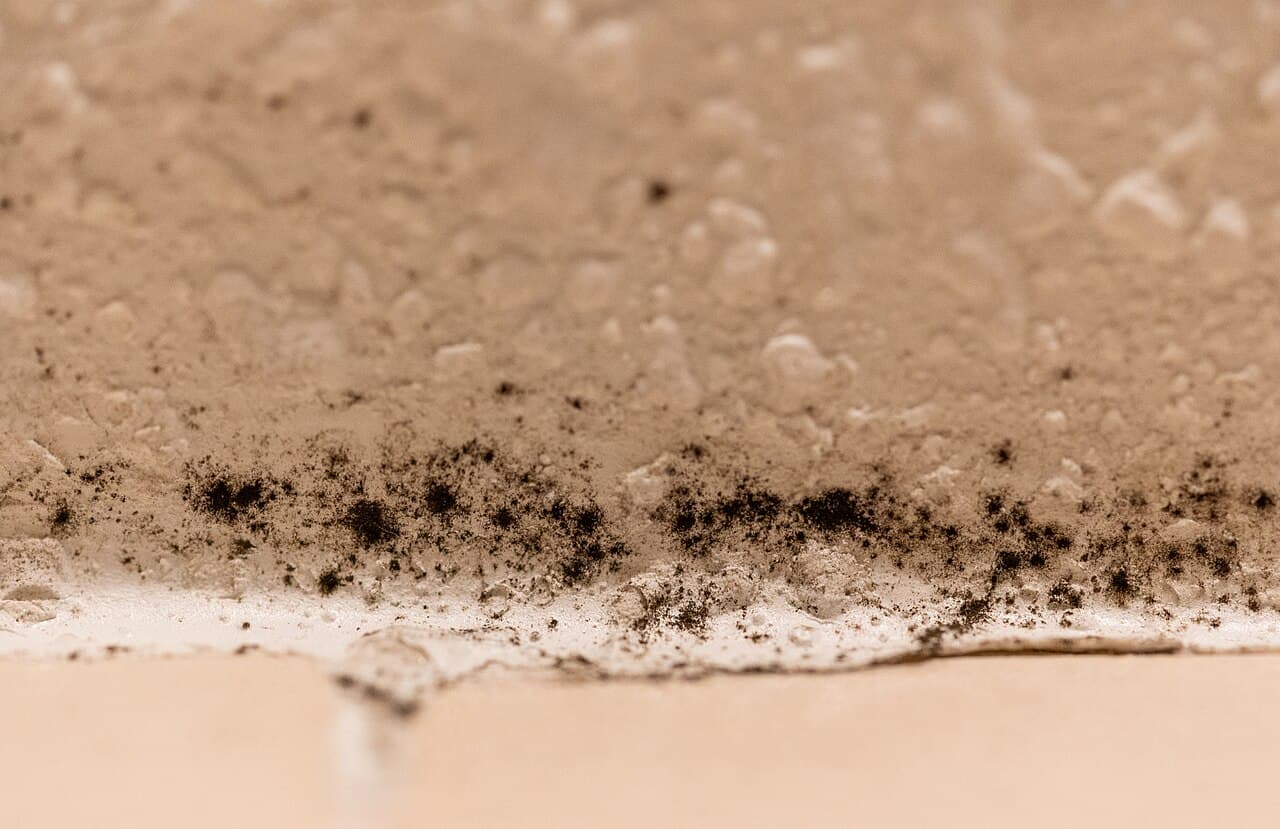
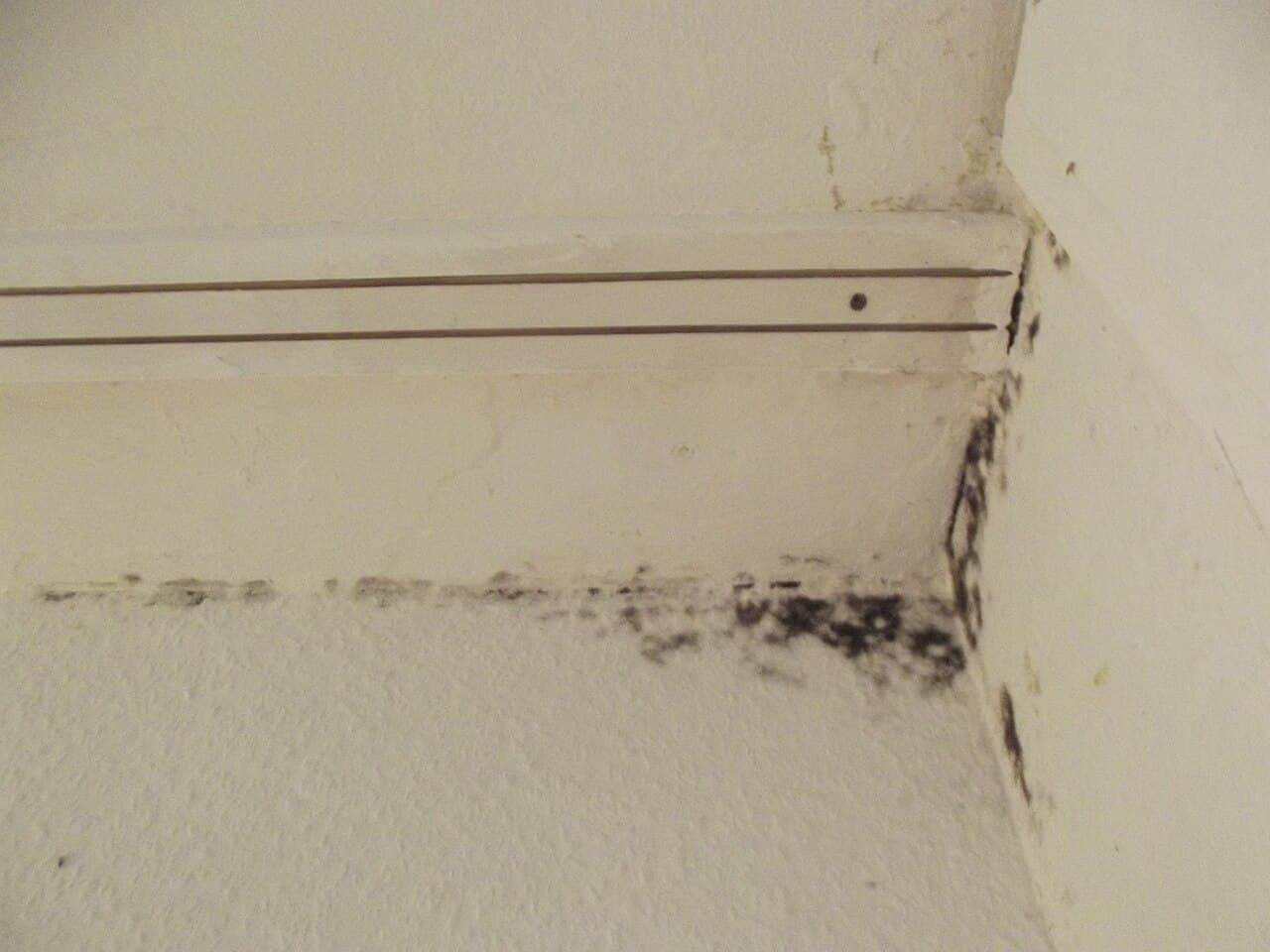
Mould doesn't even need visible droplets. It only needs humidity at the surface above ~80% for several days. That is why it shows up first in the upper corners and behind furniture, where the air barely moves.
How to tell whether bedroom mould is condensation
Condensation leaves a recognisable pattern. If most of these signs match your bedroom, that is probably the cause — and in most cases it can be fixed without building work.
- Black spots in the upper corners, especially on north-facing walls.
- Mould behind the wardrobe, chest of drawers or headboard.
- Clothes and shoes in the wardrobe smelling musty.
- Droplets on the windows when you wake up, especially with aluminium frames without a thermal break.
- Clearly worse between November and March, and almost gone in summer.
For the full mechanism, read the guide to condensation damp. If you're unsure, the free diagnosis cross-checks these signs with the type of home, the floor and your habits, and gives a probability for each cause.
Wardrobes and beds against an outside wall
A wardrobe against an outside wall works like badly placed insulation: it shields the wall from the room's heat, so the wall gets even colder, and it stops air from circulating. Behind it, humidity at the surface rises above 80% and mould grows unseen until it reaches the clothes.
- Move the wardrobe and the bed 5–10 cm away from outside walls. It doesn't sound like much, but it is enough for air to circulate.
- If you can, move the wardrobe to an inside wall, which stays warmer.
- Don't pack the wardrobe to the limit, and leave its doors open for half an hour after airing the room.
- Don't put away clothes that are still damp or wet shoes.
- If the headboard is on a cold outside wall, pull it away from the wall or turn the bed round if the room allows.
A moisture absorber inside the wardrobe helps in a small closed space, but it won't dry a whole room. See what to expect in the guide to moisture absorbers.
How to clean the mould and stop it coming back
- Clean the mould with diluted bleach (1 part to 4 parts water), wearing gloves and a mask, with the window open. Never mix bleach with other products.
- Dry the surface well and wash affected fabrics (curtains, clothes) on a hot cycle.
- Air the room for 5–10 minutes every morning with windows on opposite sides open — a short, strong through-draught, not a window left ajar all day.
- Don't dry laundry in the bedroom, and keep its door closed when drying laundry in other rooms. There are alternatives in the guide to drying clothes indoors.
- For 2 weeks, note the humidity at 7 am and in the late afternoon. Those numbers tell you whether the changes are enough.
If you prefer an anti-mould product, choose one meant for interior walls and follow the instructions. Use biocides safely. Always read the label and product information before use.
Night-time heating and dehumidifier settings
A bedroom that cools down a lot overnight has cold walls exactly when humidity peaks. Low, steady heating — for example 17–18 °C on a thermostat — usually works better than heating hard at bedtime and switching off. An electric heater or an air conditioner in heating mode adds no water vapour to the air.
| Bedroom air | Dew point | What it means |
|---|---|---|
| 18 °C and 75% RH | ≈13.5 °C | Cold corners and window frames condense easily |
| 18 °C and 60% RH | ≈10.1 °C | Much more margin before condensation |
| 20 °C and 55% RH | ≈10.7 °C | Comfortable in most homes |
If humidity at 7 am is still above 70%, a 10–12 L/day compressor dehumidifier (from about €90) is usually enough for a bedroom. Run it overnight with the door closed and the humidistat at 50–55%; below that it uses electricity with no benefit. In very cold rooms, below ~15 °C, desiccant models work better. Compare models in the guide which dehumidifier to buy.
Mould in a baby's or child's room
Children's rooms follow the same physics, with one twist: the door is often kept shut with a heater on, and sometimes a humidifier too. If the hygrometer already reads above 60%, switch the humidifier off — it is adding water to a room that already has too much.
- Clean the mould with the child out of the room, and air it well before they come back.
- Place the cot or bed away from the outside wall and the window.
- Aim for humidity between 40 and 60%, measured in the morning.
- Fix the cause rather than spraying the same spot over and over.
Prolonged exposure to damp and mould is associated with more respiratory symptoms, especially in children and in people with asthma or allergies. It is no reason to panic, but it is a reason not to leave the problem until next winter. If your child has persistent symptoms, talk to the paediatrician. There is more context in the guide to damp and health.
When bedroom mould is not condensation
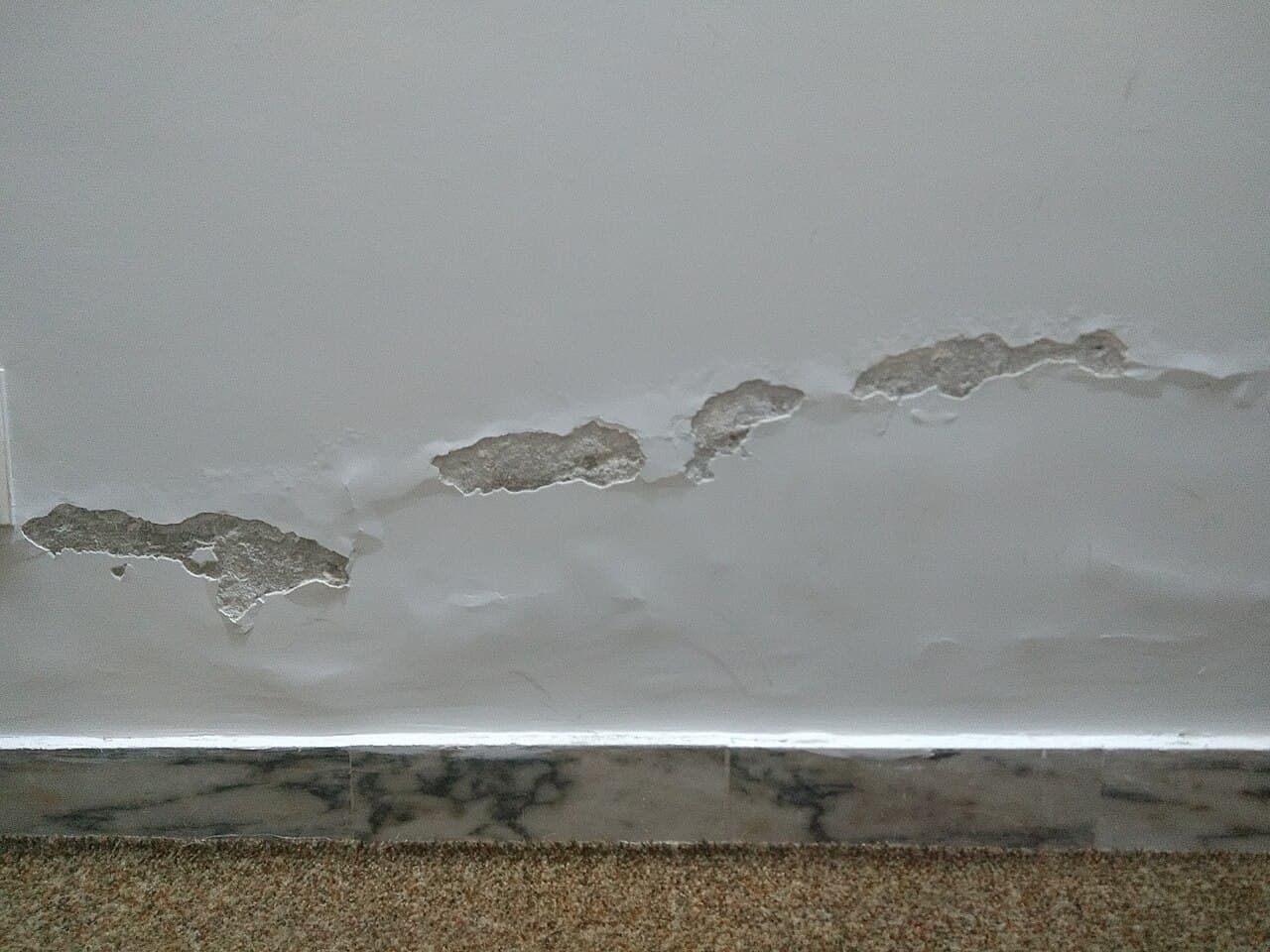
If the patch has a sharp yellow-brown edge, appears after rain or is on the ceiling of a top-floor flat, think water ingress. If it sits in a band near the floor of a ground-floor home, it may be rising damp. In those cases, airing and dehumidifying are not enough.
| Sign | Most likely |
|---|---|
| Black spots in the upper corners, worse in winter | Condensation |
| Brown tide mark on the ceiling, worse after rain | Water ingress |
| Band up to ~1 m from the floor, with white salts | Rising damp |
| Patch that grows in dry weather | Plumbing leak |
If the mould returns less than 3 weeks after cleaning, even though you air the room and humidity is below 65%, the cause is probably not just condensation. In that case, take the diagnosis before asking for quotes. If you rent, the guide to damp in a rented home explains what, as a rule, falls to the senhorio (landlord).
Frequently asked questions
It removes it from the surface of painted walls and tiles, diluted 1 part to 4 parts water, with gloves, a mask and the window open. On porous surfaces and wood it may not reach the roots. Either way, if the bedroom stays humid, the mould comes back in the same place within weeks. Cleaning is the first step, not the solution.
Compressor models make a steady hum, similar to a fridge, and many have a night mode. If it bothers you, run it in the late afternoon with the door shut, switch it off at bedtime and on again in the morning while you air another room. What matters is keeping the humidistat between 50 and 55%.
White vinegar helps with light mould and on surfaces where you'd rather not use bleach, such as some wood, but it is less effective. Neither fixes the cause: if the wall stays cold and the air humid, the mould returns. Use vinegar or bleach to clean, and deal with the humidity at the same time.
A few small patches won't make a room dangerous overnight, but prolonged exposure is associated with more respiratory symptoms, especially in children and in people with asthma or allergies. Clean the patches, bring the humidity down and, if someone has persistent symptoms, see a doctor. Moving to another room for a while is reasonable when the mould is extensive.
A strong 5–10 minute draught replaces the air without chilling the walls, which hold on to their heat. What cools the home is a window left ajar for hours. Open windows on opposite sides, close them once the air is fresh and heat again. Cold outside air, once warmed, has a lower relative humidity.
SOURCES
- Building physics: dew point (Magnus formula)
- WHO — Guidelines for indoor air quality: dampness and mould (2009)
- Regulation (EU) No 528/2012 concerning biocidal products
- Prices observed on Google.pt, cume.pt, Zaask and Habitissimo, Oct 2026