Mould in the wardrobe and on clothes: why it appears and how to prevent it
A wardrobe against an outside wall, still air and clothes put away damp: the three causes of mould in wardrobes, and what to do with clothes and shoes.
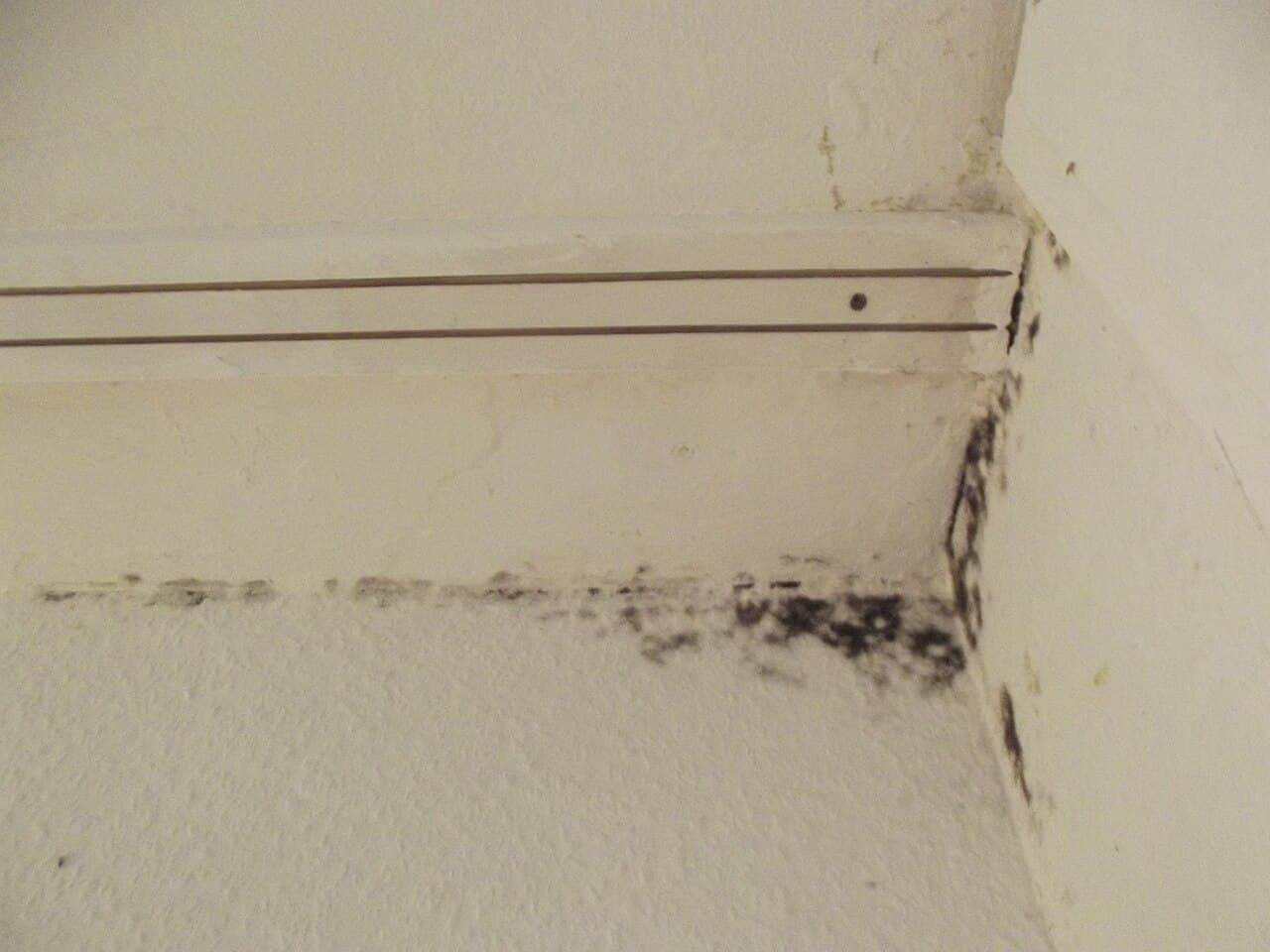
- A wardrobe against an outside wall is colder than the room; with no air moving, humidity next to the wall goes above 80%.
- Move it 5–10 cm off the wall, leave air below and above and don't pack it full; absorbers help inside the wardrobe, not in the room.
- Wash affected clothes at the highest temperature on the label, dry them fully and clean shoes and leather outdoors.
IN THIS GUIDE
Why does mould appear in a wardrobe?
Mould in a wardrobe appears when three things come together: a cold surface, still air and enough humidity in the bedroom. The typical case is a wardrobe against a north-facing outside wall, in an uninsulated 1960s–80s building, in a winter when the bedroom's relative humidity sits at 70% in the morning.
The outside wall is the coldest in the room. When the wardrobe covers it, warm air from the room no longer reaches it and the surface cools even further. The vapour in the air, meeting that cold area, pushes humidity next to the wall above ~80% — enough for mould to grow over a few days, even with no visible droplets. Clothes touching the back of the wardrobe pick up the same moisture.
The vapour comes from normal household life. Two adults sleeping release about 0.5–1 L of water per night, and a family of four puts ~10 L a day into the air through showers, cooking and drying laundry. In a closed bedroom, a good part of that water ends up in the coldest, least ventilated spots: the corner behind the wardrobe is one of them.
Wardrobe on an outside wall: how to confirm it is condensation
Before moving everything around, confirm it. Three signs together point fairly reliably to condensation:
- the mould is on the back of the wardrobe, in the corners and on clothes against the wall, not on the door side;
- it gets worse in winter and almost disappears in summer;
- the bedroom hygrometer at 7 am shows more than 65–70% relative humidity on most days.
To measure the wall, use a ~€15–20 infrared thermometer: open the wardrobe in the morning and measure the wall behind the clothes and the same wall away from the wardrobe. A difference of 2–3 °C is common. Then compare with the dew point in the calculator: at 18 °C and 75% RH in the bedroom, the dew point is ≈13.5 °C, and a wall at 14 °C is already in the risk zone. The infrared thermometer guide explains how to measure.
If the wardrobe stands against an interior wall, a bathroom wall or a wall with pipes, and the stain grows even in dry weather, the cause may be a leak or water ingress. In that case, the free diagnosis helps work out which is more likely.
Move the wardrobe away and let air circulate
The most effective fix is also the cheapest: let the room's air reach the wall. In practice:
- Move the wardrobe 5–10 cm away from the wall. If you can, move it to an interior wall.
- Leave air underneath. A wardrobe sitting directly on the floor, with a closed plinth, creates a pocket of still air. Legs of 5–10 cm or a plinth with openings solve it.
- Leave air above. Don't stack boxes and suitcases up to the ceiling on top of the wardrobe.
- Don't pack it full. Tightly packed clothes stop air moving between them.
- Open the doors for a few minutes a day, ideally while airing the bedroom in the morning.
In built-in wardrobes, common in Portuguese flats, you can't move away from the wall. There it helps to swap solid doors for louvred ones, leave a gap at the top and bottom and keep the back of the shelves lighter, a few centimetres from the wall.
Absorbers, silica and dehumidifiers: where they actually help
Calcium chloride absorbers work best in a small, closed space — and a wardrobe is exactly that. In a wardrobe, a ~€9 absorber with ~€1.50 refills can remove enough moisture to make a difference. For the whole bedroom it isn't enough: the guide do moisture absorbers work? does the maths.
| Solution | Where it helps | Limit | Indicative cost |
|---|---|---|---|
| Moving the wardrobe and letting air circulate | the main cause | not always possible with built-in wardrobes | €0 |
| Calcium chloride absorber | inside the wardrobe | doesn't lower the room's humidity | ~€9 + refills ~€1.50 |
| Silica sachets | shoe boxes, bags | very small volume | low |
| Dehumidifier in the bedroom | room above 70% RH at 7 am | doesn't fix lack of air inside the wardrobe | €90–300 |
| Airing 5–10 minutes a day | the whole room | needs a routine | €0 |
If the bedroom stays above 70% in the morning even after two weeks of airing, the problem is no longer just the wardrobe. A compressor dehumidifier, with the humidistat at 50–55%, has the best effect — see which dehumidifier to buy. Home tricks with salt, rice or charcoal absorb very little water.
Mouldy or musty-smelling clothes: how to wash them
Most clothes can be saved if you act early. Do this:
- Separate the affected clothes from clean ones and take them outside or onto the balcony.
- Shake and brush dry patches outdoors, so you don't spread spores around the bedroom.
- Wash at the highest temperature the label allows, with your usual detergent.
- Dry completely, ideally outdoors in the sun, before putting them away again.
- If the musty smell persists, wash a second time before storing.
Delicates, wool, silk and suits should go to the dry cleaner, mentioning that they have mould. Old stains on light fabrics may not come out completely. Don't use bleach without checking on the label that the fabric can take it.
The most common mistake is putting away clothes that feel dry but are still damp inside, especially in winter. Drying laundry in the bedroom makes everything worse: the guide drying clothes indoors shows how to do it without creating mould.
Shoes, bags and leather jackets
Leather is an organic material and mould settles on it easily, especially on shoes stored closed up for months. To clean:
- work outdoors and brush off white or greenish dust with a soft brush;
- wipe with a cloth that is only damp and let it dry in the shade, away from heaters, which crack leather;
- apply a leather cream or conditioner once it is completely dry;
- stuff shoes and bags with newspaper or plain paper to absorb moisture inside.
For storage, choose cardboard boxes with a few holes or fabric bags, never sealed plastic bags. A silica sachet in each box helps. Shoes worn every day should air for a night outside the wardrobe before being put away.
Clean the wardrobe and stop it coming back
With the wardrobe empty, vacuum the inside and clean the surfaces with a damp cloth and diluted bleach, 1 part to 4 of water, or with an anti-mould product. On bare wood, test first in a hidden corner, because bleach can discolour it. Wear gloves and a mask and keep the window open.
Use biocides safely. Always read the label and product information before use.
Leave the wardrobe open and empty for at least 24 hours, until it is completely dry, and clean the wall behind it too. Swollen plywood or chipboard with mould inside is usually easier to replace than to clean.
Then keep up the routine: air the bedroom in the morning, humidity below 65% at 7 am, clothes put away only when fully dry. The guide mould in the bedroom and the bedroom page cover the rest of the room.
Frequently asked questions
A thin insulation board stuck to the back of the wardrobe can reduce the cold surface on the clothes side, but the wall behind stays cold and airless, and mould may start growing hidden between the board and the wall. As a rule, it is better to move the wardrobe a few centimetres away and let air circulate. Insulating the wall continuously is a different job.
A musty smell often appears before the stains. It comes from compounds released by fungi and bacteria growing in the fibres or on wardrobe surfaces when humidity stays high for days. It is an early warning: wash the clothes, dry them fully, air the wardrobe and measure the humidity inside it with a hygrometer for a few days.
They can protect clothes that go in completely dry and clean, because the bag isolates them from humid air. The risk is the opposite: if the clothes are slightly damp or carry traces of sweat, the moisture is trapped and mould can appear anyway. Use them for washed, fully dry seasonal clothes, and check them during the winter.
It isn't a good idea. A bulb or small heater inside a closed cupboard full of clothes is a fire risk, and the effect on humidity is limited. It is more effective and safer to heat the bedroom moderately and steadily, move the wardrobe away from the wall and let air circulate, with an absorber inside if needed.
SOURCES
- Building physics: dew point (Magnus formula)
- Regulation (EU) No 528/2012 concerning biocidal products
- Prices observed on Google.pt and online shops, Oct 2026