Damp and mould in the kitchen: causes and solutions
Steam from pans, recirculating hoods, gas cookers, tumble dryers and leaks under the sink: where kitchen damp comes from and how to stop it.
- A recirculating hood filters grease and smells but returns the steam to the kitchen. To remove moisture, you need extraction outside.
- Switch the hood on before you start cooking, use lids and leave it running for 10–15 minutes afterwards.
- Mould or swollen board under the sink is often a leak — not condensation. Check the trap and the water meter.
IN THIS GUIDE
Why there is damp and mould in the kitchen
The kitchen produces water vapour several times a day: pans on the hob, the kettle, the dishwasher when you open it, the laundry that sometimes dries nearby. In a family of four, cooking is part of the roughly 10 litres of water that go into the home's air every day. With a gas cooker, the flame itself adds vapour.
That vapour ends up on the coldest surfaces: the window panes, the ceiling above the cooker, the outside wall behind the units. In most cases, kitchen damp is condensation. But the kitchen also has water and waste pipes, and a small leak can stay hidden inside a cupboard for months.
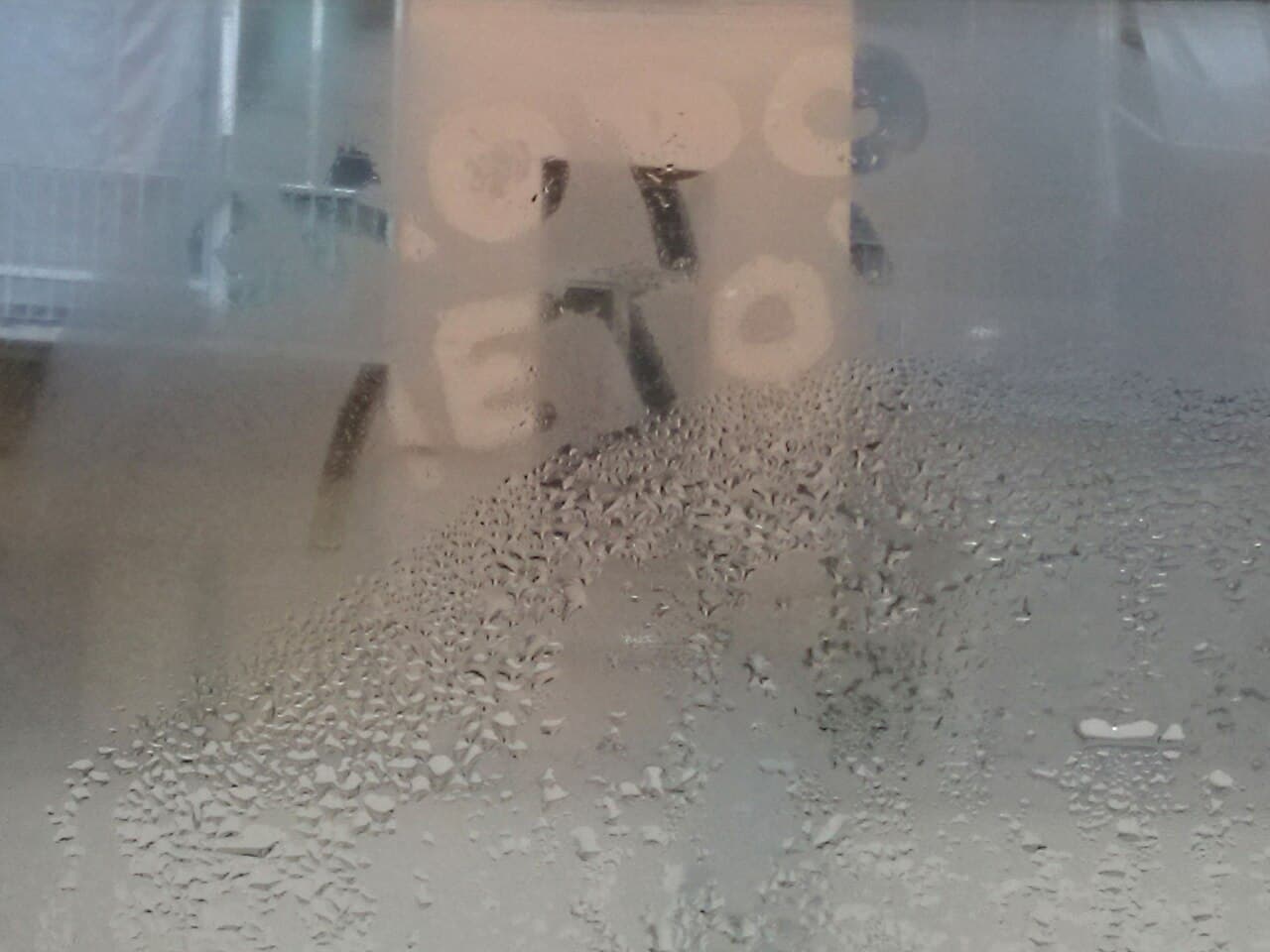
- Window streaming while you cook or in the morning.
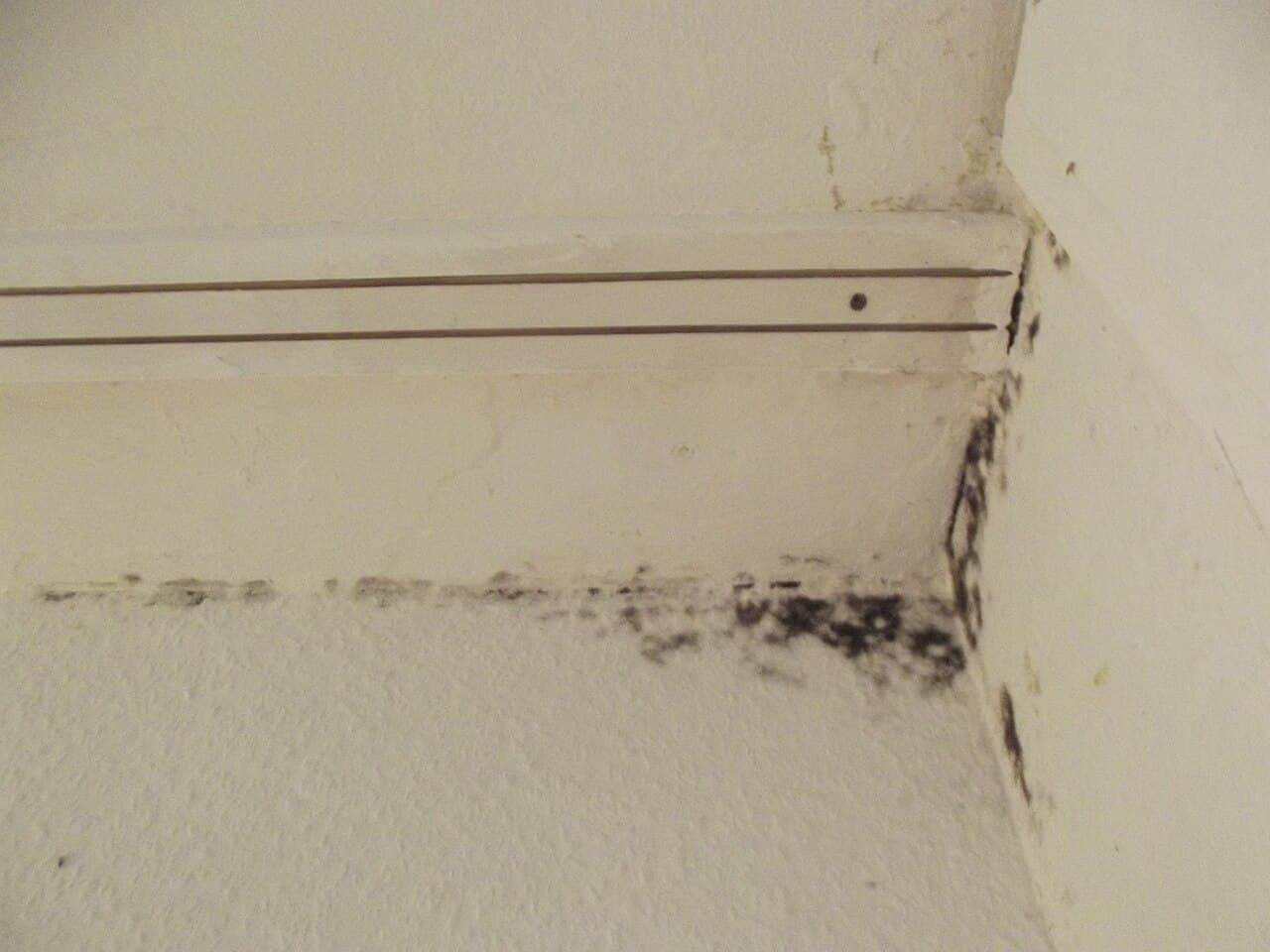
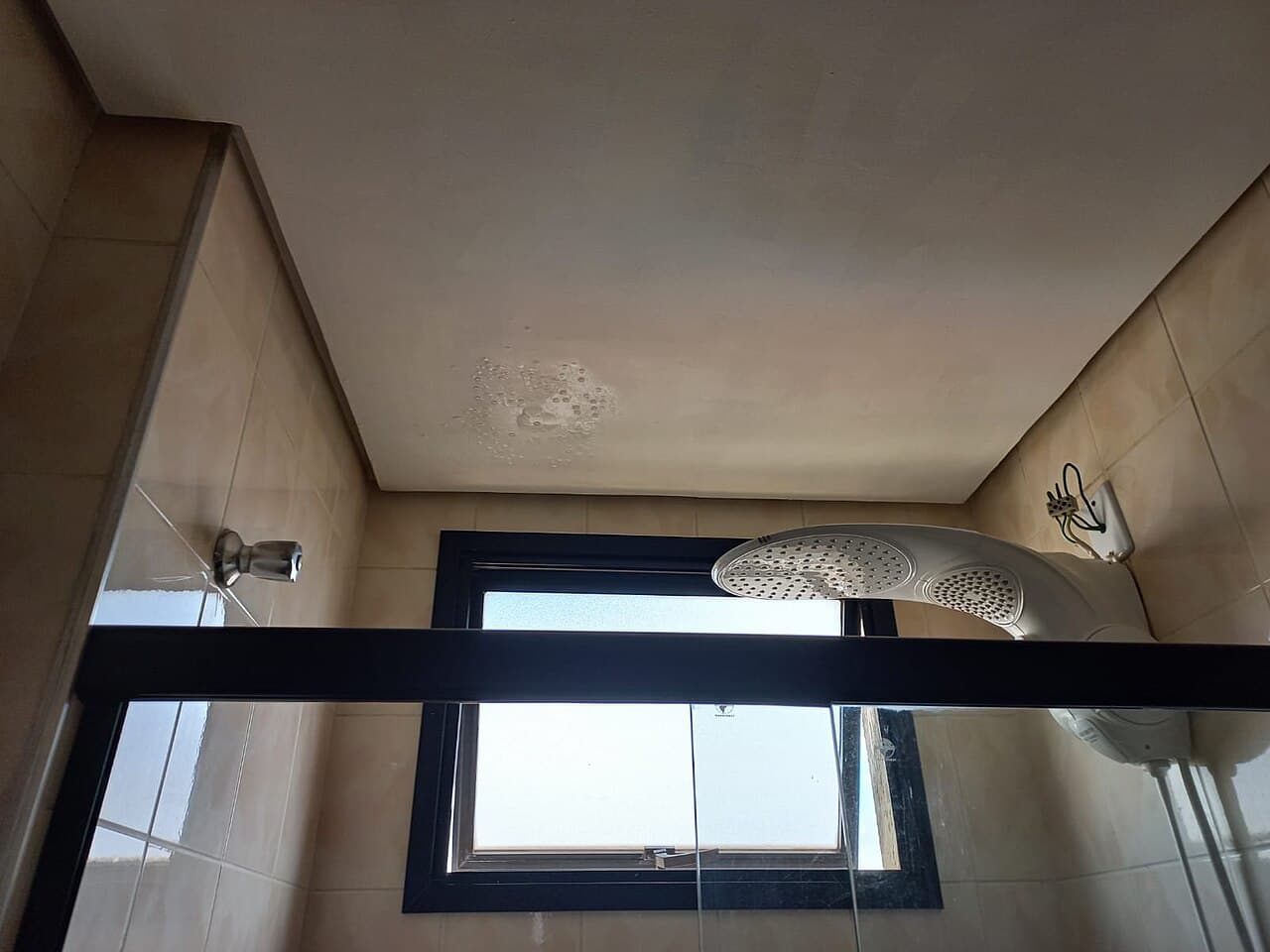
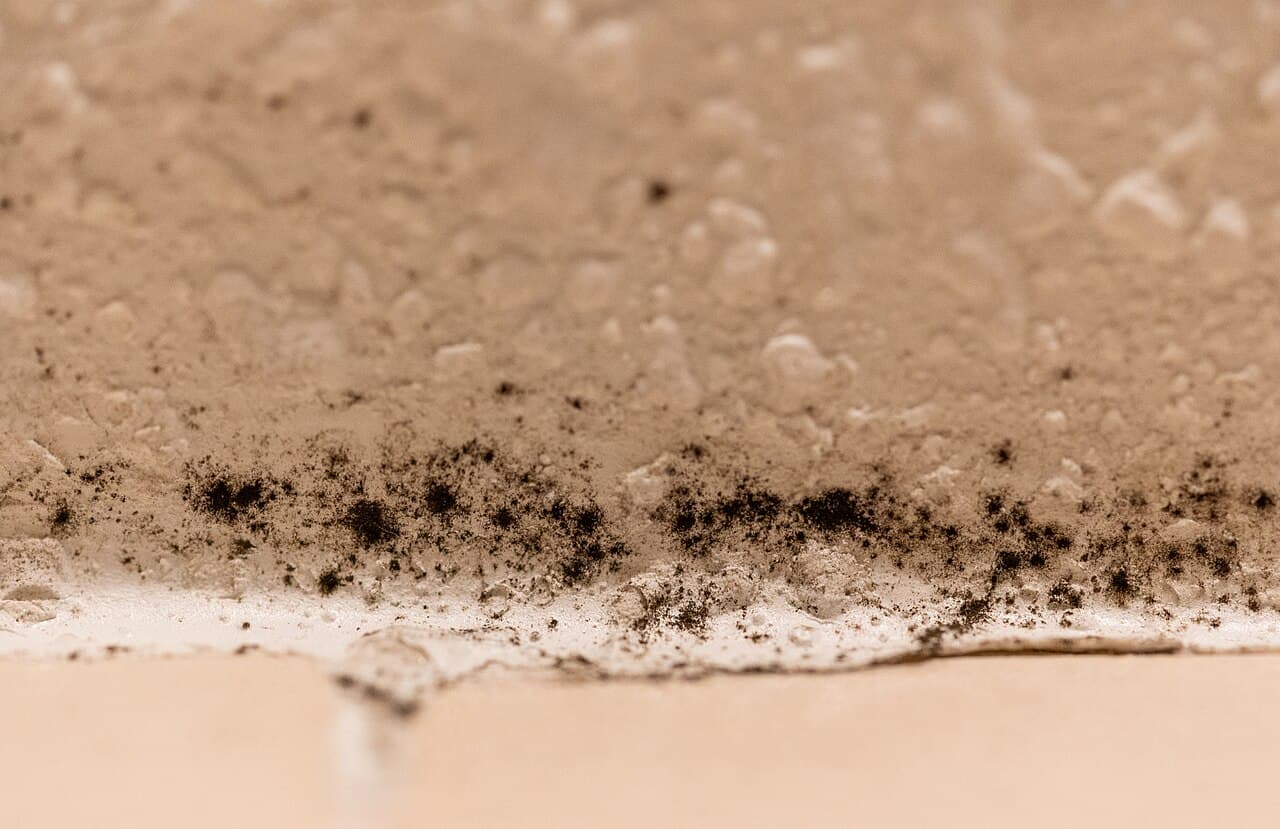
- Black spots on the ceiling above the cooker or in the corners by the window.
- Mould behind units against the outside wall.
- The base of the sink cupboard swollen, stained or smelling musty.
- Dark tile grout behind the worktop.
Cooker hood: recirculating or extracting outside?
This is the difference that matters most and is least known. An extracting hood sends the air outside, through a duct to the façade or the building's flue. A recirculating hood passes the air through grease and activated-carbon filters and returns it to the kitchen. The filters trap grease and smells, but all the water vapour goes back into the room.
| Extracting outside | Recirculating (carbon filter) | |
|---|---|---|
| Water vapour | Leaves the home | Returns to the kitchen |
| Grease | Trapped in the metal filter | Trapped in the metal filter |
| Smells | Leave the home | Reduced by the carbon, which needs replacing |
| Gas combustion products | Leave with the air | Stay in the kitchen |
| When it makes sense | Whenever there is a duct | When no duct is possible |
If you have a recirculating hood and the kitchen has damp problems, make up for it by keeping the window ajar while cooking and airing hard afterwards. If there is a duct or flue available, switching to extraction is usually the change with the biggest effect.
- Switch the hood on before the pans go on the hob, not when the kitchen is already full of steam.
- Use lids and the back burners, which sit closer to the suction area.
- Leave the hood running for 10–15 minutes after cooking.
- Wash the grease filters every month: a clogged filter cuts suction a lot.
- Test it with a sheet of kitchen paper held against the filters: if it doesn't stick, suction is weak.
Gas cookers, water heaters and kitchen damp
When gas burns, it produces water vapour as well as heat. In a small kitchen with a gas cooker, an hour of cooking adds moisture from the flame and from the pans at the same time. An induction or ceramic hob has no flame, so only the steam from the food counts.
The ventilation grilles in kitchens with gas are there to provide air for combustion and to let the gases out. They also help replace humid air. Don't block them, even if cold air gets in during winter.
More on gas heating and water vapour in the guide to gas heaters and damp.
Washing machines and tumble dryers in the kitchen
In many Portuguese flats the washing machine is in the kitchen, and in winter the clothes airer often ends up nearby too. The washing machine itself doesn't release much moisture, but laundry drying indoors does: it is one of the biggest sources of vapour in a home.
| Tumble dryer | Where the water goes | Watch out |
|---|---|---|
| Vented | Warm, humid air through a hose | The hose must go outside, not into the kitchen |
| Condenser | Tank or drain | Empty the tank and clean the condenser |
| Heat pump | Tank or drain | Clean the filters every cycle |
After each wash, leave the washing machine door ajar and dry the door seal, where mould settles easily. To dry laundry without filling the home with vapour, see the guide to drying clothes indoors.
Mould behind units and under the sink
Kitchen units against an outside wall hide a cold area where air doesn't circulate. Mould grows behind the wall cupboards and behind the plinth of the base units without anyone seeing. Every now and then, take off the plinth and look with a torch, especially in north-facing kitchens.
Under the sink, your first suspicion should be a leak, not condensation. The trap, the flexible tap connectors and the dishwasher's inlet and outlet are weak points. One drop a minute is enough to swell the chipboard base within a few weeks.
- Empty the cupboard, dry everything with kitchen paper and place a dry sheet of paper under the trap and the connections.
- Use the sink and the dishwasher as usual and check the sheet the next day.
- For hidden leaks, close all taps, note the meter reading and don't use any water for 1–2 hours. If the meter has moved, there is a leak in the installation.
- A leak inside the wall or floor needs professional leak detection, which costs from a few hundred euros.
Many multi-risk home policies cover "water damage" (danos por água) when a pipe bursts suddenly, but often exclude slow leaks and lack of maintenance — check the specific conditions of your policy. See also the guide to home insurance and damp.
Condensation on kitchen windows
The window is almost always the coldest surface in the kitchen, especially with aluminium frames without a thermal break. With the kitchen at 20 °C and 60% humidity, the dew point is ≈12 °C — and in a Lisbon winter, single glazing and the frame easily drop below that. Run the numbers with the dew point calculator.
- Wipe the glass and frame with a cloth or squeegee in the morning, before the water runs down onto the wall.
- Keep the drainage holes at the bottom of the frame clear.
- Insulating window film, about €6, reduces condensation on the glass but not on the aluminium.
- Open the window wide for 5–10 minutes after cooking, instead of leaving it ajar for hours.
To see what you can change about the windows, read the guide to aluminium windows without a thermal break.
How to clean kitchen mould and where to start
To clean painted walls, grout and ceilings, use diluted bleach (1 part to 4 parts water), with gloves, a mask and the window open, never mixed with other products. Move food and dishes out of the way and rinse surfaces where you prepare food. You can also use an anti-mould product. Use biocides safely. Always read the label and product information before use.
If the mould keeps coming back even with a hood, airing and no leaks, take the free diagnosis: it compares the kitchen with the rest of the home and tells you whether the problem is limited to this room. The page on kitchen damp sums up the most common cases, and how much mould cleaning costs shows observed prices for professional cleaning, from €48.
Frequently asked questions
No. A recirculating hood passes the air through a grease filter and an activated-carbon filter, which trap grease and smells, and returns the air to the kitchen with the same water vapour. It helps keep the units clean, but to bring humidity down you need extraction to the outside or, failing that, to open the window while you cook.
Yes, somewhat less. Induction and ceramic hobs have no flame, so the only vapour is what comes off the food and boiling water. On a gas cooker, combustion adds water vapour to the air. Either way, the steam from the pans is still there, and the hood should be switched on before you start cooking.
A little condensation on the glass while water boils is normal, especially in winter and with aluminium frames. It isn't normal for the window to still be streaming an hour later, for the water to reach the wall or for mould to appear on the frame. In that case, the hood isn't extracting enough or the steam has nowhere to go.
You can, but leave a small gap between the back of the units and the wall so air can circulate, and choose plinths with a ventilation grille. Before fitting them, fix the cause of the damp and clean off the mould, or it will keep growing behind the units unseen. In north-facing kitchens, look behind the plinth once every winter.
SOURCES
- Building physics: dew point (Magnus formula)
- Regulation (EU) No 528/2012 concerning biocidal products
- WHO — Guidelines for indoor air quality: dampness and mould (2009)
- Prices observed on Google.pt, cume.pt, Zaask and Habitissimo, Oct 2026